In 2026, material selection is becoming a manufacturing decision, not a simple resin preference. Injection moldable plastics must balance strength, cycle time, surface finish, cost, and end-of-life options. A glossy automotive console, a medical housing, and a thin food container demand very different performance.
Industry data shows why this choice matters. PlasticsEurope reported approximately 413.8 million tonnes of global plastics production in 2023. The OECD’s Global Plastics Outlook warns that plastic use could more than double by 2060 without stronger resource-efficiency measures. Market forecasts also predict continued growth for injection molding, although estimates vary by region, polymer category, and reporting method. That disagreement deserves attention.
John Bozzelli, founder of Injection Molding Solutions and a respected scientific-molding educator, states, “The goal is to make good parts, not just to fill the mold.” This principle frames the discussion. Polypropylene remains attractive for low-cost, lightweight components. ABS offers dependable impact resistance and a clean appearance. Polycarbonate supports demanding safety and optical applications. Nylon performs well under mechanical stress, but moisture control can complicate processing. Recycled and bio-based grades add promise, yet their consistency is not always perfect.
That is the uncomfortable part.
The top injection moldable plastics in 2026 will not be ranked by popularity alone. They will be judged against measurable requirements, including energy use, defect rates, recycled content, durability, and actual recycling pathways. This guide compares the leading options using technical evidence, current industry reports, and practical manufacturing experience. One limitation remains: no single polymer wins every application.
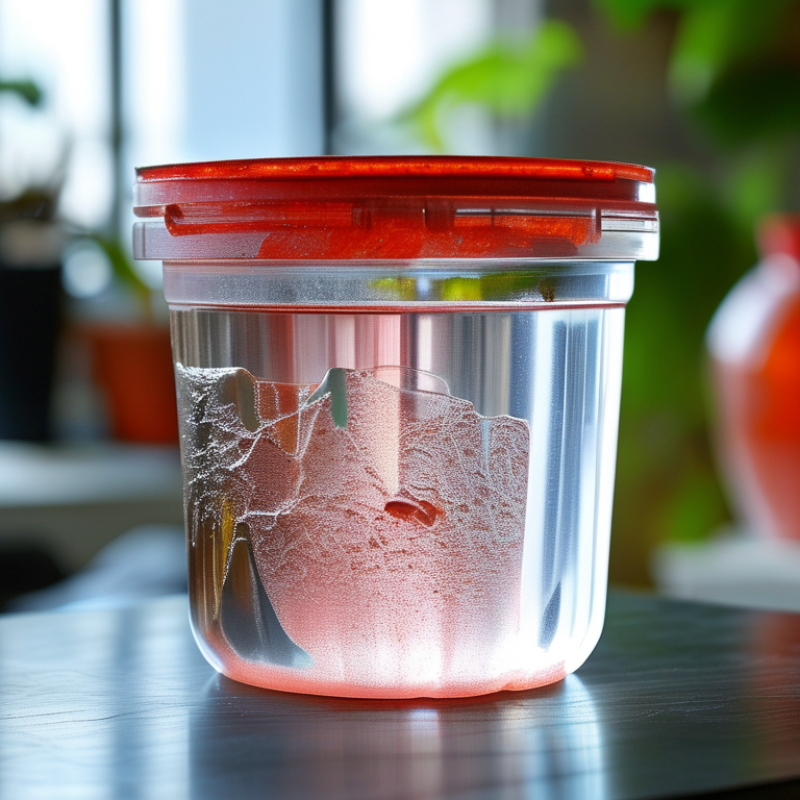
A suitable injection molding plastic must flow evenly, cool predictably, and hold its shape after ejection. In 2026, polypropylene, ABS, polycarbonate, nylon, and high-performance polymers remain strong choices for different applications. Material selection begins with the part’s job, not its popularity. A thin housing may need low-viscosity resin, while a load-bearing component demands stiffness, fatigue resistance, or heat stability.
Moisture sensitivity matters more than many teams expect. Nylon can absorb water before molding, causing bubbles, weak weld lines, or dimensional changes. Dry storage and controlled preheating are essential. Polycarbonate offers impact strength, but excessive heat or poor venting can create burns and internal stress.
Small details matter. Gate location, cooling-channel design, wall thickness, and draft angles all influence the final result. Even a premium resin can fail in an unsuitable mold.
Recycled or bio-based content is also receiving greater attention in 2026. However, sustainability claims should be supported by traceable data, processing trials, and performance testing. A material may look responsible on paper yet shrink unpredictably in production. That deserves scrutiny.
In practical mold reviews, engineers should compare flow length, shrinkage, cycle time, surface finish, and long-term aging under realistic conditions.
No plastic is perfect. The best choice balances performance, cost, manufacturability, and reliable availability. Sometimes, a simpler resin produces the more dependable part.
In 2026, commodity plastics still dominate many injection molding applications because they balance cost, availability, and production speed.
Polypropylene suits living hinges, containers, and lightweight housings.
It flows easily and resists many chemicals, but its shrinkage can complicate tight dimensions.
Polyethylene offers impact resistance and a soft surface feel.
However, its lower stiffness may require thicker walls or supporting ribs.
Acrylonitrile butadiene styrene provides a better appearance and stronger impact performance. It works well for consumer housings and functional covers. Its weakness is weathering unless the design includes suitable protection.
Polystyrene molds cleanly and supports sharp details, yet it remains relatively brittle.
Polyvinyl chloride can deliver useful chemical resistance, but its processing window demands careful temperature control. Small errors may create discoloration or surface defects. I have seen a low-cost resin become expensive after repeated mold adjustments.
Tips:
Match the plastic to the part’s actual stress, not its datasheet alone. Test flow, shrinkage, weld lines, and ejection behavior with production-like tooling. Check recycled-content consistency before changing machine settings. A material that runs well for one batch may behave differently later. Record melt temperature, cooling time, and moisture conditions. Keep the gate location visible during design reviews. It often explains defects that appear unrelated. Perfect predictions are uncommon, so validate critical dimensions after molding and aging.
What Are the Top Injection Moldable Plastics in 2026?
Engineering plastics are moving beyond basic strength. Designers now prioritize heat resistance, fatigue life, chemical stability, and dimensional control. The MarketsandMarkets Engineering Plastics Market report projects growth from about USD 291 billion in 2023 to USD 386 billion by 2028. That increase reflects demanding applications in mobility, electronics, medical equipment, and industrial systems. High-performance polymers such as PEEK, PPS, PEI, and reinforced polyamide often provide better durability than commodity plastics. However, the most expensive option is not always the most reliable choice.
PEEK can withstand continuous temperatures near 240°C in suitable grades. PPS commonly offers strong chemical resistance and low moisture absorption. PEI provides useful stiffness at elevated temperatures, while glass-filled polyamide improves load-bearing performance. POM remains effective for low-friction gears and sliding components. These figures can vary significantly by grade, reinforcement, wall thickness, and molding conditions. ISO 527 tensile testing and ISO 75 heat-deflection testing should support material comparisons. A laboratory result is valuable, but it may not predict years of vibration, humidity, or repeated impact. That limitation deserves attention.
Tips: Match the polymer to the failure mode. For heat, check long-term temperature data. For wear, test the actual mating surface. For moisture-sensitive polyamides, condition specimens before testing. Include ribs carefully, because uneven cooling can create warpage. I would also question simulations that ignore weld lines, sharp corners, and recycled-content variation. Real parts often fail there first.
What Are the Top Injection Moldable Plastics in 2026?
When to Choose High-Performance and Sustainable Moldable Plastics
Injection molding decisions now involve more than strength and price. Standard choices include polypropylene, ABS, polycarbonate, nylon, POM, and PET. They support housings, clips, gears, medical components, and many daily products. Each material has a different molding window. Drying, melt temperature, cooling, and shrinkage can change the final result.
For demanding heat, chemical, or wear conditions, high-performance plastics deserve attention. PEEK, PPS, PEI, and reinforced nylon can protect parts near engines, electrical systems, and aggressive fluids. They often retain stiffness at elevated temperatures. However, their higher cost and processing difficulty are easy to underestimate. A material may pass a laboratory test yet fail after repeated impact, moisture exposure, or poor mold venting. Real parts need real testing.
Sustainable moldable plastics are becoming more practical in 2026. Recycled polypropylene, recycled polycarbonate, bio-based nylon, and recyclable single-material designs can reduce environmental impact. The result depends on the feedstock, additives, energy use, and product lifetime. Sustainable does not automatically mean better. That assumption needs questioning. Recycled content can affect color, odor, strength, and consistency. I would compare virgin and recycled grades through identical mold trials, dimensional checks, and aging tests. Engineers should also examine repairability, separation, and end-of-life routes before approving a resin. The best choice balances performance, verified durability, processing stability, and responsible sourcing.
| Material | Typical Melt-Processing Range | Typical Tensile Strength | Typical Heat Capability | Typical Mold Shrinkage | Key Advantages | Sustainability Route | When to Choose It | 2026 Selection Priority |
|---|---|---|---|---|---|---|---|---|
| Polypropylene (PP) | 200–250 °C | 25–40 MPa | HDT typically 80–110 °C | 1.0–2.5% | Low density, excellent chemical resistance, living hinges, low cost, and good fatigue resistance. | Widely recyclable where polypropylene collection exists; recycled-content grades are available, but properties and contamination levels must be verified. | Lightweight packaging, consumer products, caps, automotive interiors, storage components, and flexible hinges. | Excellent value and circularity |
| High-Density Polyethylene (HDPE) | 180–240 °C | 20–35 MPa | HDT typically 65–85 °C | 1.5–3.0% | Strong chemical resistance, impact toughness, low moisture absorption, and low density. | Established mechanical-recycling pathways in many markets; recycled content can increase odor, color, and property variation. | Containers, closures, industrial parts, tanks, household products, and components exposed to chemicals. | Strong sustainability option |
| Acrylonitrile Butadiene Styrene (ABS) | 220–260 °C | 35–55 MPa | HDT typically 75–100 °C | 0.4–0.8% | Good impact strength, dimensional stability, surface finish, and ease of processing. | Recyclable in principle and commonly reprocessed in controlled streams; recycled content may reduce impact strength and appearance consistency. | Housings, instrument panels, appliance parts, toys, electronic enclosures, and interior components. | Balanced general-purpose choice |
| Polycarbonate (PC) | 280–320 °C | 55–75 MPa | HDT typically 125–140 °C | 0.5–0.7% | Very high impact resistance, transparency, dimensional stability, and strong heat performance. | Recycling is technically possible but collection and sorting are less widespread than for PP or HDPE; recycled-content grades require application validation. | Safety glazing, transparent housings, lighting components, medical devices, and high-impact protective parts. | High-performance standard |
| Polyoxymethylene (POM) | 190–230 °C | 60–75 MPa | HDT typically 95–120 °C | 1.5–2.5% | Low friction, excellent wear resistance, stiffness, fatigue resistance, and dimensional precision. | Recycling is possible through controlled industrial streams; end-of-life separation is important because mixed acetal waste can be difficult to manage. | Gears, bearings, clips, valves, pump components, and precision mechanisms. | Best for moving parts |
| Polyamide 6/66 (PA 6/66) | 240–290 °C | 65–90 MPa when dry | HDT commonly 150–210 °C when dry; moisture lowers stiffness | 0.8–2.0% | High strength, abrasion resistance, toughness, and suitability for glass-fiber reinforcement. | Recycled-content and chemically recycled options are available in some supply chains; drying and moisture control remain essential. | Automotive parts, structural brackets, electrical components, gears, and load-bearing housings. | High strength-to-weight ratio |
| Polybutylene Terephthalate (PBT) | 240–270 °C | 50–70 MPa | HDT typically 150–200 °C, depending on reinforcement | 1.0–2.2% | Electrical insulation, chemical resistance, fast crystallization, and good dimensional stability. | Recycled-content grades can be used in suitable applications; glass-fiber-filled material is more difficult to recycle and may need dedicated processing. | Connectors, sensors, under-hood electrical parts, relay components, and precision housings. | Electrical and automotive specialist |
| Polyphenylene Sulfide (PPS) | 300–340 °C | 70–100 MPa | HDT typically above 240 °C | 0.5–1.5% | Outstanding chemical resistance, flame resistance, dimensional stability, and high-temperature performance. | Long service life can reduce replacement impacts; recycling is mainly practical through controlled industrial recovery because filled grades are complex. | Chemical-processing components, electrical parts, under-hood systems, pumps, and high-temperature fixtures. | Extreme-environment choice |
| Polyetherimide (PEI) | 340–380 °C | 90–110 MPa | HDT typically 180–210 °C | 0.5–0.8% | High stiffness, flame resistance, low smoke generation, dimensional stability, and strong electrical performance. | Durable service life is a primary sustainability benefit; recycling is technically possible but usually depends on segregated industrial streams. | Aerospace interiors, medical components, electrical connectors, and demanding flame-resistant structures. | Safety-critical performance |
| Polyether Ether Ketone (PEEK) | 360–400 °C | 90–100 MPa | Continuous-use capability commonly near 250 °C; grade-dependent | 0.8–1.5% | Exceptional heat resistance, chemical resistance, wear performance, fatigue resistance, and sterilization capability. | Very long service life can offset high material impact; recycling generally requires segregated, high-value industrial recovery. | Aerospace, medical implants and instruments, semiconductor equipment, seals, and high-temperature mechanisms. | Maximum technical performance |
| Bio-Based Polyamide 11 (PA 11) | 190–240 °C | 45–60 MPa | HDT typically 45–65 °C for unreinforced grades | 0.8–1.5% | Good impact resistance, low-temperature toughness, chemical resistance, and reduced dependence on fossil feedstock. | Can be produced partly or largely from renewable feedstock depending on the grade; recycling and end-of-life routes should be confirmed for the selected formulation. | Sustainable consumer products, flexible technical parts, tubing, sports components, and applications requiring toughness. | Renewable-feedstock option |
Selecting an injection moldable plastic starts with the product’s real working conditions, not a popularity list. A kitchen hinge, medical housing, and outdoor enclosure need different answers. I check temperature, impact, chemical contact, moisture, load, and expected service life before comparing grades.
Polypropylene suits lightweight parts and repeated flexing, while ABS offers a balanced surface and impact performance. Polycarbonate handles demanding impact, but it may scratch and requires careful processing.
Nylon performs well under mechanical load, although it absorbs moisture and can change dimensions. POM supports low-friction moving parts. Flexible elastomers help seals and grips, but they need realistic compression testing.
Do not trust a datasheet alone. Molded results depend on wall thickness, gate location, cooling, drying, and fiber orientation. I have seen a strong material fail because a thin corner cooled unevenly. Prototype the actual geometry, then test it after heat, humidity, chemicals, and repeated use. Small details matter.
The right choice also considers part volume, tooling cost, cycle time, color, recyclability, and surface appearance. A premium resin can solve one problem while creating three manufacturing problems. Ask for traceable test data and confirm the supplier’s grade consistency. Review the decision with the molder, because design intent often changes during production. Be willing to revise the material. That is not failure. It is sound engineering.
Copyright © 2025 The Toolroom Inc. All Rights Reserved.
Website Design St Louis by IQComputing