Why do manufacturers across different regions continue choosing plastic injection machines for global production? The answer begins with repeatability, not marketing. A well-configured machine can transform measured polymer pellets into thousands of consistent housings, caps, or automotive clips. On a production floor, this means stable dimensions, predictable cycle times, and fewer surprises during inspection. Small details matter. Clamp force, screw design, mold temperature, and cooling time all influence the final part.
From practical engineering experience, successful plants select equipment around product geometry, material behavior, and expected output. Servo-hydraulic and electric systems can support precise movement, while modern controls help operators record pressure, temperature, and cycle data. This evidence strengthens process validation and makes troubleshooting less dependent on guesswork. However, no machine solves poor mold design or careless maintenance. That limitation deserves attention. A low-cost purchase may become expensive when energy use, spare parts, training, and downtime are ignored.
Global production also demands responsible planning. Manufacturers must verify applicable safety requirements, emissions expectations, worker training, and material-handling procedures in each market. Reliable suppliers provide documented specifications, technical support, replacement components, and realistic performance guidance. They should explain limitations, not only advertise speed. For many factories, plastic injection machines offer a practical balance of productivity, quality, and scalability. Still, the best choice depends on evidence from trials, samples, and total operating costs. A careful decision may feel slower at the beginning. It often prevents larger problems later.
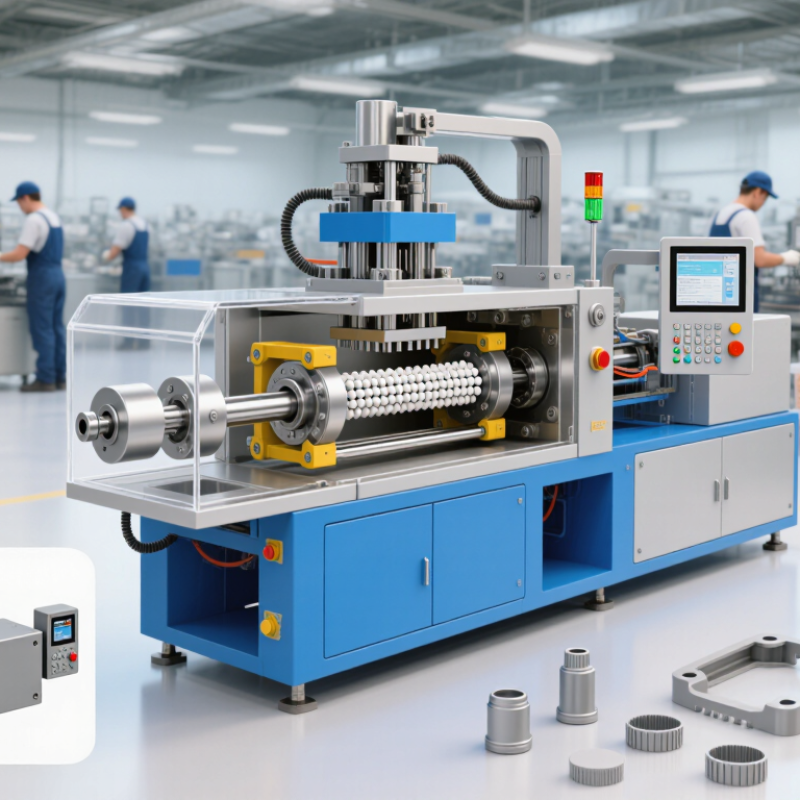
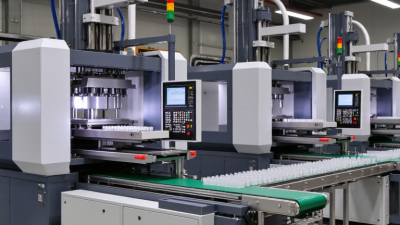
Plastic injection machines turn measured polymer pellets into repeatable molded parts. They combine controlled heat, pressure, movement, and cooling inside a timed production cycle. Pellets enter a hopper and fall into a heated barrel. Inside, a rotating screw conveys the material forward. Heater bands soften it, while screw movement builds a uniform melt. Then the screw pushes the melt through a nozzle into a closed mold. A clamping unit holds the mold tightly against injection pressure. The part cools in the cavity before the mold opens.
Small details matter. Moisture, temperature, and fill speed can change the final surface. Good operators check these variables instead of trusting a preset recipe. For global production, this working principle supports consistent parts across different facilities. However, consistency is not automatic. Teams must match screw design, mold steel, resin behavior, and local power conditions. Pressure and cooling settings need validation with real samples, not assumptions. In production practice, stable cycles often begin with simple records: melt temperature, injection time, cushion, and cooling time. These measurements help technicians identify short shots, warping, flash, or color variation. Automation can reduce handling errors, but it cannot correct a poorly designed mold. Maintenance also protects reliability. Clean vents, inspected heaters, calibrated sensors, and adequate lubrication prevent avoidable downtime. A machine may produce thousands of parts daily, yet one overlooked setting can repeat a defect thousands of times.
| Production Dimension | Typical Information | How It Supports Global Production | Key Consideration |
|---|---|---|---|
| Machine Definition | A plastic injection machine melts polymer pellets, injects the molten material into a mold, holds pressure during filling and packing, and ejects the cooled part. | The repeatable process can be standardized across plants, production lines, and manufacturing regions. | Part quality depends on machine settings, mold design, material condition, and process control. |
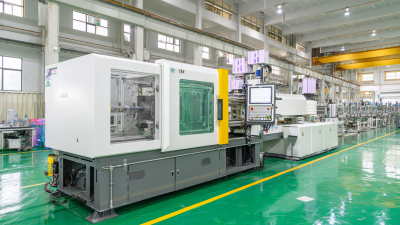
| Main Machine Units | Injection unit, screw and barrel, hopper, heating bands, mold-clamping unit, hydraulic or electric drive, control system, and ejection system. | A modular architecture simplifies operator training, maintenance planning, and process documentation. | The machine must be matched to the mold size, material, shot volume, and required production rate. |
| Typical Clamping Force | Approximately 20 to more than 2,000 metric tons, depending on part size, projected area, mold design, and material pressure. | A broad force range supports small precision components as well as large housings and structural parts. | Insufficient clamping force can cause flash; excessive force may increase mold wear and energy use. |
| Common Thermoplastics | Polypropylene, polyethylene, ABS, polystyrene, polyamide, polycarbonate, POM, and thermoplastic elastomers. | One production platform can serve packaging, consumer products, automotive components, electronics, and medical parts. | Each resin requires suitable drying, melt temperature, mold temperature, pressure, and cooling conditions. |
| Typical Cycle Time | Often about 10 to 60 seconds for many standard parts; thin-wall packaging can be faster, while thick or technical parts can take longer. | Short, repeatable cycles enable high-volume output and predictable production planning. | Cooling commonly represents a major portion of the cycle and is strongly influenced by wall thickness and mold design. |
| Dimensional Repeatability | Well-controlled processes can achieve repeatability in the hundredths of a millimeter for suitable parts, although actual results vary by resin, geometry, mold, and machine. | Consistent settings help manufacturers meet common specifications across multiple production locations. | Material shrinkage, warpage, moisture, and mold temperature must be controlled to maintain tolerances. |
| Automation Potential | Robotic part removal, automatic feeding, in-mold labeling, vision inspection, conveyors, and production monitoring can be integrated. | Automation can reduce manual handling, improve consistency, and support continuous operation. | The return on automation depends on production volume, labor costs, part geometry, and changeover frequency. |
| Energy Options | Hydraulic, hybrid, and all-electric configurations are widely used; electric drives generally provide precise motion control and can reduce energy consumption in suitable applications. | Different drive systems allow factories to balance energy performance, process requirements, maintenance, and investment cost. | Actual energy use varies with machine size, cycle time, material, utilization, auxiliary equipment, and operating conditions. |
| Material Efficiency | The process can produce near-net-shape parts with controlled runners, regrind, and hot-runner systems where technically appropriate. | Lower material waste can improve cost control and support resource-efficiency goals. | Recycled content and regrind must be validated because they can affect strength, appearance, moisture sensitivity, and process stability. |
| Tooling Requirement | A dedicated mold is normally required; tooling may use single-cavity, multi-cavity, family, cold-runner, or hot-runner designs. | A well-designed mold supports stable quality, high output, and consistent part interchangeability. | Initial mold cost can be significant, so injection molding is generally most economical at medium to high volumes. |
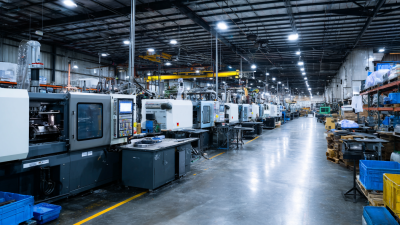
| Global Production Advantages | High throughput, repeatable quality, scalable machine sizes, automation compatibility, and support for many thermoplastic materials. | Standardized molds, recipes, inspection methods, and maintenance procedures can help synchronize international production. | Successful global deployment requires compatible utilities, trained technicians, spare parts, safety procedures, and quality standards. |
| Best-Fit Applications | Packaging closures, appliance components, electrical enclosures, automotive interior parts, consumer products, industrial components, and medical-device housings. | The technology is suitable for products requiring repeatability, complex geometry, high volume, and consistent surface finish. | Very low-volume parts, frequently changing designs, or unusually large one-off components may be better suited to alternative processes. |
Note: The figures shown are general industry ranges. Actual performance depends on machine specification, mold design, polymer grade, part geometry, process settings, and operating conditions.