
Choosing the right enclosure material affects comfort, energy use, maintenance, and long-term operating costs. A Non-Aging Foam Sandwich Panel offers a practical combination of insulation, structural stability, and clean installation. Its foam core helps reduce heat transfer through walls, roofs, and temperature-controlled rooms. The outer skins protect the core from everyday moisture, impact, and handling damage.
In real projects, these panels are valued for their consistent dimensions and fast assembly. A properly joined panel can reduce thermal bridges around seams and corners. This matters in warehouses, workshops, cold rooms, and modular buildings. The smooth surface also simplifies cleaning, especially where dust or condensation may collect. However, performance depends on core density, facing material, joint design, and installation quality. It is not a magic solution.
One detail is easy to overlook. Even a high-quality panel can underperform when fasteners are poorly placed or seals are incomplete. Experienced contractors should inspect panel alignment, edge protection, and vapor-control details before handover. Product data, fire classifications, thermal values, and test reports should come from recognized manufacturers or independent laboratories. Local building requirements must also guide material selection.
A Non-Aging Foam Sandwich Panel can support durable construction when its specifications match the application. “Non-aging” should not be treated as unlimited service life. Weather exposure, chemicals, impact, and maintenance still influence results. This article examines the material’s benefits, limitations, selection criteria, and installation considerations. The goal is a balanced decision, not a sales promise.
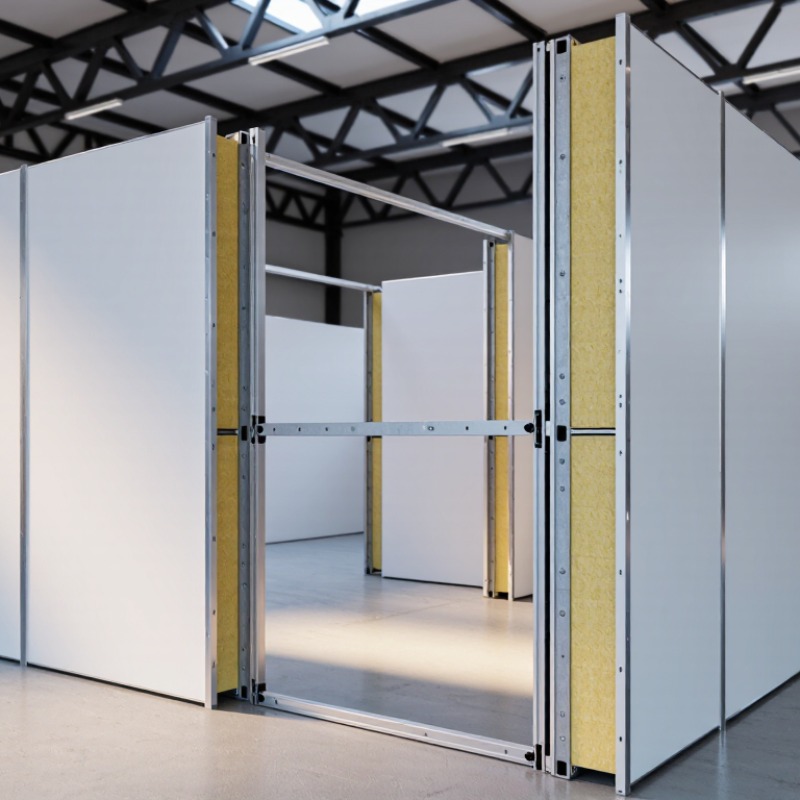
A non-aging foam sandwich panel is an insulated building component designed to retain its thermal and structural performance over time. It usually contains a rigid foam core, such as PIR, PUR, EPS, or XPS, between two protective metal skins. The phrase “non-aging” does not mean permanent. It means the panel resists serious loss of insulation, shape, and bonding under normal service conditions.
EN 14509 testing evaluates key properties, including thermal resistance, dimensional stability, and fire behavior.
This matters because buildings consume roughly 30% of global final energy, according to the International Energy Agency’s Buildings report. The 2023 UNEP Global Status Report also links buildings and construction with about 37% of global energy-related emissions.
A stable foam core can reduce heat transfer through walls and roofs. In practical inspections, however, damaged joints often cause more trouble than the panel itself. Water entry, poor cutting, and exposed edges can weaken long-term performance. Small mistakes matter.
A foam sandwich panel combines a low-conductivity core with protective surface layers. The core usually uses closed-cell polyurethane or polyisocyanurate foam. Its small cells slow heat transfer and limit moisture movement.
This matters because buildings accounted for about 30% of global final energy use in 2022, according to the International Energy Agency.
The surface layers do more than provide appearance. Coated steel or aluminum skins resist impact, vapor entry, and daily temperature changes. Adhesive bonding must remain continuous, especially around panel edges and fasteners. Poor joints can waste the core’s thermal performance. They can also create cold bridges and hidden condensation.
Small details matter.
A “non-aging” claim needs careful interpretation. Foam performance can remain stable when density, cell structure, and moisture resistance are properly controlled. However, ultraviolet exposure, fire, chemicals, and repeated thermal movement still affect the outer layers.
The 2023 Global Status Report for Buildings and Construction links buildings to roughly 34% of global energy demand, reinforcing the value of durable insulation design.
Yet laboratory results do not perfectly represent a dusty roof or a careless installation. That is the uncomfortable part. Designers should review tested thermal aging, fire classification, water absorption, and joint performance before selection.
Why Choose Non-Aging Foam Sandwich Panel?
Why Non-Aging Foam Preserves Long-Term Performance
Non-aging foam is not a promise of immortality. It describes a core designed to resist structural change over time. Its closed-cell structure limits moisture absorption and helps maintain insulation performance. Stable density also reduces the risk of uneven movement between the panel skins.
On active building sites, this stability matters. Panels face daily temperature swings, transport vibration, humidity, and repeated heating. A well-made foam core can reduce shrinkage, warping, and thermal bridging. Rooms stay more comfortable, while cooling and heating systems work with less strain. The surface remains firm under normal handling.
Details matter.
However, “non-aging” should never replace proper verification. Performance depends on foam chemistry, production quality, joint design, and installation conditions. Poor sealing can allow water into panel connections, even when the core resists moisture. Direct sunlight can also damage exposed surfaces if protective layers are missing.
Reliable selection requires more than a product label. Check independent test data for thermal conductivity, dimensional stability, water absorption, and fire behavior. Review results after accelerated aging, not only fresh samples. In practice, installers should protect cut edges, keep panels dry, and follow the specified fastening pattern. Small mistakes can weaken long-term results. That part is often underestimated.
Why Non-Aging Foam Preserves Long-Term Thermal Performance
Lower thermal conductivity means better insulation efficiency at the same thickness. Closed-cell polyurethane and polyisocyanurate foams typically provide lower thermal conductivity than many conventional insulation materials. Their low moisture uptake and stable cell structure can help reduce long-term performance loss, although actual results depend on formulation, installation quality, temperature, and service conditions.
Representative, non-branded thermal conductivity values at approximately 10°C, expressed in W/m·K. Actual declared values vary by product and applicable standard.
A non-aging foam sandwich panel can help maintain insulation performance over many service years. Its rigid foam core limits heat transfer, while sealed panel joints reduce unwanted air leakage. The International Energy Agency reports that buildings consume about 30% of global final energy. Better envelope insulation remains a practical efficiency measure. Still, “non-aging” should not mean maintenance-free. Moisture, ultraviolet exposure, and poor installation can reduce real-world performance.
Strength matters beyond the laboratory. A bonded foam core transfers loads between the outer metal skins, creating a lightweight composite panel. Under EN 14509 assessment, manufacturers evaluate thermal, mechanical, fire, and durability performance. Actual capacity depends on core density, skin thickness, span, fasteners, and wind conditions. Small design errors can become expensive.
Durability is visible at the jobsite. Properly protected edges resist water entry, and stable joints help prevent drafts around cold rooms or industrial walls. In practice, installers should inspect screw tension, sealant continuity, and panel alignment. The U.S. Department of Energy notes that air sealing and insulation work together to improve building efficiency. That relationship is easy to overlook. Selecting a panel only by its advertised thermal value can be misleading; verified test data, installation records, and periodic inspections provide stronger evidence of long-term reliability.
Non-aging foam sandwich panels are widely used where stable insulation matters over many years. Cold rooms, freezer warehouses, and food processing areas often use them for walls and ceilings. Their rigid foam core helps reduce heat transfer. This supports more consistent indoor temperatures and can lower refrigeration demand.
In practice, installers value the panels’ clean surfaces and quick assembly. Fewer joints can also simplify routine cleaning.
These panels are common in logistics centers, industrial workshops, agricultural buildings, and temperature-controlled storage rooms. They suit wall and roof systems that need lightweight construction with reliable thermal performance. Some facilities use them in clean production spaces because sealed panel surfaces can limit dust collection. Portable buildings and site offices may also benefit from their fast installation. The fit matters.
Project conditions still require careful review. Humidity, fire requirements, impact risks, and panel joint design can affect service life. A panel described as non-aging is not maintenance-free. Damaged coatings, open seams, or poor drainage may reduce performance. I have seen small installation details create large comfort problems later. That lesson is easy to overlook.
For refrigerated spaces, designers should check the required temperature range and vapor control. For workshops, they should consider noise, loading, and wall protection.
Choosing the right core, thickness, and fastening method depends on the building’s location and use. Practical inspection remains important, even with durable materials.
Copyright © 2025 The Toolroom Inc. All Rights Reserved.
Website Design St Louis by IQComputing