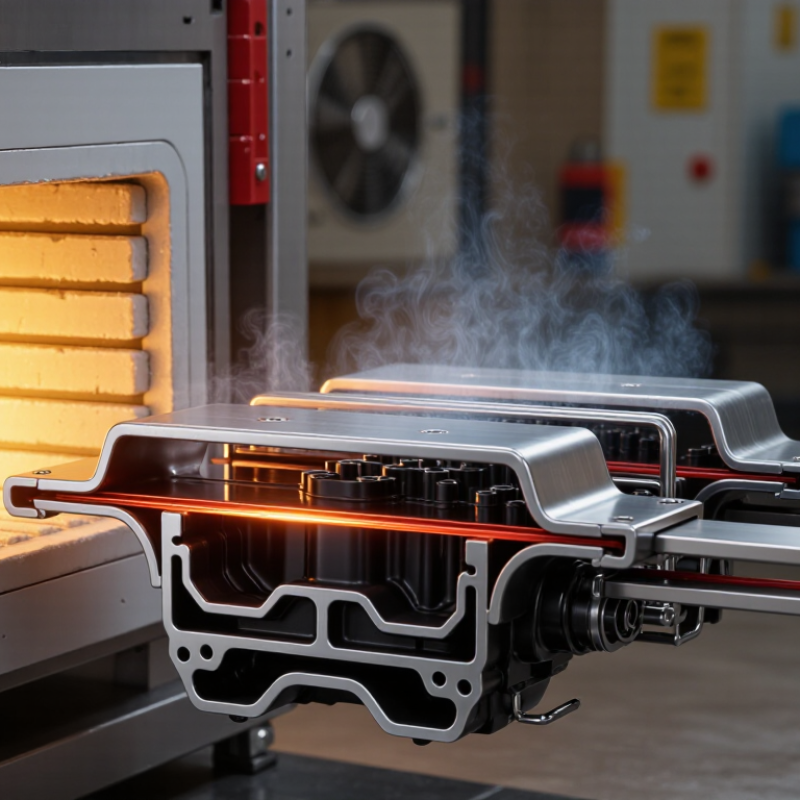
High heat changes how an adhesive behaves. As temperatures rise, many bonding materials soften, shrink, or lose strength. Heat Resistant Adhesive is designed for demanding environments, including engine compartments, industrial ovens, electrical assemblies, and metal components exposed to repeated heat cycles. The right choice protects the bond when surfaces expand at different rates.
Dr. Eric M. Petrie, author of Handbook of Adhesives and Sealants, offers a practical principle: “An adhesive must be selected for the entire service environment, not temperature alone.” That advice matters. A product rated for 300°C may still fail when exposed to vibration, moisture, oil, or sudden cooling. Temperature ratings can mislead.
Look closely.
A reliable evaluation should examine substrate type, bond-line thickness, curing conditions, thermal cycling, and expected load. For example, a stainless-steel bracket near a furnace may reach high temperatures within minutes. Its adhesive must remain stable while the metal expands and contracts. Laboratory data helps, but real-world testing reveals problems that product sheets may hide. Small gaps, uneven surfaces, and rushed curing can weaken performance.
The decision is not always simple. Even experienced engineers can overlook one factor. A slightly lower temperature rating may perform better under vibration. A stronger initial bond may degrade faster after repeated heating. Choosing Heat Resistant Adhesive therefore requires technical evidence, practical testing, and honest attention to limitations. This approach supports safer designs, longer service life, and more dependable results.
Heat-resistant adhesive is a bonding material designed to remain stable when exposed to elevated temperatures. It joins surfaces such as metal, ceramic, glass, and some engineered plastics. Unlike ordinary glue, it resists softening, cracking, or losing strength near heat sources. Its performance depends on chemical formulation, curing method, bond thickness, and the materials being joined.
It is not magic. In practical workshop testing, a thin, even adhesive layer often performs better than a thick bead. Uneven application can create weak areas, especially around sharp corners. Heat-resistant adhesives may use silicone, epoxy, or ceramic-based chemistry. Each type handles heat differently. Some tolerate short temperature spikes, while others support continuous exposure for longer periods. Always check the rated service temperature, because a headline number may describe brief resistance rather than daily operation.
Temperature changes matter. Repeated heating and cooling can expand metal faster than glass or ceramic, stressing the bond line. A reliable selection considers vibration, moisture, pressure, and curing time, not heat alone. Clean surfaces are essential; oil, dust, and oxidation can reduce adhesion before heating begins. I have seen a carefully chosen adhesive fail because the metal was not properly prepared. That mistake is easy to overlook. Small test samples under real operating conditions provide more trustworthy evidence than assumptions. Allow full curing before applying heat.
Heat-resistant adhesive is formulated to maintain bonding strength, dimensional stability, and electrical or chemical resistance when exposed to elevated temperatures. The chart compares typical continuous service-temperature ranges for common adhesive families.
Higher-temperature adhesive systems are useful in applications such as engine components, industrial ovens, electronics, insulation, and high-temperature sealing. Actual performance depends on formulation, bond-line thickness, curing conditions, load, and exposure time.
Heat resistant adhesive is designed to maintain bonding strength when temperatures rise. Its performance depends on the adhesive chemistry, curing process, and bonded materials. In practical assembly work, a joint may face engine heat, radiant warmth, vibration, and sudden cooling. These repeated changes can create stress, even when the peak temperature remains within the product rating. A laboratory rating is useful. Real conditions are messier.
A reliable high-temperature adhesive should resist softening, cracking, and chemical degradation. It must also handle the expected load at operating temperature, not only at room temperature. Proper surface preparation matters greatly. Clean metal, ceramic, or glass surfaces usually provide better contact than dusty or oily ones. Allow the adhesive to cure fully before heating. Rushing this step can weaken the joint. I have seen failures blamed on heat when incomplete curing was the real cause.
Tips: Check the continuous and peak temperature ratings separately. Test a small sample under heat, vibration, and cooling cycles. Leave room for thermal expansion. Apply a controlled bond line, because excess adhesive may cure unevenly. Recheck the joint after testing. Small gaps, discoloration, or edge lifting should not be ignored. Even careful testing can miss long-term fatigue. That limitation deserves attention.
Why Choose Heat Resistant Adhesive for High Heat?
Which Properties Matter in Heat-Resistant Adhesives?
A high temperature rating alone can mislead. A reliable adhesive must retain bond strength during continuous heating and sudden temperature changes. In practical testing, I check the rated service temperature, glass transition temperature, and decomposition point. These values show different limits. They should not be treated as interchangeable.
Thermal cycling matters greatly. An adhesive may survive one hour at 200°C, then fail after repeated heating and cooling. Look for low shrinkage, suitable flexibility, and strong resistance to cracking. Coefficient of thermal expansion also deserves attention. Metal, ceramic, and plastic expand differently. A rigid adhesive can split when bonded surfaces move apart. Small gaps make this problem worse.
Surface adhesion is equally important. The adhesive should match the actual materials, not just laboratory samples. Viscosity affects application, gap filling, and air entrapment. Cure conditions matter too. Some products need controlled heat, while others cure at room temperature but develop strength slowly. I would verify lap-shear data after heat aging, not only before exposure. Moisture resistance, electrical insulation, and low outgassing may also matter in enclosed equipment.
Testing reveals the uncomfortable details. A bond can look perfect while hiding weak edges. Temperature probes should sit near the joint, where heat may concentrate. Results can vary with surface preparation, pressure, and bond thickness. That variability deserves honest review. Heat resistance is not a single number. It is a performance pattern over time.
| Property or Data Dimension | Why It Matters in High-Heat Applications | What to Look For | Typical Evaluation Method or Reference | Practical Selection Guidance |
|---|---|---|---|---|
| Continuous Service Temperature | The adhesive must retain adequate strength and dimensional stability during long-term exposure to operating heat. | Manufacturer-rated continuous-use temperature, not only a short-term peak temperature. | Product technical data; long-term aging and property-retention testing. | Choose an adhesive with a continuous rating above the actual operating temperature, including safety margin. |
| Short-Term Temperature Resistance | Temporary temperature spikes may occur during soldering, reflow, welding, sterilization, or emergency overheating. | Maximum exposure temperature and permitted exposure duration. | Thermal exposure followed by bond-strength and visual inspection. | Confirm both temperature and time. A material rated for short peaks may not be suitable for continuous heat. |
| Glass Transition Temperature (Tg) | Above Tg, many polymer adhesives become softer and may lose stiffness, creep resistance, and load-bearing capacity. | A Tg comfortably above the intended service temperature for rigid structural bonds. | Dynamic mechanical analysis (DMA), commonly reported as ASTM E1640 or equivalent methods. | Do not treat Tg as the same as the maximum service temperature; actual performance also depends on formulation and load. |
| Heat Aging and Property Retention | Heat can cause oxidation, embrittlement, discoloration, mass loss, or gradual reduction in bond strength. | Bond strength retained after thermal aging, preferably with data at the intended temperature and duration. | Conditioning under controlled heat followed by lap-shear, peel, or tensile testing; ASTM D1002 is commonly used for metal lap shear. | Prioritize retention data over an isolated initial strength value. |
| Creep Resistance | Constant load at elevated temperature can cause slow, permanent deformation even when the adhesive does not immediately fail. | Low deformation under sustained load at operating temperature. | Long-term static-load or creep testing at controlled temperature. | For suspended or load-bearing parts, use a structural adhesive with documented elevated-temperature creep data. |
| Thermal Expansion Compatibility | Different coefficients of thermal expansion (CTE) create stress during repeated heating and cooling. | CTE compatibility, adequate flexibility, or a formulation capable of absorbing thermal strain. | CTE measurement by thermomechanical analysis or dilatometry; ASTM E831 is commonly used for polymer CTE. | For metal-to-plastic, ceramic-to-metal, or glass-to-metal assemblies, consider both material CTE and bond-line thickness. |
| Thermal Cycling Resistance | Repeated temperature changes can produce fatigue, cracking, delamination, and loss of adhesion. | Stable performance after repeated low-to-high temperature cycles. | Accelerated thermal cycling followed by visual inspection and mechanical testing. | Use application-specific cycling limits; one high-temperature exposure does not represent repeated cycling. |
| Thermal Conductivity | Heat-conductive adhesive can transfer heat away from sensitive components and reduce localized hot spots. | Measured thermal conductivity in W/m·K and controlled bond-line thickness. | ASTM E1461, ASTM E1530, or other validated thermal-conductivity methods. | Choose thermally conductive grades for heat dissipation; choose insulating grades where electrical isolation is more important. |
| Electrical Insulation | High-temperature assemblies may require the adhesive to prevent leakage current, arcing, or electrical shorts. | Dielectric strength, volume resistivity, dielectric constant, and performance after heat aging. | ASTM D149 for dielectric breakdown strength and ASTM D257 for volume resistivity are commonly referenced. | Verify electrical properties at the actual temperature, humidity, and frequency conditions. |
| Adhesion to Substrates | Heat-resistant chemistry alone cannot compensate for poor adhesion to the actual materials being joined. | Compatible adhesion to metals, ceramics, glass, composites, or engineered plastics. | Substrate-specific lap-shear, peel, pull-off, or tensile testing before and after heat aging. | Test production substrates with the intended surface preparation rather than relying only on generic data. |
| Bond-Line Thickness Control | Thickness affects heat transfer, stress distribution, cure behavior, and dimensional accuracy. | Recommended minimum and maximum bond-line thickness with suitable gap-filling capability. | Controlled assembly trials and cross-sectional inspection. | Follow the specified bond-line thickness; excessive adhesive may increase cure time and thermal stress. |
| Chemical and Moisture Resistance | Heat combined with oils, fuels, solvents, water, steam, or cleaning chemicals can accelerate bond degradation. | Resistance to the actual chemical environment at the intended temperature. | Immersion or exposure testing followed by strength and appearance evaluation. | Evaluate combined heat-and-chemical exposure because separate ratings may overstate real-world performance. |
| Cure Mechanism and Cure Temperature | The adhesive must cure reliably without damaging heat-sensitive components or leaving uncured material in the joint. | Room-temperature, heat-cure, moisture-cure, or two-part cure requirements; complete cure profile. | Technical data for mix ratio, cure schedule, working time, and post-cure requirements. | Select a cure process compatible with production equipment, assembly tolerances, and component temperature limits. |
| Flexibility and Toughness | A tough or flexible adhesive can absorb vibration, impact, and thermal-expansion mismatch more effectively than a highly brittle adhesive. | Elongation, impact resistance, fracture toughness, and stable flexibility after heat aging. | Tensile, peel, impact, or fracture-toughness testing before and after thermal conditioning. | Use flexible chemistries for vibration and dissimilar materials; use rigid systems where high dimensional stability is essential. |
| Flammability and Smoke Behavior | In electrical, transportation, and enclosed equipment, the adhesive may need to meet fire-safety requirements. | Applicable flammability classification and smoke or toxicity requirements. | Relevant regulatory or industry tests, such as UL 94 where applicable. | Confirm the requirement for the complete cured adhesive system, including fillers, pigments, and substrates. |
| Typical Adhesive Families | Different chemistries balance temperature resistance, flexibility, strength, cure speed, and processability differently. | Silicone Epoxy Polyimide Ceramic | Compare the cured system's technical data under the actual thermal, mechanical, and chemical conditions. | Silicone generally offers flexibility and thermal cycling resistance; epoxy offers structural strength; polyimide supports very high-temperature applications; ceramic systems provide extreme temperature capability but may be brittle. |
| Representative Continuous-Use Ranges | Temperature capability varies significantly by formulation, cure condition, joint design, and applied load. | Silicone: approximately −50 to 200–260°C Epoxy: approximately 120–200°C Polyimide: approximately 200–300°C Ceramic: often above 1,000°C in specialized applications | Always use the specific cured-product technical data and test results rather than chemistry-family averages. | These are broad industry guide ranges, not guaranteed specifications. Actual limits differ by formulation and application conditions. |
| Application and Quality Control | Surface contamination, incorrect mixing, insufficient cure, or uncontrolled bond-line thickness can cause failure before the adhesive reaches its rated temperature. | Documented surface preparation, mix ratio, cure schedule, storage conditions, and inspection criteria. | Process validation, witness samples, dimensional checks, and destructive or non-destructive inspection as appropriate. | Validate the complete bonding process, not only the adhesive material in isolation. |

High-heat adhesives are commonly used where ordinary bonding materials soften, crack, or release fumes. Typical locations include vehicle battery modules, exhaust sensors, electric motors, industrial ovens, lighting systems, and circuit assemblies. They secure components while reducing vibration and limiting heat transfer.
The International Energy Agency reported nearly 14 million electric car sales in 2023, representing about 18% of global new-car sales. This growth increases demand for adhesives inside battery packs, power electronics, and charging equipment. These materials must tolerate repeated heating and cooling, not only one extreme temperature. A small gap around a sensor can become a serious failure point.
Electronics manufacturers also use high-temperature adhesives for wire protection, component fixation, and thermal interface bonding. MarketsandMarkets estimates the high-temperature adhesives market could grow from roughly 3.5 billion dollars in 2023 to 4.8 billion dollars by 2028. The estimate reflects wider use in transportation, electronics, and industrial equipment.
A practical warning matters here. Higher temperature ratings do not guarantee longer service life. Surface preparation, curing conditions, bond thickness, and chemical exposure can matter just as much. In workshop testing, a poorly prepared metal surface may fail before the adhesive reaches its rated limit. That detail is easy to overlook. Temperature data should guide selection, not replace validation under real operating conditions.
Start with the temperature. Identify the highest continuous temperature, not only the brief peak. A joint exposed to 180°C for hours needs different protection from one facing 250°C for seconds. Check the adhesive’s published service range and curing limits. A higher number is not always better.
Consider the materials being joined. Metal, ceramic, glass, and engineered plastics expand at different rates. Repeated heating and cooling can stress a rigid bond until cracks appear. A slightly flexible adhesive may handle thermal movement more reliably. In workshop trials, I also check viscosity, bond-line thickness, and surface preparation. Clean, dry surfaces matter greatly. Test it first.
Chemical exposure deserves attention. Oils, moisture, solvents, vibration, and electrical requirements can change the selection. Review the technical data sheet, then test a small sample under real temperature cycles. Measure adhesion after cooling, not just immediately after curing. A neat laboratory result can still mislead. I once overlooked a slow cure in a thick joint, creating a weak center. That mistake reinforced a useful rule: match the adhesive to the complete operating environment, not temperature alone. Ask for documented test methods, storage conditions, and batch information when reliability is critical. Small details matter.
Copyright © 2025 The Toolroom Inc. All Rights Reserved.
Website Design St Louis by IQComputing