Why Choose Moped Scooters for Adults?
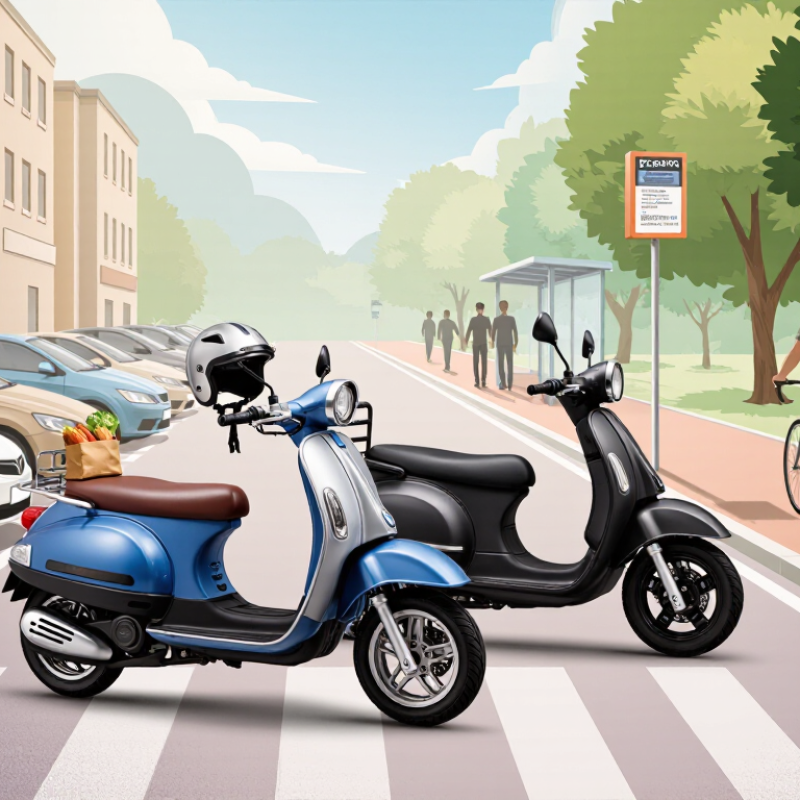
Moped Scooters For Adults can make short trips feel simpler: a compact frame, a step-through seat, and enough storage for a small grocery bag. They may suit commuters facing crowded streets, limited parking, or a daily journey too long to walk. Still, the right choice depends on route length, carrying needs, comfort, and local road conditions. Convenience matters. So does protection.
Market figures need careful reading. Fortune Business Insights estimated the global electric-scooter market at about $34.91 billion in 2023, with growth projected through 2032. That broad category includes products beyond adult mopeds, so it is not a direct measure of moped demand. Safety deserves equal attention. NHTSA’s 2022 traffic-safety data recorded 6,218 motorcyclist deaths in the United States; the figure covers motorcycles, not mopeds alone. It cannot predict an individual rider’s risk, but it is a useful reminder to compare braking, lighting, visibility, and protective gear. The WHO’s road-safety expert Dr. Etienne Krug has described road traffic injuries as “a major public health problem.” That warning applies well beyond scooters.
A moped can be practical, but it is not effortless transport. Hills, rain, passenger weight, and storage can change the experience quickly. Check the manufacturer’s range claims against your actual route, and test the seating position before buying. A quiet ride is not automatically a safe one. The best choice is the model that fits your daily trip, feels manageable at low speed, and meets the rules where you ride. These details are less glamorous than styling. They matter more.
What Defines a Moped Scooter for Adult Riders?
A moped scooter for adult riders is defined less by its name than by its design and intended use. The term can describe compact two-wheelers with a step-through frame, a small engine or electric motor, and simple twist-grip controls. Some designs include pedals; others do not. Labels vary, so check the vehicle’s specifications rather than assuming every model is alike.
Fit matters. An adult should be able to sit with both feet positioned comfortably and reach the controls without stretching. Look for a stated rider-weight capacity, a stable seat, tires suited to the surfaces you use, and brakes that feel predictable. Practical details count: a firm center stand, clear instrument display, and enough room for a helmet can make everyday stops easier. Small wheels can feel nimble, but rough pavement may be less forgiving. That trade-off is easy to overlook.
A useful definition also includes the scooter’s limits. Motor power, range, and carrying capacity affect how it handles hills, longer trips, and extra cargo. Read the manual and inspect routine service needs before choosing. I would not rely on appearance alone. A sleek model may still feel cramped, and advertised range may not match your route, load, or weather. The name can be fuzzy; the measurements should not be.
How Moped Scooters Support Everyday Transportation
For many adults, everyday transportation means more than getting to work. It includes a quick grocery run, a pharmacy stop, or a visit across town. A moped scooter can make these short trips feel simpler, especially when parking is limited. It takes up little space near a home or workplace. Small trips add up.
For commuting, a scooter can offer a practical middle ground between walking and driving. Riders can often avoid searching for a large parking space and may spend less on fuel than they would in a car. A small storage compartment can hold a rain jacket, gloves, or a few groceries. Before buying, check the scooter’s range, seat comfort, and carrying capacity against your actual route. A steep hill or a heavy bag can change the experience.
Weather and road conditions still matter. Rain changes everything. A scooter offers little protection from wind, cold, or wet pavement, so suitable clothing and careful riding are important. It may also be less useful for long journeys or trips that require carrying several people or bulky items. Think honestly about your routine: if most destinations are nearby and parking is difficult, a moped scooter may fit well. If your trips vary widely, it may become an occasional option rather than your main transport. That is not a failure, just something worth considering.
Practical Benefits of Choosing a Moped Scooter
Moped scooters can make short adult commutes feel simpler. Their compact frames fit into tight parking spaces, and their step-through designs make getting on and off easy. A grocery bag or small backpack may fit, depending on the scooter’s storage capacity. That can reduce reliance on a car for nearby errands. The savings are not automatic, though; fuel or charging, maintenance, insurance, and protective gear all affect the overall cost.
Tips: Before choosing a scooter, check its seat height, weight, storage, and rated load. Take a test ride on roads similar to your usual route. Notice how it handles stops and turns. Small details matter.
A scooter is most practical when your trips are short and parking is limited. Check the expected range or fuel use against your routine, and leave a little margin for detours or colder weather. Regular tire checks and scheduled servicing help keep rides predictable. Still, bad weather can make a quick trip less appealing, and carrying bulky items is awkward. That trade-off is easy to underestimate.
Why Choose Moped Scooters for Adults?
Typical fuel economy highlights one practical advantage of small-displacement two-wheelers: they can travel farther on a gallon of fuel than a typical passenger car.
Approximate representative fuel-economy figures: mopeds commonly achieve about 100 mpg, while a typical passenger car averages about 30 mpg. Actual mileage varies by vehicle, speed, load, maintenance, and riding conditions.
Costs, Safety, and Licensing Factors to Consider
Why Choose Moped Scooters for Adults?
Costs, Safety, and Licensing Factors to Consider
A moped scooter can make short commutes less expensive than driving, but the purchase price is only part of the cost. Include fuel, insurance, routine servicing, tires, and secure parking in your budget. Small repairs add up. Ask a mechanic what regular maintenance involves, especially if you plan to ride daily. A low-cost model may not stay low-cost if parts or servicing are difficult to find.
Safety depends on more than the scooter’s size. Wear a properly fitted helmet and protective clothing, even on brief trips. Before riding, check tire pressure, lights, brakes, and mirrors; a quick inspection takes only minutes. Practice braking and turning in a quiet area before joining busy traffic. Wet leaves, painted road markings, and potholes can feel surprisingly slippery or abrupt on small wheels. I used to think short trips needed less preparation. That was a poor assumption.
Licensing requirements vary by location and may depend on engine size, maximum speed, or vehicle classification. Confirm local rules with the relevant transport authority before buying, and ask whether registration, insurance, or a specific licence is required. Keep the vehicle’s specifications available when checking. A scooter that looks like a moped may be classified differently, and guessing can lead to unexpected costs or restrictions.
How Mopeds Compare With Other Adult Transport Options
Why Choose Moped Scooters for Adults?
For short urban trips, a moped can bridge the gap between a bicycle and a car. It takes less parking space than a car and needs less physical effort than pedaling. A three-mile ride may feel simple on a dry morning, but rain, bulky groceries, or a steep hill can change the calculation. Mopeds also offer less weather protection and carrying capacity than cars. They are not tiny cars.
Cost depends on the model, fuel use, insurance, maintenance, and how often you ride. AAA’s 2024 Your Driving Costs report estimated that owning and operating a new car cost an average of $12,297 per year at 15,000 miles of annual driving. That figure is not a direct moped comparison, but it shows why short-trip alternatives attract attention. Public transit may cost less and avoids parking, though fixed routes and schedules can limit convenience. A bicycle costs little to run, but demands more effort and time.
Tips: Compare your actual commute, not just advertised range or fuel economy. Check local rules for moped classification, road access, licensing, and required safety equipment. Include a helmet, gloves, secure parking, and routine service in your budget. It is easy to overlook these. A moped works best when the route is short, parking is scarce, and weather is manageable.