
A Welded Tantalum Tube is used where corrosion resistance and dependable performance matter more than low material cost. In chemical-processing equipment, it can carry aggressive fluids or form part of heat-transfer and furnace systems. Its value comes from tantalum’s resistance to many corrosive environments, though not every one. Hydrofluoric acid and certain hot, concentrated alkaline conditions require particular caution. That matters.
The U.S. Geological Survey’s Mineral Commodity Summaries describes tantalum’s broader industrial role, including its use in electronic components and alloys. That report provides useful market context, but it does not establish that every tantalum application suits welded tubing. For product requirements, ASTM B521 is a more direct reference: it covers seamless and welded tantalum and tantalum-alloy tubes. Buyers should still check dimensions, material grade, weld integrity, and operating conditions against the actual service.
The seam deserves attention. A sound tube depends on qualified fabrication, suitable inspection, and careful handling; the alloy name alone cannot guarantee service life. In practice, engineers compare corrosion conditions, pressure, temperature, and joining requirements before selecting a tube. There is a trade-off. Welded construction may fit particular sizes and production needs, but the weld and finished tube must meet the application’s requirements. A little skepticism helps: “tantalum” is not a complete specification.
What Is a Welded Tantalum Tube?
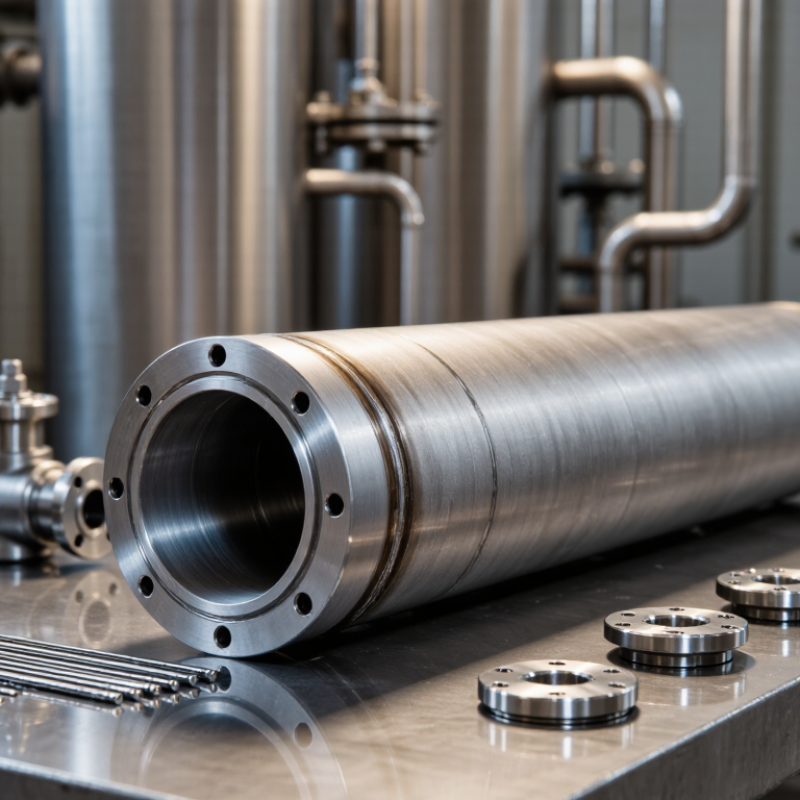
A welded tantalum tube is made by shaping flat tantalum sheet or strip into a cylinder and joining its edges, usually with a longitudinal weld. Unlike seamless tubing, it has a visible seam that must be controlled during production. The finished tube may be cut to length, inspected, and tested for leaks or weld defects. The seam matters. Its quality can affect pressure performance and reliability, so the tube should be specified for its intended dimensions and service conditions.
Tantalum is valued for its high melting point and resistance to corrosion in many chemical environments. Welded tubes can serve in heat exchangers, process equipment, and furnace components where other metals may deteriorate. A small tube carrying hot process fluid, for example, needs compatible end connections and a sound, clean weld. But tantalum is not resistant to every substance; certain acids and hot alkaline solutions can attack it. Temperature, concentration, and impurities matter. It is easy to treat “corrosion-resistant” as a guarantee, when material selection still requires careful review.
What Is a Welded Tantalum Tube Used For?
Which Properties Make Tantalum Tubes Useful?
Tantalum tubes are used in chemical processing equipment, including heat exchangers, condensers, and process lines. They can handle many corrosive environments that quickly damage common metals. Tantalum also has a very high melting point, about 3,017°C, and remains stable at elevated temperatures. Its protective oxide layer helps resist corrosion in suitable chemical conditions. These qualities make it useful when equipment must stay reliable through repeated exposure to heat and aggressive fluids.
Tantalum is also ductile, so it can be formed into thin-walled tubing. A welded tube is made from formed sheet or strip, leaving a seam that needs careful attention. Weld quality, wall thickness, and the service fluid all affect performance. Not invincible. Hydrofluoric acid and certain hot, concentrated chemicals can attack tantalum, so compatibility should be checked rather than assumed. The metal is dense and relatively costly, which may also influence material choice.
Tips: Ask for weld inspection records and confirm the tube’s chemistry compatibility, operating temperature, and pressure limits. A small test coupon can reveal problems that a specification sheet may not. Don’t skip that step.
Approximate melting points of selected metals (°C)
Why it matters: Tantalum’s very high melting point and strong resistance to many corrosive chemicals make welded tantalum tubes useful in chemical-processing equipment, heat exchangers, and high-temperature or vacuum systems. Melting point is not the same as a safe continuous-use temperature. Tantalum is attacked by hydrofluoric acid and some hot, concentrated alkaline solutions, so compatibility should be checked for each application.
Welded tantalum tubes are used in demanding chemical equipment, where corrosion resistance matters. Their quality begins with clean, carefully handled tantalum sheet. Clean metal matters. Surface oil, dust, or embedded particles can compromise the weld.
Manufacturers cut sheet to size, prepare the edges, then roll it into a cylinder. The edges are aligned and joined, commonly using gas tungsten arc or laser welding. Tantalum reacts readily with oxygen at high temperatures, so shielding gas must protect the weld and nearby hot metal.
Operators may use argon on both sides of the seam. This part is exacting, and a small shielding failure can leave a brittle, discolored area. The tube is then sized and inspected for dimensions, surface defects, and weld integrity.
ASTM B521 covers requirements for tantalum and tantalum-alloy seamless and welded tubes. It provides a useful specification reference, though a standard cannot replace sound process control.
The U.S. Geological Survey’s Mineral Commodity Summaries 2025 estimated global tantalum mine production at 2,300 metric tons in 2024. That figure describes mined supply, not finished tube output.
Manufacturers therefore need traceable material records, alongside testing suited to the tube’s intended service. A polished seam can look convincing. Inspection still matters.
Welded tantalum tubes are used where process fluids attack ordinary metals. In chemical plants, they can form heat-exchanger tubes, reactor linings, and instrument-protection sleeves. These parts handle demanding acid service, but tantalum is not universally resistant: hydrofluoric acid and hot, concentrated alkalis require special caution. A weld’s quality matters as much as the base metal. Poor shielding or contamination can weaken corrosion performance.
The USGS Mineral Commodity Summaries estimates tantalum use across broad categories, including about 5% for chemicals and 10% for mill products. Those figures do not identify welded tubes separately, so they show the material’s niche rather than tube-market size. In practice, welded tubing is selected for localized, high-value duties, such as carrying corrosive liquid through a compact exchanger with visible seams and tight bend radii. It is costly. And not every acid line needs it. Engineers should check the fluid’s temperature, concentration, and impurities, then qualify the weld and inspect it before service; overlooking one variable can undo the material’s advantage.
A welded tantalum tube is used to carry fluids in equipment exposed to corrosive chemicals or high temperatures. Its resistance to many aggressive environments makes it useful in chemical processing, heat exchangers, and laboratory systems. The welded seam can reduce material cost compared with a seamless tube, but it also deserves careful attention. Details matter.
Selection starts with the actual service conditions. Identify the chemicals, their concentration, operating temperature, pressure, and any cleaning cycles. Compatibility can change with concentration or heat, so general corrosion charts are only a starting point. Not every case is simple. Specify the tube’s inner and outer diameter, wall thickness, length, and dimensional tolerances. A thin wall may save weight, yet leave less margin for handling or pressure.
Ask how the longitudinal weld is made and inspected, and whether the finished tube receives suitable leak or nondestructive testing. Surface finish and material purity may matter when contamination is a concern. Also check how ends will be joined to the wider system; a compatible tube can still fail at a poorly designed connection. The lowest purchase price is not always the practical choice. Compare fabrication quality, inspection records, and expected service life against the cost of replacement and downtime.
| Category | Typical Use or Consideration | Why It Matters | Selection Guidance |
|---|---|---|---|
| Corrosion-resistant process equipment | Linings, transfer lines, and components in chemical-processing equipment exposed to highly corrosive media. | Tantalum resists corrosion in many environments, including many mineral acids, but its compatibility depends on the specific chemistry and operating conditions. | Check the full process composition, concentration, temperature, and contaminants against qualified corrosion data. Fluoride-containing media, including hydrofluoric acid, can attack tantalum. |
| Heat exchangers and condensers | Tube-side or process-side components where corrosion resistance is needed alongside heat transfer. | Tantalum’s corrosion resistance can help protect equipment surfaces, while tube dimensions and wall thickness affect heat transfer and mechanical performance. | Evaluate fluid compatibility, design temperature, pressure, flow conditions, tube dimensions, and joining details as a complete design. |
| Semiconductor and high-purity equipment | Selected fluid-handling or process-system components where contamination control and chemical compatibility are important. | Material purity, cleanliness, surface condition, and fabrication quality can affect contamination risk. | Specify required material grade or purity, cleaning method, surface finish, and inspection documentation; verify suitability for the actual process. |
| High-temperature equipment | Selected furnace or thermal-process assemblies, where the tube’s environment and construction are suitable. | Tantalum has a very high melting point (about 3,017°C), but useful service limits are lower and depend on atmosphere, stress, and component design. | Consider temperature profile, atmosphere, mechanical loading, oxidation risk, and any interaction with adjacent materials. Do not use melting point alone as a service-temperature limit. |
| Tube manufacturing route | Welded tube is made by forming tantalum sheet or strip into a tube and joining the longitudinal seam. | The seam and its surrounding heat-affected area are important parts of the finished tube and may influence integrity and performance. | Ask about seam-welding procedure, weld inspection, any required nondestructive examination, and applicable acceptance criteria. |
| Material grade and purity | Selection of commercially pure tantalum or another specified material condition for the intended service. | Composition, impurities, and material condition can affect corrosion behavior, strength, and fabrication response. | Define the required specification, grade, chemical analysis, and material certificates rather than relying on a generic “tantalum” description. |
| Dimensions and tolerances | Outside diameter, wall thickness, length, straightness, and dimensional tolerances. | These dimensions affect fit-up, flow area, pressure design, and compatibility with connected equipment. | Provide a dimensioned drawing and identify tolerances, end preparation, and any requirements for cutting or forming. |
| Pressure and mechanical design | Tube operation under internal or external pressure, vibration, thermal cycling, or mechanical loads. | Allowable performance depends on dimensions, material properties, weld quality, temperature, supports, and the applicable design rules. | Have the complete component assessed for the specified pressure, temperature, loads, and governing code. Do not infer a pressure rating from material alone. |
| Surface finish and cleanliness | As-fabricated, pickled, polished, or otherwise specified internal and external surfaces. | Surface condition can affect cleanability, fluid behavior, and suitability for high-purity service. | State the required finish and cleaning or packaging conditions, and confirm that the manufacturing process can achieve them. |
| Inspection and traceability | Verification of material identity, dimensions, seam integrity, and condition before installation. | Documented checks help confirm that the delivered tube meets the design and service requirements. | Specify required certificates, dimensional inspection, visual examination, and any weld or leak testing appropriate to the application. |
Copyright © 2025 The Toolroom Inc. All Rights Reserved.
Website Design St Louis by IQComputing