
Blog

What Are the Best Commercial Lifts in China?

Choosing the right Commercial Lifts in China means looking beyond a polished showroom and a fast ride. A lift must suit the building, its daily traffic, and the people who use it. A busy office tower has different needs from a neighborhood clinic, hotel, or shopping center. Even a few seconds of waiting can feel significant during the morning rush.

China offers a broad market, from domestic manufacturers to international brands with local operations. Comparing them requires more than a brand list. Buyers should examine passenger capacity, rated speed, door performance, energy use, accessibility, maintenance arrangements, and spare-parts support. Ask how the proposed system handles peak traffic, not only ordinary hours. Details matter. A quiet cabin is welcome, but reliable service matters more when a building depends on every lift.

Elevator historian Dr. Lee Gray’s research offers a useful perspective: “Judge a lift in the context of the building it serves.” This is a guiding paraphrase, not a verbatim quotation. The comparison that follows considers how lift types and suppliers fit different commercial projects, and what questions help separate useful specifications from sales language. No shortlist can fit every site. That is the honest limit. Local service quality, project design, and operating conditions can change the best choice, so readers should verify claims with qualified professionals and project-specific assessments.
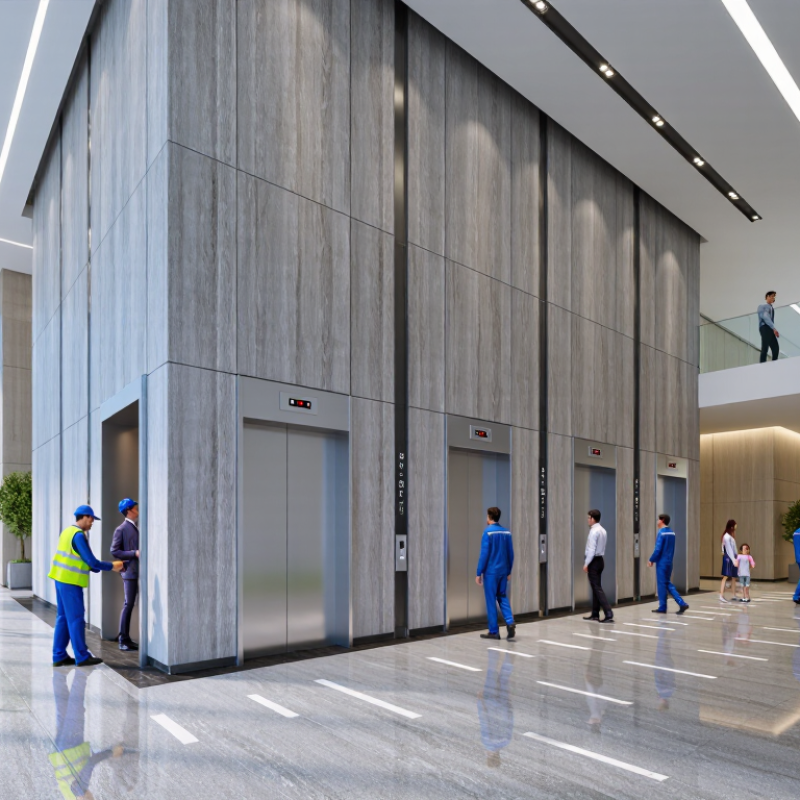
What Are the Best Commercial Lifts in China?

Types of Commercial Lifts Used in China

Commercial lift choices in China depend on traffic, building height, and the goods being moved. Passenger lifts serve offices, hotels, and shopping centres. Freight lifts handle pallets, catering supplies, and stockroom deliveries. Service lifts separate staff and deliveries from public traffic. Escalators and moving walks suit busy malls and transport buildings, where steady passenger flow matters more than direct floor-to-floor travel.

The State Administration for Market Regulation’s 2023 National Special Equipment Safety Status Bulletin counted 10.49 million elevators nationwide. This figure covers more than commercial buildings, but it highlights the scale of China’s installed base and the importance of maintenance planning. For a new project, compare expected peak traffic, lift capacity, door opening time, and service access. A freight lift that fits the load on paper may still feel cramped with a pallet trolley. Peak traffic matters. Small details matter.

Tips: Map delivery routes before choosing lift types. Check whether loading docks connect directly to freight lifts, and assess passenger demand by time of day. A traffic forecast can miss sudden event crowds, so leave room for operational review.

Leading Commercial Lift Manufacturers in China

For commercial projects, leading lift manufacturers in China are best judged by engineering depth, production control, and after-sales reach—not showroom size. The right supplier can match passenger flow, shaft dimensions, traffic peaks, and building use. China’s National Bureau of Statistics recorded about 1.55 million units of elevator, escalator, and moving-walkway production in 2023. This scale shows manufacturing capacity, but output alone does not prove reliability.

Compare manufacturers on documented quality systems, component traceability, load testing, energy performance, and spare-parts availability. Ask for references from buildings with similar traffic and duty cycles. A hotel lift serving luggage carts faces different demands from one in a low-rise office. Check response times and maintenance coverage in your city, not just national service claims. A polished brochure can mislead. It happens.

Tips: Request a sample maintenance schedule and a clear list of included components. Then compare warranty exclusions, delivery lead times, and commissioning support in writing. These details expose weak proposals early.

What Are the Best Commercial Lifts in China? - Leading Commercial Lift Manufacturers in China

Commercial Lift Type Typical Applications Indicative Rated Load Key Design Priorities Best Fit
Passenger lift Offices, hotels, shopping centers, and mixed-use buildings Commonly about 630–1,600 kg, depending on the building and car layout Passenger capacity, traffic handling, ride comfort, and energy use General public transport within commercial buildings
Freight lift Warehouses, factories, logistics facilities, and retail back-of-house areas Often 1,000 kg or more; heavy-duty configurations can be substantially higher Load rating, car and door dimensions, durability, and loading access Moving goods, equipment, and palletized loads between floors
Hospital lift Hospitals, clinics, and other healthcare buildings Selected to accommodate the required bed, stretcher, staff, and equipment configuration Car and door size, smooth travel, precise leveling, and operational reliability Buildings where patients and medical equipment need to travel together
Service lift Hotels, restaurants, offices, and commercial kitchens Varies with the intended load and car dimensions; typically smaller than a main freight lift Practical loading access, easy cleaning, and separation from public traffic Transporting supplies, meals, laundry, or equipment on service routes
Observation lift Hotels, malls, attractions, and buildings with prominent public spaces Set according to passenger demand and the chosen car design Visibility, architectural integration, passenger comfort, and safety Projects where the lift is also a visible architectural feature
Machine-room-less (MRL) lift Commercial buildings where dedicated machine-room space is limited Available in passenger and other configurations; capacity depends on the selected system Shaft layout, maintenance access, building height, and project requirements Projects seeking to avoid a separate machine room, where the design permits

Note: Load figures and configurations are indicative, not a ranking or a manufacturer-specific specification. The appropriate lift depends on building height, traffic demand, shaft dimensions, accessibility needs, applicable codes, and project design. Confirm final specifications with a qualified lift designer and the relevant local authorities.

How Commercial Lifts Compare in Safety, Capacity, and Efficiency

For commercial lifts in China, safety starts with verified design and disciplined maintenance. China’s 2023 special-equipment safety bulletin reported about 10.05 million elevators in service. That scale makes inspection records and fault response more than paperwork. Compare safety features against applicable requirements in EN 81-20, then check door protection, emergency communication, and maintenance access in the actual building. Small details matter. A crowded lobby can expose weak traffic planning before a lift itself shows a fault.

Capacity should match peak demand, not just the building’s floor count. A 1,000-kilogram rating roughly corresponds to 13 passengers at 75 kilograms each, but luggage and uneven loading change real performance. Observe queues during office arrival and lunch periods. One oversized car may carry more, yet several appropriately sized cars can reduce waits. That trade-off deserves a site-specific traffic study.

Efficiency comparisons should include standby consumption, travel patterns, and expected daily trips. ISO 25745-2 provides a method for calculating and classifying lift energy performance; rated motor power alone is not enough. Ask for measured or calculated data using consistent assumptions. A lift with efficient standby controls may help in a lightly used building, while frequent peak traffic shifts attention toward dispatch and drive performance. Estimates are imperfect. Building use changes, so the best comparison records its assumptions.

Key Factors for Choosing a Commercial Lift in China

Choosing a commercial lift in China starts with the building, not a catalogue. A hotel in Guangzhou may face sharp morning and evening peaks, while a small clinic needs space for stretchers and staff. Peak-hour traffic matters. Ask for a traffic study using occupancy, floor count, and expected waiting times; rated speed alone gives an incomplete picture.

Check the rated load, car dimensions, and door width against daily use. Measure the shaft and machine-room space before finalizing plans, since late changes can be costly. In humid coastal areas, consider ventilation and corrosion protection for exposed components. A busy retail building may also benefit from destination controls, but added features should solve a real flow problem. They are not automatically an upgrade.

Compare energy use, maintenance access, spare-part availability, and local service response. Request clear details on inspection routines and emergency support, then verify applicable requirements with a qualified local professional. A polished proposal can still overlook practical issues, such as a delivery cart that barely fits through the entrance. I would revisit the plan after observing actual passenger movement, because early estimates are sometimes wrong. Short site visits help.

Chinese Standards, Installation, and Maintenance Requirements for Commercial Lifts

What Are the Best Commercial Lifts in China?

For a commercial lift, “best” means suitable for the building, traffic, and local requirements. In China, project teams should check the applicable national standards and local rules before selecting equipment. GB/T 7588.1 and GB/T 7588.2 address lift safety during design, construction, and installation; confirm the current editions with qualified professionals. Details matter. Confirm rated load, speed, door width, and expected daily trips. A lift serving a busy hotel has different demands from one moving goods through a low-rise warehouse.

Installation begins with accurate site checks. Measure the shaft, pit, and overhead clearance, then coordinate power supply, structural openings, and fire-safety interfaces. Keep drawings and approved changes on site. A neat drawing is not a perfect site; dimensions can shift after finishing work, and that small mismatch may delay installation. Use qualified contractors and follow required inspection and acceptance procedures before putting the lift into service.

Maintenance should be planned, recorded, and matched to actual use. Check doors, brakes, levelling, alarms, and emergency communication at scheduled intervals. Keep service logs, repair records, and clear instructions for building staff. Do not wait for repeated door faults. They can signal a developing issue, though not every fault has the same cause. Review the maintenance plan when passenger volume or operating hours change. That is practical, and sometimes overlooked.

Copyright © 2025 The Toolroom Inc. All Rights Reserved.
Website Design St Louis by IQComputing