What Is a 51.2V 160Ah LFP Battery?
A 51.2V 160Ah LFP battery combines a nominal voltage of 51.2 volts with a capacity of 160 amp-hours. LFP means lithium iron phosphate, a battery chemistry valued for stable operation and long cycle life when used within its specified limits. Multiplying voltage by capacity gives approximately 8.19 kilowatt-hours of nominal energy. That figure is useful for comparing products, but it does not guarantee the same usable energy in every installation.
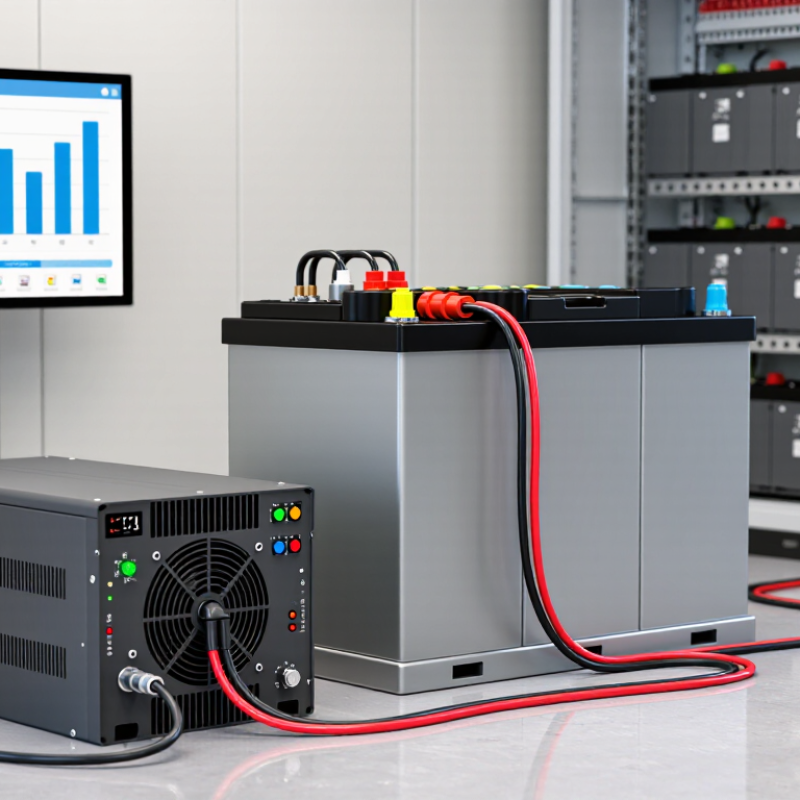
In practical terms, this battery may power an inverter, backup system, or off-grid setup. Imagine a battery cabinet beside an inverter, with cables sized for the system and a monitoring screen showing charge levels. The actual runtime depends on the load, inverter efficiency, temperature, and battery-management settings. Check the manufacturer’s datasheet for continuous discharge current, operating temperature, cycle-life test conditions, and compatibility requirements. These details matter. The label alone is not the whole story.
This guide explains what 51.2 V 160ah Lfp Batteries are, how their voltage and capacity relate to energy, and what to examine before choosing one. It also distinguishes nominal specifications from real-world performance. Product ratings can look precise, yet test methods and usable-capacity limits may differ. That is worth questioning. A careful comparison should use documented specifications rather than assumptions based on voltage and amp-hours alone.
Definition and Meaning of a 51.2V 160Ah LFP Battery
What Is a 51.2V 160Ah LFP Battery?
Definition and Meaning of a 51.2V 160Ah LFP Battery
A 51.2V 160Ah LFP battery is a rechargeable lithium iron phosphate battery rated at 51.2 volts and 160 ampere-hours. In common designs, 16 cells with a nominal voltage of 3.2 volts each are connected in series. Multiply voltage by capacity, and the result is 8,192 watt-hours, or about 8.19 kilowatt-hours of nominal energy. For a practical comparison, a 1,000-watt load would draw roughly 20 amps at nominal voltage, before conversion losses. Actual runtime varies. The full capacity may not be available in use.
LFP describes the battery’s cathode chemistry. It is valued for thermal stability and long cycle life, though performance still depends on cell quality, temperature, charge limits, and battery management. The International Energy Agency’s Global EV Outlook 2024 reported that LFP accounted for about 40% of the global electric-car battery market in 2023. That figure shows the chemistry’s growing importance, but it does not predict the performance of one battery pack. The label is helpful, but incomplete. Check usable energy, continuous current limits, and operating-temperature specifications before comparing systems.
What Is a 51.2V 160Ah LFP Battery? - Definition and Meaning of a 51.2V 160Ah LFP Battery
| Specification | Value | Definition and meaning |
| Battery chemistry | Lithium iron phosphate (LFP or LiFePO₄) | A lithium-ion battery chemistry that uses lithium iron phosphate as its cathode material. |
| Nominal voltage | 51.2 V | The rated voltage of the battery pack. It is nominal, not a constant voltage during charging and discharging. |
| Capacity | 160 Ah | The stated electric charge capacity. Actual usable capacity depends on the battery design, operating conditions, and battery management settings. |
| Nominal energy | 8,192 Wh (8.192 kWh) | Calculated as 51.2 V × 160 Ah. This is the rated nominal energy, not necessarily the energy available to a load. |
| Typical cell arrangement | 16 cells in series (16S) | A common configuration using 16 LFP cells with a nominal voltage of about 3.2 V each: 16 × 3.2 V = 51.2 V. |
| Typical cell voltage range | About 2.5–3.65 V per cell | These are commonly cited LFP cell limits, but the permitted range depends on the cell and battery manufacturer. The battery’s BMS helps manage operating limits. |
| Example pack charge voltage | Up to 58.4 V for a 16S pack | Calculated as 16 × 3.65 V per cell. This is a common maximum cell-based value, not a universal charging instruction; use the battery’s specified settings. |
| Power capability | Depends on the rated current | Voltage and amp-hour capacity alone do not determine maximum output power. The cell, BMS, cables, and inverter or load ratings also matter. |
| Common applications | Energy storage, backup power, and off-grid systems | Suitability depends on the battery’s current limits, operating temperature range, installation requirements, and compatibility with connected equipment. |
Note: Figures described as typical are general reference values. Always follow the battery’s own datasheet and operating instructions for charging, discharging, and installation.
Key Electrical Specifications and Energy Capacity
What Is a 51.2V 160Ah LFP Battery?
Key Electrical Specifications and Energy Capacity
A 51.2V 160Ah LFP battery has a nominal voltage of 51.2 volts and a rated capacity of 160 amp-hours. Multiplying these figures gives 8,192 watt-hours, or about 8.2 kilowatt-hours of nominal energy. That is a useful baseline. It does not mean every device can draw the full capacity. The battery management system, operating temperature, discharge rate, and inverter losses all affect the energy available at the socket.
For a rough comparison, a steady 1,000-watt load could use the nominal energy in a little over eight hours. In practice, runtime is usually shorter because conversion losses and reserve limits reduce usable energy. Real use varies.
The 160Ah figure describes charge capacity, not a guaranteed continuous current rating; check the battery’s specified charge and discharge limits before sizing equipment. Voltage also changes during charging and discharging, so a single voltage reading cannot show the remaining energy precisely. The simple multiplication is useful, but it can be a little misleading. For an installation, compare the battery’s stated usable capacity and operating limits with the actual load profile, not just its headline figures.
Cell Chemistry and Battery Pack Construction
A 51.2V 160Ah LFP battery commonly uses sixteen lithium iron phosphate cells connected in series. Each cell has a nominal voltage near 3.2V, producing a pack voltage of about 51.2V. The 160Ah rating describes the charge capacity, not the voltage. Multiply those nominal figures, and the pack stores roughly 8.2kWh of energy. Actual usable energy depends on operating limits, temperature, and the battery’s control settings.
Cell chemistry is only part of the story. LFP cells use an iron-phosphate cathode, valued for thermal stability and long cycle life under suitable conditions. A battery pack also needs busbars, insulated connections, a protective enclosure, and a battery management system. The BMS checks cell voltages and temperatures, then limits charging or discharging when readings fall outside configured ranges. Small differences between cells matter. They can grow over time.
Inside the enclosure, cells may be arranged in a rigid frame to reduce movement and protect electrical connections. The exact layout varies by design; sixteen cells in series is common, not a universal rule. Vent paths and temperature sensors also influence real-world performance. A neat wiring diagram hides awkward details, like cable bends and uneven heat. Those details deserve attention, even when the specification sheet looks reassuring.
What Is a 51.2V 160Ah LFP Battery?
A typical 51.2V LFP pack uses 16 cells connected in series. At a nominal 3.2V per cell, the series voltage totals 51.2V. With a capacity of 160Ah, its nominal energy is approximately 8.192kWh (51.2V × 160Ah). Actual voltage varies with charge level, load, and operating conditions.
Charging, Discharging, and Battery Management
What Is a 51.2V 160Ah LFP Battery?
Charging, Discharging, and Battery Management
A 51.2V 160Ah lithium iron phosphate battery stores about 8.2 kWh at its nominal voltage. Actual usable energy depends on the battery’s limits and system settings. For charging, use a charger configured for the battery’s specified voltage and current. Avoid relying on voltage alone; check the battery documentation. Charging in very cold conditions can damage cells, so confirm the allowed temperature range before connecting a charger. Small details matter.
Tips: Set the inverter’s low-voltage cutoff to match the battery guidance. Leave some reserve for unexpected loads, such as a pump starting or a heater cycling on. A display reading is useful, but it is not a perfect measure of remaining energy.
During discharge, the battery management system (BMS) monitors cell voltage, temperature, and current. It may reduce output or disconnect the battery if readings pass safe limits. That protection is valuable, but repeated cutoffs can indicate incorrect settings, excessive loads, or poor connections. Check cable tightness and watch for unusual warmth near terminals. Cold changes things. I would not treat one smooth operating day as proof that settings are ideal; review performance across different loads and temperatures, and adjust only within the manufacturer’s specifications.
Common Applications and System Compatibility
A 51.2V 160Ah lithium iron phosphate (LFP) battery stores about 8.2 kWh at nominal voltage. It can support off-grid solar systems, household backup, telecom cabinets, and some mobile power setups. These uses need steady energy and careful charge control. The International Energy Agency reported that global battery storage additions reached 42 GW in 2023, more than 130% above 2022. That growth reflects rising demand for storage, but it does not mean every battery fits every system.
Compatibility starts with the inverter’s voltage range. A 51.2V battery is often used in 48V-class systems, yet the charger must follow the battery’s specified LFP charging limits. Check continuous and peak current, low-voltage cutoff, and the battery management system’s communication protocol, such as CAN or RS-485. Confirm that the inverter can read battery status or operate safely without communications. For parallel installations, verify that the battery supports the proposed number of units and connection method. Small mismatches matter.
Tips: Check the manuals together. Match charge voltage and current. Leave room for cables, ventilation, and service access. Real installations can be less tidy than a wiring diagram suggests; temperature, aging, and loads can change available capacity.