China Top Titanium Parts Manufacturers and Suppliers
China has become a major sourcing destination for precision Titanium Parts, serving aerospace, medical, chemical, marine, and industrial equipment manufacturers. This article introduces leading Chinese manufacturers and suppliers, while examining the capabilities behind their reputations. Product quality cannot be judged by photographs alone. It depends on alloy control, machining accuracy, heat treatment, surface finishing, and dependable documentation.
Materials author Matthew J. Donachie Jr. offers a useful principle: “Titanium alloy selection must begin with the service environment, not with price.” That warning remains practical. A supplier may offer attractive quotations, yet overlook fatigue strength, corrosion exposure, dimensional tolerance, or repeated sterilization. Serious buyers should review certifications, mill test reports, inspection records, and traceability from raw material to shipment. ISO 9001 can support consistency, while AS9100 may matter for aerospace projects. ASTM and customer-specific requirements still need careful confirmation.
Look closely at the details. A machined implant component should have clean edges, controlled roughness, and documented biocompatibility requirements. An aerospace bracket may require five-axis machining, CMM inspection, and stable batch control. Delivery performance matters too. So does communication when a drawing changes unexpectedly.
“Top” is not universal.
The strongest supplier for one project may be unsuitable for another. Some manufacturers excel at prototypes, while others handle repeat production better. This overview therefore compares technical experience, equipment, quality systems, customization, pricing transparency, and after-sales support. It also recognizes an uncomfortable truth: even reputable suppliers can make mistakes. Careful verification remains necessary.
What Are Titanium Parts and Why China Is a Major Supply Base
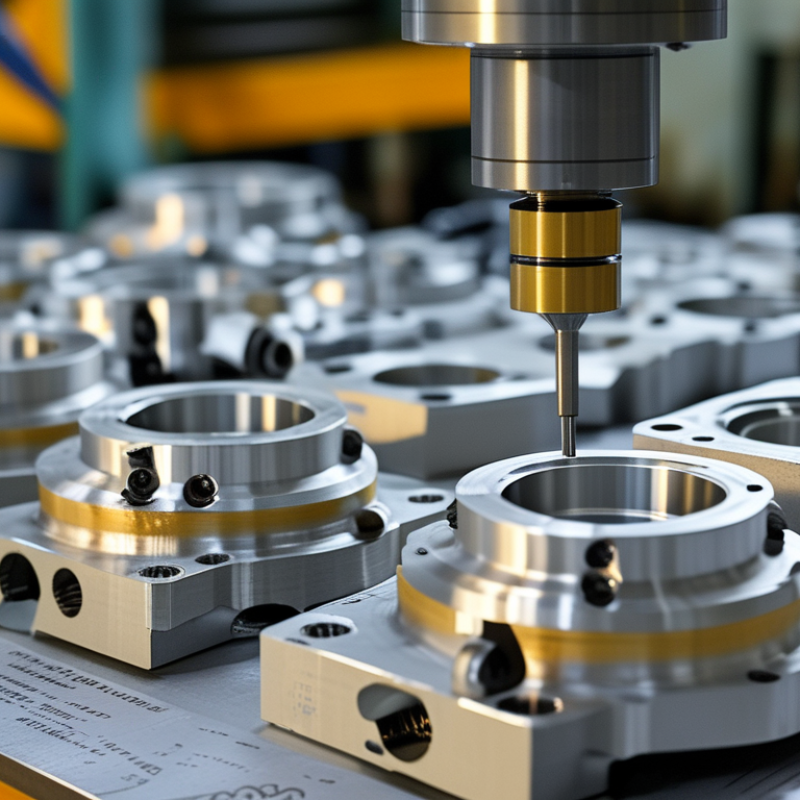
Titanium parts are components made from titanium alloys for demanding industrial applications. They combine low weight with high strength, corrosion resistance, and reliable performance at elevated temperatures. Common examples include brackets, shafts, fasteners, housings, blades, and custom medical components. Their value appears in details: a machined aerospace bracket may weigh less than steel, while resisting repeated stress and moisture.
China has become a major supply base because its manufacturing network covers melting, forging, casting, machining, surface treatment, inspection, and packaging. This connected structure can shorten production schedules and support both prototypes and large orders. Experienced factories use CNC machining, precision forging, wire cutting, and additive manufacturing for different geometries. They also work with widely recognized titanium grades, such as commercially pure titanium and titanium alloy grades for higher strength.
Quality depends on more than equipment. Buyers should review material certificates, heat-treatment records, dimensional reports, and traceability from raw stock to shipment. On-site audits can reveal practical details, including measuring-room conditions and operator training. Communication matters too. A clear drawing with tolerances prevents expensive rework. Still, no supply chain is flawless. Some quotations look attractive but exclude testing, tooling, or finishing costs. That mistake can change the real price. Careful suppliers explain limitations instead of promising everything. Independent inspection may add time, yet it offers useful confidence for safety-critical parts. Reliable sourcing in China requires technical judgment, documented controls, and a willingness to question convenient answers.
China Top Titanium Parts Manufacturers and Suppliers — What Are Titanium Parts and Why China Is a Major Supply Base
Titanium parts are precision components manufactured from commercially pure titanium or titanium alloys for aerospace, medical, chemical-processing, marine, and automotive applications. The chart compares the minimum tensile strength values of widely used titanium grades based on commonly specified ASTM material requirements.
Higher tensile strength supports lighter and more highly loaded components, while commercially pure grades are often selected for corrosion resistance, formability, and service environments. China is a major supply base because its manufacturing ecosystem supports titanium melting, forging, machining, additive manufacturing, surface treatment, and export-oriented production.
Common Types of Titanium Parts Made by Chinese Suppliers
Chinese titanium suppliers commonly produce CNC-machined brackets, flanges, shafts, housings, fasteners, and pipe fittings. Aerospace orders often require lightweight brackets with tight positional tolerances. Chemical-processing projects favor Grade 2 valves, elbows, and heat-exchanger components because titanium resists many corrosive environments. Grade 5 parts remain popular for high-strength applications, including medical instruments, bicycle components, and industrial fixtures. Small parts matter too.
The 2024 USGS Mineral Commodity Summaries reported global ilmenite and rutile mine production of roughly 9 million metric tons in 2023. This large raw-material base supports China’s broad titanium processing network, from forging and casting to five-axis machining. A 2024 market analysis by Grand View Research estimated the global titanium market at more than 27 billion US dollars in 2023, with continued growth driven by aerospace and medical demand. Material traceability still needs attention. A supplier may list Grade 5, while the drawing omits heat-treatment condition or surface requirements. That creates avoidable risk. Practical buyers should request mill certificates, chemical analysis, dimensional inspection records, and evidence of ultrasonic or dye-penetrant testing when appropriate. Surface finish can also change performance. Threads, thin walls, and deep pockets deserve special review because titanium generates heat during machining. Not every low-cost quote is a bargain. Supplier capability, inspection depth, and process control often matter more than unit price.
Titanium Grades, Materials, and Manufacturing Processes
China Top Titanium Parts Manufacturers and Suppliers
Titanium grade selection controls strength, corrosion resistance, machining cost, and service life. Grade 2 offers excellent corrosion resistance and practical formability for chemical equipment. Grade 5, or Ti-6Al-4V, delivers high strength with relatively low density. It remains widely used in aerospace and demanding mechanical parts. Grade 23 reduces oxygen and iron content, supporting critical medical applications. The USGS Mineral Commodity Summaries 2024 reported global titanium sponge production above 200,000 metric tons in 2023. That scale reflects strong demand, but it does not make every supplier equally reliable. A perfect grade choice rarely exists.
Manufacturing route matters just as much. Vacuum melting improves chemical consistency, while forging refines structure and supports fatigue performance. Five-axis CNC machining produces accurate holes, threads, and thin walls, but titanium generates heat quickly. Additive manufacturing can reduce material waste for complex geometries. However, surface defects and internal porosity still require careful inspection. ASTM B348 and ASTM B381 provide useful requirements for titanium bars and forgings. Reputable manufacturers should also provide heat numbers, chemical analysis, mechanical test results, and dimensional reports. I would not accept “aerospace quality” without traceable evidence.
Tips: Match the grade to the actual environment, not only the tensile-strength table. Ask for oxygen content, ultrasonic inspection, and process records. Check whether the supplier understands tool wear and heat control. Small process gaps can become expensive failures. Consider prototype testing before volume production. Specification reviews sometimes reveal an overlooked issue.
Quality Standards and Certifications for Chinese Titanium Parts
China’s titanium parts manufacturers and suppliers serve aerospace, medical, marine, and chemical industries. Quality begins with material control, not machining alone. ASTM B348 covers titanium bars and billets, while ASTM B381 covers titanium forgings. These standards define chemistry, tensile strength, elongation, and dimensional requirements.
ISO 9001 certification shows that a supplier operates a documented quality system. The ISO Survey 2022 recorded 1,265,216 ISO 9001 certificates worldwide, highlighting its broad acceptance. Aerospace buyers may also request AS9100 certification, process audits, and full traceability. Reliable suppliers should provide mill certificates, heat-lot records, inspection reports, and calibrated equipment evidence. Non-destructive testing, including ultrasonic inspection, can reveal internal flaws before shipment. Still, certification is not proof of perfect production. A weak inspection plan can hide practical risks.
Tips: Request a sample inspection package before placing a large order. Check titanium grade, heat number, test method, and acceptance limits. Ask whether critical dimensions receive independent verification. Review recent corrective-action records, too. They often reveal more than a certificate. One detail is easy to miss: packaging. Titanium parts need clean, dry protection, especially after surface treatment. Supplier claims should be measured against drawings, applicable ASTM requirements, and contract-specific criteria. The review may feel slow. It prevents expensive rework later.