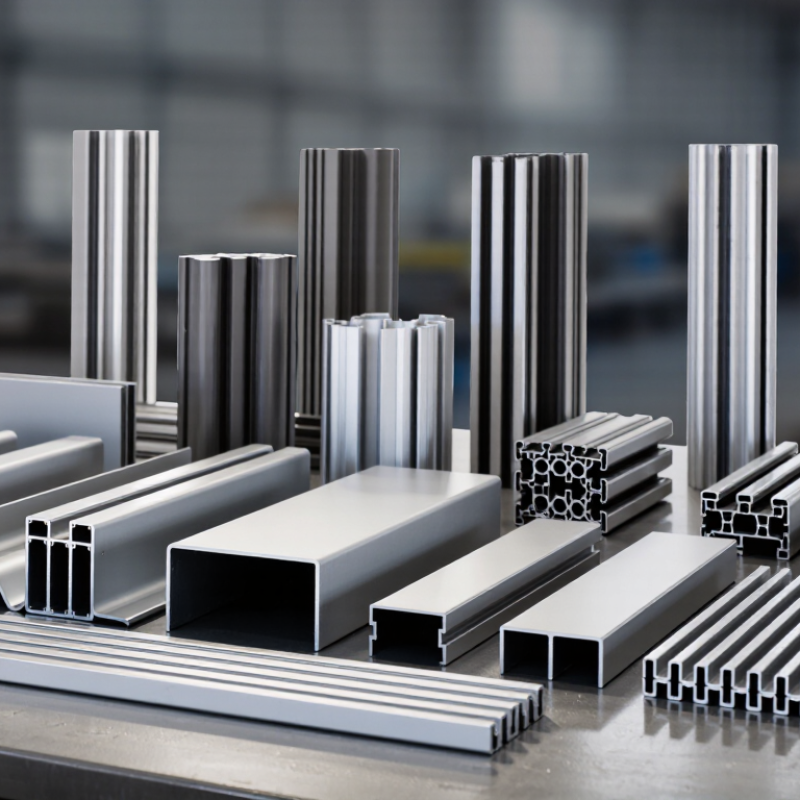
| Architectural window and door profiles | 6063-T5 or 6063-T6; 6060 tempers are also used in some markets | Window frames, door frames, curtain-wall components, trim | Surface finish, corrosion resistance, dimensional accuracy, and the ability to extrude detailed shapes | Visible finish requirements, wall thickness, thermal-break design, exposure conditions, and building-system loads | 6063 is widely used for architectural extrusions and is well suited to anodizing. Structural capacity still depends on the profile design and temper. |
| Modular framing and T-slot profiles | Commonly 6063-T5 or 6063-T6; alloy and temper vary by system and duty | Machine frames, workstations, guards, fixtures, and modular enclosures | Slot geometry, straightness, connection strength, machinability, and repeatable assembly | Frame span, applied loads, connector design, vibration, required adjustability, and compatibility with fittings | Check the profile’s load data and connection details rather than judging strength from the alloy designation alone. |
| Heat-sink and thermal-management profiles | Often 6063-T5/T6 or 6061-T6, depending on geometry and mechanical requirements | Electronic enclosures, LED housings, power equipment, and cooling assemblies | Thermal conductivity, fin spacing, surface area, airflow, and contact-surface flatness | Heat load, available space, natural or forced airflow, machining needs, and attachment method | Fin geometry and the complete thermal path are as important as alloy choice; verify performance in the intended operating conditions. |
| Structural and load-bearing profiles | 6061-T6 or 6082-T6 are common options; selection depends on local standards and supply | Frames, supports, platforms, brackets, and structural assemblies | Yield strength, stiffness, buckling resistance, fatigue loading, and connection performance | Design loads, span, wall thickness, fastening or welding method, safety factors, and applicable design codes | 6061-T6 and 6082-T6 are heat-treatable structural alloys. A qualified design check is needed for load-bearing use. |
| Transport and rail profiles | 6005A-T6 and 6082-T6 are used in suitable structural applications; other alloys may be specified | Vehicle structures, rail components, flooring, frames, and equipment supports | Strength-to-weight performance, fatigue resistance, weld-joint properties, and corrosion protection | Service loads, impact and vibration, joining process, inspection requirements, and operating environment | Properties can differ between the parent material and heat-affected zones after welding. Use design data applicable to the chosen joining process. |
| Solar mounting and support profiles | Common choices include 6005A-T6 and 6063-T6; the required alloy varies with the design | Module rails, brackets, support channels, and related mounting components | Wind and snow loading, stiffness, corrosion resistance, drainage, and fastening strength | Site-specific loads, rail span, roof or ground attachment, exposure, galvanic compatibility, and service life | Choose from project-specific structural calculations and environmental conditions; a profile’s general use does not establish its capacity for a particular installation. |
| Custom thin-wall or complex-shape profiles | Often 6063 or 6060 for intricate shapes; alloy choice depends on strength and finish requirements | Enclosures, channels, decorative sections, equipment housings, and bespoke components | Extrudability, wall-thickness consistency, dimensional tolerances, die feasibility, and finishing quality | Cross-section complexity, minimum wall thickness, production volume, tolerance needs, and finishing process | Very thin walls, narrow slots, and uneven material distribution can increase extrusion difficulty. Review the cross-section with an extrusion specialist before tooling. |
| Decorative and anodized profiles | Commonly 6063-T5/T6 or 6060 tempers, with the finish specified for the application | Interior trim, display systems, furniture components, and architectural details | Surface uniformity, color consistency, corrosion resistance, and visible defect control | Anodized or painted finish, appearance class, exposure, alloy consistency, and handling requirements | Surface appearance depends on alloy, extrusion quality, pretreatment, and finishing controls; specify the required finish and acceptance criteria. |