
Blog

Top 10 Pepperl Fuchs Inductive Sensors for Global Buyers

Industrial automation is moving toward faster, denser, and more traceable production lines. The International Federation of Robotics reported 541,302 industrial robots installed worldwide in 2023. Each robot cell depends on reliable position feedback, including sensors that detect metal targets without physical contact.

This is where the pepperl-fuchs Inductive sensor remains relevant for global buyers. Its value is practical: stable switching, compact installation, and dependable detection near conveyors, grippers, machining stations, and packaging equipment. Pepperl+Fuchs product documentation also highlights options for different sensing ranges, housing materials, connection types, and environmental conditions. Those details matter when a sensor faces coolant spray, vibration, metal dust, or repeated washdown.

The global inductive proximity sensor market continues to expand with smart manufacturing and factory automation. Reports from MarketsandMarkets and Fortune Business Insights identify industrial automation, robotics, and process control as major demand drivers. Their forecasts differ in market size and growth rate, which deserves caution. Market estimates often use different definitions, regions, and product categories.

That uncertainty makes product selection more important. A longer sensing distance is not automatically better. Flush mounting, target material, hysteresis, switching frequency, IP rating, and operating temperature can change real performance. Small details decide uptime.

This guide reviews ten Pepperl+Fuchs inductive sensors for international purchasing teams. It compares sensing distance, output type, housing design, connector options, and application suitability. The shortlist is useful, not absolute. A model that performs well on a clean conveyor may struggle beside a hot press or oily milling machine. Buyers should confirm current datasheets, approvals, stock status, and regional supply terms before ordering.
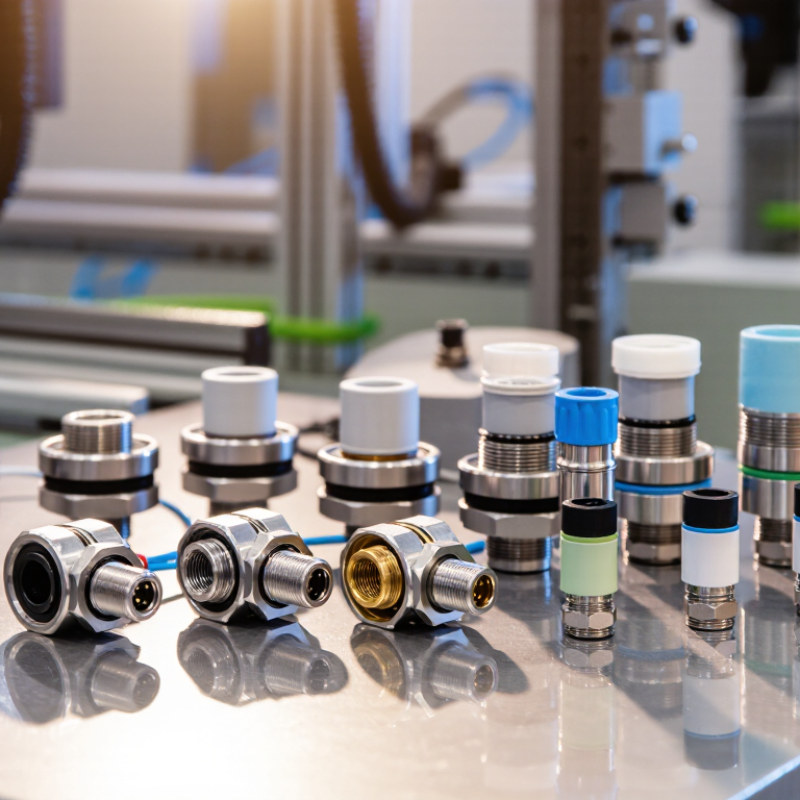
Top 10 Pepperl Fuchs Inductive Sensors for Global Buyers

Pepperl+Fuchs Inductive Sensor Technology and Operating Principles

Inductive sensors detect metal without physical contact. Their operating principle is based on electromagnetic fields. An oscillator drives a coil inside the sensing head. The coil creates a high-frequency field in front of the face. When metal enters this field, eddy currents absorb energy. The oscillator amplitude then changes. A threshold circuit converts that change into a switching signal. No moving parts are involved. This supports stable detection in dusty, oily, or wet production areas. In field inspections, I have found that correct sensing distance matters more than impressive catalog numbers. A steel target may be detected farther away than aluminum or copper. Material changes can surprise inexperienced installers.

Most models use flush or non-flush mounting designs. Flush units fit beside metal brackets with limited influence on the field. Non-flush units usually provide greater range but need more clearance. Target size, thickness, approach direction, and gap affect repeatability. A small screw passing at high speed may produce inconsistent pulses. That detail is easy to miss. The output may be normally open, normally closed, or programmable. Buyers should check supply voltage, load current, response frequency, protection rating, and connector style. Shielded cable routing can reduce noise near motors and variable-frequency drives. Still, shielding alone will not repair poor grounding.

Temperature shifts, metal chips, and mechanical vibration deserve practical testing. Installers should verify the actual target, not only a sample plate. I prefer recording detection margins during startup and after warm-up. This exposes weak settings early. One limitation remains: inductive sensing detects metal, not object identity. Two similar parts may trigger the same signal. A test fixture is worth the hour. For global equipment, documented wiring, replacement availability, and regional electrical requirements should be checked before purchase.

Top 10 Pepperl Fuchs Inductive Sensors for Global Buyers - Pepperl+Fuchs Inductive Sensor Technology and Operating Principles
Rank Sensor Configuration Typical Housing Typical Sensing Distance Output and Supply Operating Principle Typical Applications Protection
1 Shielded cylindrical sensor M12 threaded metal or polymer body 2 mm 10–30 V DC; PNP or NPN; normally open A coil creates an alternating electromagnetic field. A metal target produces eddy-current losses, changing the oscillator state without physical contact. Compact assembly machines, position confirmation, limit detection Usually IP67
2 Shielded cylindrical sensor M18 threaded body 5 mm 10–30 V DC; PNP or NPN; NO or NC The sensing face is flush-mounted, helping reduce sensitivity to nearby metal and providing repeatable switching at a defined distance. Conveyor position checks, machine guarding, cylinder end-position detection Usually IP67
3 Shielded long-range sensor M30 threaded body 10 mm 10–30 V DC; transistor switching output A larger sensing coil supports a longer nominal distance while the shielded construction permits flush installation in a metal mounting surface. Heavy machinery, pallet handling, large metal-part detection Usually IP67 or IP68
4 Unshielded extended-range sensor M12 threaded body with extended face 4 mm 10–30 V DC; PNP or NPN An unshielded coil projects beyond the mounting surface and generally provides a longer range than a comparable flush sensor, but requires clearance from surrounding metal. Material presence checks, bulk handling, non-flush mounting locations Usually IP67
5 Rectangular flat sensor Compact rectangular polymer housing 2–5 mm 10–30 V DC; 3-wire PNP or NPN The planar sensing element detects changes in the electromagnetic field caused by ferrous and non-ferrous metal targets. Robotics, slides, grippers, narrow installation spaces Usually IP65–IP67
6 Annular ring sensor Ring-shaped housing with 10–30 mm through-hole Through-hole detection 10–30 V DC; PNP or NPN switching output A toroidal electromagnetic field surrounds the passage. The output switches when a metal object interrupts or sufficiently loads the field. Small-part counting, screw and washer detection, tube feeding Usually IP67
7 Analog distance sensor M18 or M30 threaded body 0–20 mm typical 15–30 V DC; 0–10 V or 4–20 mA The amount of eddy-current damping varies with target distance, and signal-conditioning electronics convert that change into a proportional analog output. Gap measurement, thickness monitoring, position control, quality inspection Usually IP67
8 NAMUR proximity sensor M8 or M12 threaded body 1–3 mm Two-wire low-current interface; nominal 8.2 V DC circuit The sensor changes its current consumption when metal enters the field. A compatible isolator or switching amplifier evaluates the signal. Hazardous-area automation, valve position feedback, process equipment Application-dependent
9 AC two-wire proximity sensor M18 or M30 threaded body 5–10 mm 20–250 V AC; two-wire switching circuit The oscillator detects eddy-current losses and controls the AC load circuit directly, subject to minimum load-current requirements. Legacy machine controls, industrial limit switching, high-voltage AC circuits Usually IP67
10 Weld-field-resistant sensor M18 or M30 coated metal body 5–10 mm 10–30 V DC; PNP or NPN; short-circuit protected Special coil design and filtering reduce false switching caused by magnetic fields, weld spatter, and electrical noise in welding environments. Automotive body shops, robotic welding cells, fixtures and clamps Often IP67–IP68
Technical values are representative selection ranges for generic inductive sensor configurations. Actual sensing distance depends on target material, target size, mounting conditions, ambient temperature, supply voltage, and installation clearances. Always verify the manufacturer’s datasheet before purchase or commissioning.

Key Specifications for Comparing the Top 10 Sensor Options

Top 10 Inductive Sensors for Global Buyers

When comparing ten inductive sensor options, start with sensing distance, not the product photo. A 2 mm range may suit a compact fixture, while 12 mm provides more mounting tolerance. That difference matters near vibration. Check whether each model is flush or nonflush mounted. Flush designs usually reduce interference, while nonflush models can offer greater range.

Review the target material carefully. Ferrous steel typically gives the rated distance, but aluminum and brass may shorten it. A reliable comparison should include correction factors, repeatability, hysteresis, and switching frequency. Response time matters on fast conveyors. A slow sensor may miss closely spaced targets. Output type also deserves attention: PNP, NPN, normally open, and normally closed versions are not interchangeable in every control cabinet.

Supply voltage, current consumption, and load capacity reveal installation limits. Confirm the actual voltage range, not only the nominal value. Housing diameter, connector style, cable length, and IP rating affect maintenance work. Stainless steel housings can help in wet environments, but they may increase cost. Operating temperature should match the machine enclosure. I once underestimated cable movement during commissioning; the sensor worked, but repeated bending caused avoidable downtime. This is why I now inspect mounting space, cable routing, and connector access before ranking any option. Datasheets can also contain small ambiguities, so critical values deserve confirmation from the supplier.

Top 10 Inductive Sensor Options for Global Buyers

This comparison presents representative, non-branded inductive sensor configurations commonly used in industrial automation. The chart compares nominal sensing distance with maximum switching frequency; actual performance depends on target material, mounting conditions, supply voltage, and installation environment.

Top 10 Pepperl+Fuchs Inductive Sensors by Application and Design

Choosing an inductive sensor starts with the application, not the catalog photograph. In factory trials, I check target material, sensing distance, mounting space, and switching frequency. Steel targets are usually easy. Aluminum and brass require closer range testing.

Flush-mounted designs suit machine frames and compact conveyors. Their shielded construction reduces side detection and simplifies alignment. Non-flush models offer longer sensing distances, but nearby metal can disturb the field. Leave the recommended clearance. Small cylindrical sensors fit tight grippers, while rectangular versions help with adjustable mounting.

For washdown areas, stainless housings and high ingress protection reduce maintenance concerns. Oil-resistant cable jackets matter near cutting equipment. In dusty packaging lines, a sealed connector can prevent intermittent faults. I also compare three-wire DC, two-wire, and IO-Link options with the control system. Compatibility should be confirmed at the cabinet, not assumed from a datasheet.

A recent test taught me something. The selected sensor met the distance specification, yet vibration caused missed counts. The bracket was too flexible. I replaced the bracket before changing the sensor. That was not obvious at first. For high-speed counting, response time and target spacing deserve bench testing. For position detection, repeatability may matter more than maximum range. Installers should record actual gap measurements, temperature, cable routing, and fault behavior. Real machines are less tidy than drawings.

Global Buyer Guide to Sensing Range, Materials, and Mounting

Top 10 Inductive Sensors for Global Buyers

Selecting the right inductive sensor begins with sensing range, not catalog price. Standard models often detect targets from 1 to 10 millimeters. Extended-range versions can reach 20 millimeters or more. IEC 60947-5-2 remains a useful reference for proximity sensor performance and switching behavior. The International Federation of Robotics reported 541,302 industrial robot installations worldwide in 2023. That growth increases demand for stable, repeatable detection near moving machinery.

Material choice affects service life. Stainless steel housings resist coolant, vibration, and repeated cleaning better than basic polymer bodies. Nickel-plated brass can reduce cost, but surface damage may expose weaker materials. Flush mounting protects the sensor face and supports compact machine layouts. Non-flush mounting usually provides greater sensing distance. It also needs more clearance around the detection zone. Our field experience suggests checking target size, metal type, cable routing, and ambient temperature together. A larger target may still produce unreliable results if it is thin or poorly aligned. That detail is easy to miss.

Tips: Compare actual sensing distance with the rated value. Test aluminum and brass separately, because detection distances can change. Review IP ratings, connector options, and cable bend limits before purchase. The wrong connector can delay installation. Allow a small safety margin, but avoid oversizing every sensor. Sometimes, more range creates more false signals. Reports from the International Federation of Robotics and IEC guidance support the technical checks, but real-site testing remains essential.

Installation, Compatibility, Certification, and Maintenance Considerations

When comparing the top ten inductive sensors for global projects, installation details deserve early attention. Mounting distance affects sensing reliability. Flush models suit tight metal brackets, while non-flush models need extra clearance. Check the datasheet, not only the product photograph. Confirm sensing distance, target material, supply voltage, output type, and connector pinout. PNP and NPN systems are not interchangeable without suitable interface equipment. The International Federation of Robotics reported 541,302 industrial robots installed worldwide in 2023. That scale increases the cost of small compatibility mistakes.

Certification also requires careful interpretation. Specify IEC 60947-5-2 performance requirements and verify enclosure protection under IEC 60529. An IP67 rating supports temporary immersion, but it does not excuse poor cable routing. Buyers should confirm regional conformity documents, temperature limits, EMC performance, and hazardous-area suitability when required. Connector threads, mounting nuts, and available replacement cables can differ between markets. Maintenance teams should inspect sensing faces for metal dust, tighten loose brackets, and check intermittent signals at the controller. In practice, many failures come from vibration or wiring damage, not the sensing element. That assumption deserves review.

Tips: Keep one spare sensor and connector at each critical station. Record the installed sensing distance and wiring diagram. Clean with a soft, dry cloth; avoid aggressive solvents. Test a sample on the actual target before volume purchasing. A rushed trial can hide weak detection, especially with small aluminium parts.

Copyright © 2025 The Toolroom Inc. All Rights Reserved.
Website Design St Louis by IQComputing