
Nylon Rope remains a practical choice for marine work, towing, outdoor equipment, and industrial handling. It is valued for strength, flexibility, and resistance to abrasion, though heat and prolonged ultraviolet exposure can affect performance. Small details matter. A rope’s construction, diameter, coating, and stated working load can change how it performs in real use.
The market context is broad, not nylon-specific. Grand View Research’s Global Ropes Market report valued the global ropes market at approximately USD 12.75 billion in 2023 and projected a 4.8% compound annual growth rate from 2024 to 2030. That figure covers rope types and applications beyond nylon, so it should not be read as a nylon-only estimate. China’s extensive manufacturing base makes it an important sourcing destination, but a factory’s scale alone does not establish product quality. This guide examines leading Chinese manufacturers through practical criteria: material specifications, construction options, testing and traceability, export experience, and responsiveness to custom requirements. A list can help. It cannot replace a sample test or a clear review of load ratings. Rankings also have limits; supplier capabilities change, and published information may be incomplete. Buyers should verify current specifications directly before placing an order.
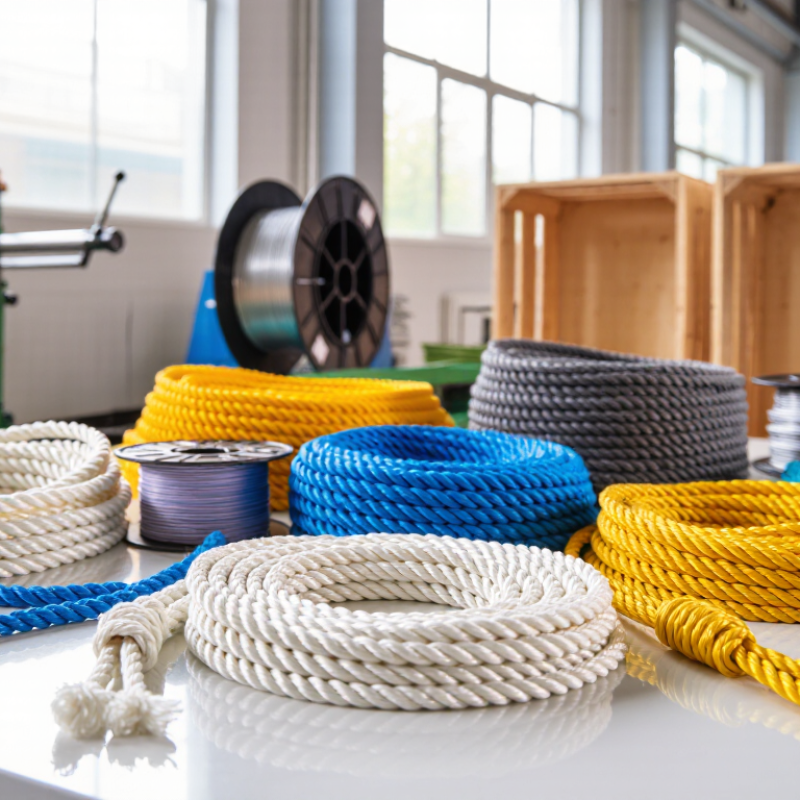
Nylon rope production in China covers several constructions, including three-strand twisted rope and braided rope with a round, compact profile. Many production lines begin with nylon filament yarn, which is twisted into strands or fed into braiding machines. Some factories make yarn from polymer chips; others buy prepared yarn. The difference can affect traceability and process control. Details matter.
After forming, rope may be heat-set to stabilize its shape and reduce unwanted untwisting. Finishing varies by product: some ropes receive a coating to improve abrasion resistance or handling, while others remain untreated. Manufacturers commonly inspect diameter, surface consistency, and tensile strength, with test methods depending on the intended use. For buyers, a clear specification should state construction, nominal diameter, breaking strength, and any test conditions. A single strength figure can be misleading if the testing method is unclear.
Production quality is not uniform across every facility. Yarn variation, machine settings, and finishing conditions can all influence the finished rope. Ask for samples and recent test records, then check whether the rope feels consistent along its length. A sample is useful, but it cannot prove that every production batch will match. That limitation deserves attention.
The table below summarizes common nylon rope constructions and manufacturing methods. Product specifications and processes vary by manufacturer and intended use.
| Rope product type | Typical construction | Common production methods | Typical applications | Key specification considerations |
|---|---|---|---|---|
| Three-strand twisted rope | Three strands are laid together; fibers are commonly nylon (polyamide) filament or staple yarn. | Nylon yarn is twisted into strands, then the strands are laid into rope. The finished rope may be heat-set to help stabilize its structure. | General marine, mooring, utility, and industrial applications. | Check diameter, construction, breaking force, elongation, and whether the rope is intended for wet or outdoor service. |
| Eight-strand plaited rope | Eight strands are interlaced, often arranged as four pairs with opposing lay directions. | Yarns are twisted into strands and fed through a braiding or plaiting process. The construction is designed to reduce the tendency to kink compared with laid rope. | Mooring, towing, and other marine or industrial uses where handling and flexibility matter. | Compare rope diameter, mass per length, breaking force, splice compatibility, and the manufacturer’s test documentation. |
| Twelve-strand single braid | A hollow, braided construction made from twelve strands; it may use high-tenacity nylon yarn. | Strands are braided around a forming point, with braid balance and strand tension controlled during production. Some designs can be spliced without stitching. | Marine, utility, and industrial applications requiring a flexible rope that can be handled or spliced for the intended design. | Confirm the exact braid construction, splice instructions, elongation, and rated breaking force for the rope size. |
| Double-braid rope | A braided core is covered by a braided outer jacket; the core and cover may use different yarn arrangements. | The core and cover are produced separately or in coordinated braiding operations, then assembled and finished to the specified construction. | Marine, lifting, and general industrial applications when a covered construction is suitable. | Check core-to-cover design, abrasion protection, splice method, elongation, and the applicable load rating. |
| Kernmantle rope | A load-bearing core is surrounded by a protective sheath. Nylon is commonly used in dynamic ropes, but fiber composition varies by product. | Core yarns are arranged or braided, then covered by a braided sheath. Construction and testing depend on the rope’s intended use and applicable standards. | Specialist climbing, rescue, or access applications when the product is specifically designed and certified for that use. | Verify the intended-use rating, applicable certification, diameter, elongation, and inspection requirements; general-purpose rope is not a substitute for certified life-safety rope. |
| Common manufacturing and quality checks | Nylon (polyamide) yarn is commonly melt-spun, drawn to develop fiber properties, and converted into rope yarns before rope construction. | Typical stages include yarn preparation, twisting or braiding, rope forming, finishing, and inspection. Testing may include diameter, mass per length, breaking force, and elongation. | Quality checks help confirm consistency for the product’s specified application. | Request a current technical data sheet, test method and results, material details, and storage and use guidance. Nylon absorbs moisture, so service conditions should be considered when selecting and maintaining rope. |