
A Fusion Bonded Epoxy Pipe is more than a steel tube with a green coating. Its long-term performance depends on surface preparation, coating thickness, cure quality, and careful handling. Even a small holiday or damaged coating at a weld can create a weak point once the pipe is buried. Buyers comparing manufacturers need evidence, not polished claims.
The scale matters. The U.S. Pipeline and Hazardous Materials Safety Administration’s pipeline mileage data document a network exceeding three million miles, underscoring the need for durable pipeline materials. For coating requirements, ISO 21809-2 provides a technical benchmark for external fusion-bonded epoxy coatings on buried or submerged pipelines. Corrosion engineer Pierre R. Roberge gives a useful reminder: “Corrosion is the destructive attack of a material by reaction with its environment.” That principle makes soil conditions, installation methods, and inspection records central to supplier evaluation.
This guide compares ten manufacturers through practical criteria: production capability, coating standards, quality controls, testing, and documented project experience. A strong shortlist should include traceable inspection records and clear repair procedures, not only impressive factory photographs. Still, rankings are imperfect. Product quality can vary by plant, project, and specification, so buyers should verify details directly before placing an order.
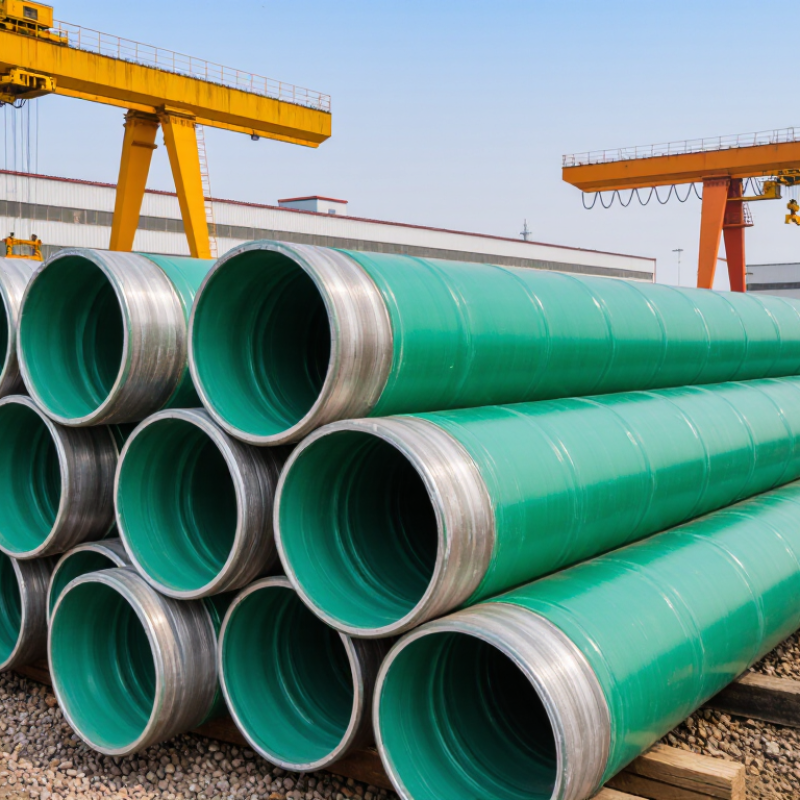
Fusion-bonded epoxy (FBE) pipe is steel pipe protected by a tough thermoset coating. The steel surface is cleaned and abrasive-blasted, then heated. Fine epoxy powder is applied electrostatically; heat melts and cures it into a bonded film. The result is a smooth barrier that helps limit corrosion and can reduce friction for flowing liquids. It is a coating system, not a different kind of steel pipe. That distinction matters.
Quality depends on preparation and inspection, not just the resin. Coating thickness, adhesion, cure, and holiday testing—the search for tiny gaps—are typically checked against project specifications and standards such as ISO 21809-2 for external FBE coatings. The NACE IMPACT study, published in 2016, estimated corrosion’s global cost at US$2.5 trillion annually, or about 3.4% of global GDP, using 2013 data. That figure explains why barrier coatings matter, but it does not prove that FBE suits every service. Temperature, soil conditions, handling damage, and repair access all affect performance. Coating is not magic. A missed defect near a weld can still become a weak point, so careful field inspection remains essential.
How Fusion-Bonded Epoxy Pipe Manufacturers Are Evaluated
A credible assessment looks beyond glossy brochures. It compares documented process controls with project requirements. For fusion-bonded epoxy (FBE), reviewers check steel cleanliness, surface profile, preheat uniformity, powder handling, and coating thickness. These steps matter: contamination or uneven heating can leave thin spots near welds and pipe ends. ISO 21809-2:2014 provides requirements for external FBE coatings on steel pipelines. It is a useful baseline, not proof of consistent production. Quality records should connect each pipe lot to test results, repair logs, and calibrated instruments. A tidy certificate still deserves scrutiny; sampling can be thin.
NACE International’s 2016 IMPACT study estimated corrosion’s global cost at US$2.5 trillion, about 3.4% of global GDP. That figure shows why coating performance matters, but it does not rank suppliers. Evaluation should also consider repeatability across production runs, inspection staff competence, traceability, and how defects are repaired. Ask how the manufacturer handles changing pipe diameters and production speeds. Small process changes can matter. Compare test conditions with the intended service environment, rather than relying on a single headline result.
Tips: Request recent adhesion, impact, cathodic-disbondment, and holiday-detection results. Check sample dates and test conditions. Look for gaps between written procedures and actual inspection records.
Evaluation framework: the weights below are illustrative and should be adjusted to suit the project, service conditions, and procurement specification. No manufacturers or brands are ranked.
| No. | Evaluation criterion | Illustrative weight | What to assess | Typical evidence to request |
|---|---|---|---|---|
| 1 | Standards and specification compliance | 18% | Whether the proposed coating system meets the project’s applicable requirements for pipe type, service, and environment. Standards such as AWWA C213 or ISO 21809-2 may be relevant to particular applications; applicability depends on the project specification. | Compliance matrix, current test reports, product data sheets, and documented exceptions or deviations. |
| 2 | Coating performance and durability | 15% | Evidence that the coating’s specified properties suit the intended exposure, including corrosion protection, adhesion, impact resistance, and resistance to relevant chemicals or temperatures. | Test methods and results tied to the specified coating system and service conditions; qualification records where required. |
| 3 | Surface preparation control | 14% | Control of steel cleanliness, surface profile, dust, oil, moisture, and other conditions before coating. Surface preparation requirements should follow the governing project specification. | Written procedures, inspection records, instrument calibration records, and batch or shift-level preparation logs. |
| 4 | Application and curing process control | 12% | Consistency of powder application and control of relevant process variables, such as pipe temperature, coating thickness, and cure conditions, in accordance with the approved procedure. | Process-control plans, production records, equipment maintenance logs, and calibration certificates. |
| 5 | Inspection and testing capability | 10% | Ability to inspect the finished coating using the methods and acceptance criteria stated in the contract, including checks for thickness, continuity, and visible defects when specified. | Inspection and test plans, sample inspection reports, calibrated equipment records, and procedures for handling nonconformities. |
| 6 | Pipe size and configuration range | 9% | Capability to coat the required pipe diameters, lengths, wall thicknesses, and specified fittings or end configurations using an approved process. | Documented production range, equipment limits, representative project records, and confirmation of any size-specific constraints. |
| 7 | Quality management and corrective action | 8% | How the supplier controls documented procedures, inspection records, nonconforming product, corrective actions, and process changes. | Quality-system documentation, audit findings and closure records, and examples of corrective-action reports. |
| 8 | Traceability and documentation | 6% | Ability to link supplied pipe and coating records to production batches and provide the documentation required for project handover. | Sample material and coating records, batch identification procedures, inspection dossiers, and document-retention practices. |
| 9 | Handling, packaging, and delivery controls | 5% | Measures to reduce coating damage during storage, loading, transport, and site handling, plus the ability to meet the agreed delivery schedule. | Packing and handling procedures, inspection records before dispatch, delivery plans, and damage-claim processes. |
| 10 | Technical support and warranty clarity | 3% | Availability of technical support for specification review, coating repair guidance, and clear written warranty terms relevant to the supplied product. | Support contacts, repair instructions, warranty document, and stated exclusions or claim requirements. |
| Total illustrative weight | 100% | Use documented, project-specific evidence when comparing suppliers. | ||
Profiles of ten leading fusion-bonded epoxy pipe manufacturers are most useful when they explain how each company controls coating quality. Compare surface preparation, application methods, curing systems, and inspection procedures. These details matter. A clean, evenly blasted steel surface helps epoxy bond reliably. Uneven coating thickness can leave weak spots, especially near welds and pipe ends.
The profiles should also show how manufacturers serve different projects. Some focus on large-diameter transmission lines, while others handle smaller pipes or custom fittings. Look for details on testing, production capacity, coating repair, and technical support. A capable supplier should explain its process clearly, not just list equipment. Still, a profile cannot prove consistent field performance by itself. That is worth remembering. Ask how sample results relate to routine production and request documentation for the pipe specification you need.
Tips: Check coating thickness, holiday-testing procedures, and repair instructions. Confirm that the stated temperature and service limits match your project. Compare evidence, not claims.
Profiles of 10 Leading Fusion-Bonded Epoxy Pipe Manufacturers
FBE coating thickness is specified for each project and pipe system. The values shown are common nominal specification benchmarks, not a universal requirement or a ranking of manufacturers; confirm the applicable project specification and standard.
A useful comparison of fusion bonded epoxy pipe manufacturers starts with product range, not catalog size alone. Check whether suppliers coat straight pipe, bends, fittings, and fabricated spools, and whether they support different diameters and coating thicknesses. A broad range can simplify procurement. It does not guarantee consistent quality across every item. Ask how surface preparation, powder application, and cure are monitored. Those details affect adhesion and service life.
Standards help define what a product is designed to meet. AWWA C213 covers fusion bonded epoxy coatings for steel water pipes, while ISO 21809-2 addresses external coatings for pipeline transportation systems. Their scopes differ, so they are not interchangeable checkboxes. Confirm the exact edition, test reports, and project-specific acceptance criteria. Look for documented checks such as holiday detection, coating thickness, and adhesion testing. Paperwork matters, but the test method and traceability matter more.
Market reach is more than a map of export destinations. Compare regional inventory, delivery capacity, technical support, and experience with similar operating conditions. A supplier serving distant markets may still face long lead times for custom fittings. Ask who handles inspection records and site questions after shipment. Small gaps in communication can become costly delays. I would also examine recent project references carefully; they can be useful, though they rarely tell the whole story.
Choosing a fusion-bonded epoxy (FBE) pipe manufacturer starts with process evidence, not polished brochures. Ask how the supplier controls steel surface preparation, coating thickness, and curing temperature. Request recent inspection records, batch traceability, and details of holiday and adhesion testing. A smooth finish can still hide weak preparation. Look closely.
Check whether the manufacturer’s procedures align with ISO 21809-2, which covers external FBE coatings for buried or submerged pipelines. Ask for qualification results from the same coating system and production conditions you plan to buy. Compare documented test methods, acceptance criteria, and how defects are repaired. A certificate alone is not the whole story; the scope and date matter.
Consider project fit, too: pipe diameter, operating temperature, transport conditions, and installation method can affect coating requirements. The AMPP IMPACT study estimated corrosion costs at US$2.5 trillion annually, or 3.4% of global GDP, based on 2013 data. This broad estimate is not specific to FBE pipe, but it shows why coating quality deserves careful procurement. Ask for sample reports and talk through a real inspection scenario. If answers stay vague, pause. Even experienced buyers can miss small gaps in quality records.
Copyright © 2025 The Toolroom Inc. All Rights Reserved.
Website Design St Louis by IQComputing