China Top Slim Frame Aluminum Sliding Door Suppliers
China has a broad network of aluminum door manufacturers, but finding the right partner takes more than comparing catalogue photos. Slim frame aluminum sliding doors can make a room feel brighter and more open. Their appeal depends on details that are easy to overlook. A slim profile is only useful when the frame, glass, and hardware work well together.
For buyers comparing China Top Slim Frame Aluminum Sliding Door Suppliers, practical checks can reveal more than polished marketing. Ask for clear drawings, profile dimensions, glass specifications, finish samples, and details about rollers, locks, and drainage. Request product test reports where relevant, and confirm what each report actually covers. Small things count. A sample panel that slides smoothly may still perform differently after repeated use or installation. I would not treat one good sample as a guarantee.
Supplier communication matters, too. Can the team explain packaging, production timelines, customization limits, and quality checks in plain terms? Ask how defects are recorded and handled, rather than relying on general promises. Verify references and company information independently when possible. No single checklist removes every risk, and supplier claims may need follow-up. This guide introduces manufacturers and the questions worth asking before requesting a quotation, comparing options, or moving toward an order. The goal is not to choose the cheapest door, but to identify a supplier whose product details and working process suit the project.
What Defines a Slim Frame Aluminum Sliding Door?
What Defines a Slim Frame Aluminum Sliding Door?
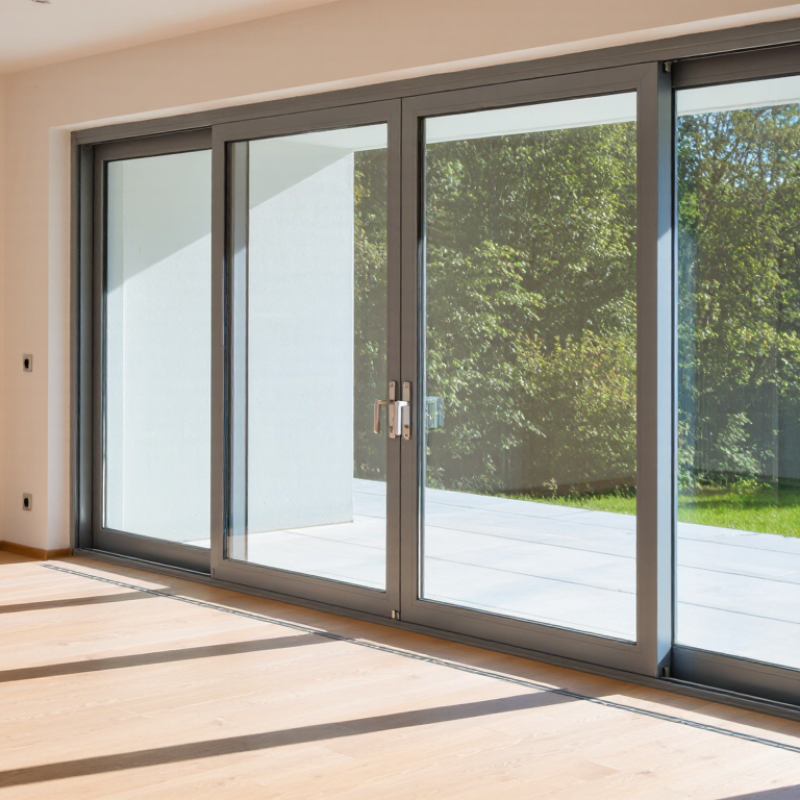
A slim frame aluminum sliding door uses narrow visible profiles around its glass panels. The reduced frame width gives the glass more visual space and creates a cleaner connection between indoor and outdoor areas. Aluminum keeps the frame relatively light while providing rigidity for large panels. The exact profile width varies by system, so “slim” is not a universal measurement.
The design is more than appearance. Frame depth, glass thickness, rollers, and track construction all affect how a door performs. A narrow profile still needs enough strength to support the glazing and resist everyday movement. On site, check whether the panel slides smoothly and whether the meeting rails align evenly. A sleek sample can look convincing; a poorly fitted track can change the experience. That matters.
Tips: Ask suppliers for the visible frame dimensions and a working sample. Check handle comfort, drainage details, and the floor track. Don’t judge by photos alone. A very narrow frame may not suit every opening, and that trade-off deserves a careful review.
Key Design Features and Aluminum Frame Construction
Slim-frame aluminum sliding doors use narrow visible profiles to preserve clear views and bring more daylight indoors. The frame’s strength allows slender sections, but proportions still depend on panel size and glass weight. Check the manufacturer’s stated frame depth, maximum panel dimensions, and hardware capacity before comparing designs. Details matter. A neat profile is not enough if the rollers feel rough or the panels do not meet evenly.
Aluminum frame construction typically combines outer and inner sections with thermal-break material between them. This separation can reduce heat transfer, though actual performance also depends on glazing, seals, and installation quality. Look for secure corner joints, continuous weather seals, and drainage paths at the sill. These small features help manage rainwater and everyday wear. Very slim frames can limit the space available for reinforcement or hardware, so the narrowest option is not automatically the best fit. That trade-off is easy to overlook in product photos.
Tips: Ask suppliers for section drawings and tested performance data for the complete door, not just the glass. Inspect a sample corner and slide a sample panel if possible. Note whether the sill suits your floor level and local exposure to wind-driven rain. Ask how adjustments are made after installation; some systems are less forgiving than they appear.
How Slim Frame Sliding Doors Are Manufactured and Tested
Slim-frame aluminum sliding doors begin with extruded profiles made to specified dimensions. The sections are cut, machined, and joined, with close attention to corner alignment and drainage openings. Small errors matter. A slight mismatch can make a narrow sash rub against its track.
After surface treatment, technicians assemble the frame, rollers, seals, and glass. They check diagonal measurements and confirm that the sash moves smoothly across the full track. Glazing blocks must support the glass evenly; misplaced blocks can cause pressure points. The fit may look clean, yet feel stiff.
Testing covers operation, water resistance, and air leakage using controlled equipment and recorded procedures. Repeated opening and closing can reveal roller wear, loose fixings, or changes in handle force. Water spray tests help identify leaks around joints and seals. Test results depend on setup, so frame size and installation details should be recorded. A factory test cannot fully reproduce an uneven floor or poor site fitting, and that gap deserves attention.
China’s Slim Frame Aluminum Sliding Door Supplier Landscape
China’s slim-frame aluminum sliding door supplier landscape is built on a large upstream materials base and a varied network of fabricators. International Aluminium Institute production statistics put global primary aluminum output at about 70.6 million tonnes in 2023, with China contributing roughly 41.5 million tonnes. That scale supports access to profiles, hardware, and finishing services, but it does not prove that every supplier offers consistent door quality. Not all of it. Buyers still need to check profile wall thickness, alloy specifications, and whether reported test results apply to the exact door system being quoted.
The market includes specialist door makers, extrusion companies with fabrication lines, and export-focused workshops. Their slim-frame products can look similar in catalogue photos, yet differ in track design, drainage paths, glass options, and installation tolerances.
Ask for drawings showing frame dimensions and drainage details. Request sample corners or operating units, not just finish chips. A smooth sample is useful, but site installation can expose weak rollers or poor alignment. Supplier comparisons should also record lead times, packaging methods, and after-sales response arrangements.
One caution: factory capacity figures are often self-reported, and public data rarely separates sliding-door output from broader aluminum products. Verify claims with dated documents and a project reference where possible.
How to Evaluate and Select a Chinese Door Supplier
China Top Slim Frame Aluminum Sliding Door Suppliers
Evaluating a Chinese door supplier means checking more than a slim showroom sample. Ask for the aluminum alloy designation, profile-wall measurements, coating specifications, and hardware cycle-test results. A thin frame can look elegant, but poor drainage or undersized rollers may cause trouble after installation. Request drawings and a production sample. Compare the sample with the approved specifications, not just the catalogue image. The IEA’s 2024 Global Status Report for Buildings and Construction estimates that buildings and construction account for 32% of global energy use and 34% of energy-related emissions. That makes verified thermal performance relevant. Check whole-window U-values and air, water, and wind-pressure test reports, including the tested size and configuration.
Also examine how the supplier controls production. Ask whether batch records link profiles, glass, and hardware to inspection results, and whether an independent laboratory performed the tests. The World Green Building Council’s 2019 Bringing Embodied Carbon Upfront report attributes about 11% of global emissions to building materials and construction. This is sector-wide context, not proof that one door is greener. Compare documented recycled content and finish durability where available. I would also request references for projects in a similar climate and a written warranty covering rollers, seals, and coating. A factory audit helps, but it cannot guarantee every shipment. Small point, but important: confirm who handles replacement parts after delivery, and get that answer in writing.