
Blog

What Are the 2026 Top Bath Towel Making Machine Types?

Choosing the right Bath Towel Making Machine in 2026 requires more than comparing speed, price, or brand names. Towel production combines yarn preparation, terry weaving, cutting, washing, drying, and finishing. Each stage affects absorbency, loop height, softness, and fabric weight.

Industry data shows why this decision matters. Textile Exchange’s Materials Market Report 2024 estimated global fiber production at 124 million tonnes in 2023. It also projected growth toward 160 million tonnes by 2030. This expansion may increase demand for efficient and traceable textile equipment. Meanwhile, the International Textile Machinery Federation’s 2024 shipment statistics reported weaker shipments for several new textile machine categories in 2023. The market is cautious. Buyers cannot rely on capacity claims alone.

This guide examines the leading 2026 machine types, including terry towel looms, rapier looms, jacquard towel machines, and automated finishing equipment. It considers production speed, pile control, energy use, maintenance access, and compatibility with cotton or blended yarns. A machine that runs quickly may still create uneven loops or excessive waste. That detail matters.

There is no universal winner. A hotel towel factory may prioritize stable bulk production, while a premium brand may need complex borders and precise patterns. Smaller manufacturers may value modular upgrades more than maximum output. This is where published specifications need practical testing. Sample runs, operator feedback, and lifecycle costs should influence the final decision. The ranking may change by factory size, product design, and regional service support. That uncertainty deserves attention.
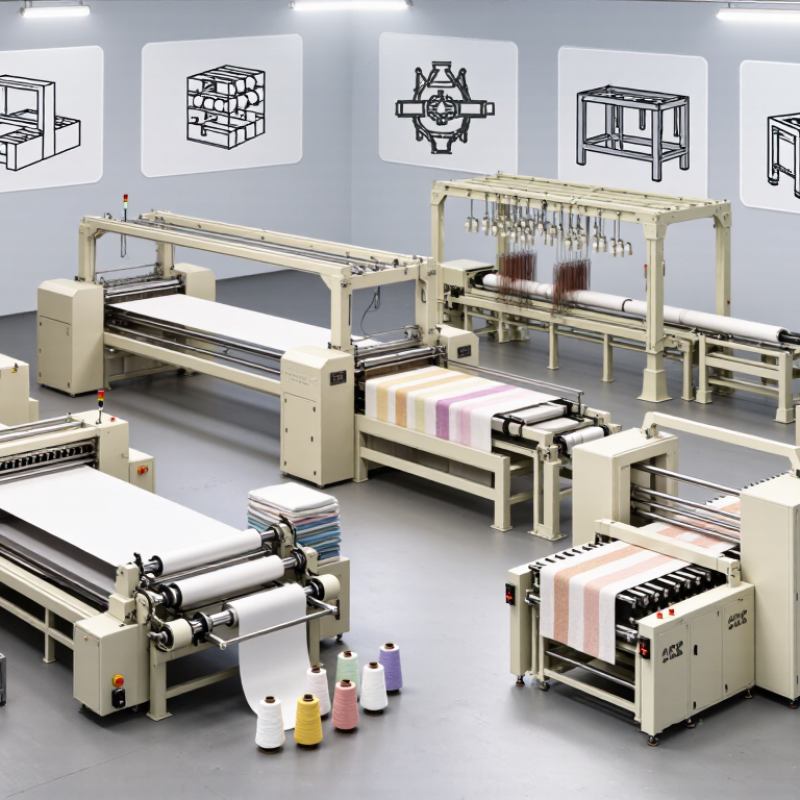
What Are the 2026 Top Bath Towel Making Machine Types?

What Defines a Bath Towel Making Machine in 2026?

In 2026, a bath towel making machine is not one universal device. It is a connected production system built for terry fabric. Depending on the factory, it may cover yarn preparation, terry weaving, cutting, hemming, and quality inspection. The core equipment controls loops, density, width, and towel weight. Supporting units manage edge sewing, label attachment, folding, and packing. Together, they turn yarn into a usable bath towel.

Modern definition also includes intelligent control. Servo drives help maintain stable tension during fast weaving. Vision cameras can detect broken loops, stains, uneven edges, and loose threads. Data dashboards record speed, energy use, stoppages, and rejected pieces. This matters. Operators can trace a defect to a specific time or process setting. Still, digital monitoring is not magic. A dirty sensor may report clean fabric.

When comparing machine types, buyers should examine the production purpose, not only the advertised speed. High-speed terry looms suit large orders and consistent designs. Compact semi-automatic machines may fit smaller workshops with changing towel sizes. Integrated lines reduce handling, while separate machines offer easier replacement and process adjustment. The right choice depends on fabric weight, cotton blend, order volume, floor space, and operator skill. Energy use matters. Noise matters too. Maintenance access is often overlooked. A machine can promise excellent output yet perform poorly with unstable yarn or careless calibration. That gap deserves honest testing. Practical trials should measure loop quality, seam strength, waste, and cleaning time before installation.

Which Machine Types Are Used for Bath Towel Production?

Bath towel production depends on several machine types, not one “top” machine. The terry towel loom is the core unit. It forms ground and pile yarns, creating the familiar looped surface. Modern high-speed looms can control pile height, density, and border patterns with electronic settings. A warping machine prepares yarn beams before weaving. Accurate tension matters here. Small errors can produce uneven loops or visible stripes.

After weaving, bleaching and dyeing machines improve absorbency, color consistency, and softness. Continuous washing ranges are useful for larger factories, while batch dyeing machines offer better flexibility for different towel sizes.

Finishing equipment may include hydro extractors, dryers, softening systems, and shearing machines. Cutting and sewing machines then shape hems, labels, and hanging loops. Inspection systems check weight, dimensions, loose threads, and shade variation.

Textile Exchange’s 2024 Materials Market Report recorded 124 million tonnes of global fiber production in 2023. This figure shows the scale of textile demand, although it does not measure towels alone. The report also projects production could reach 160 million tonnes by 2030. Energy-efficient motors and water-saving dyeing systems may therefore become more important in 2026. ITMF’s International Textile Machinery Shipment Statistics also tracks continuing investment in automated textile equipment.

Still, automation is not always the best answer. A smaller plant may need flexible machines instead. I have seen specifications look impressive, yet maintenance access was poor. That matters.

How Do Different Towel Machines Work Step by Step?

What Are the 2026 Top Bath Towel Making Machine Types?

Bath towel production combines opening, spinning, weaving, dyeing, drying, cutting, and sewing machines. Each machine controls a different stage. The process often starts with cotton bales. A bale opener loosens compressed fibers and removes visible impurities. Blending equipment then mixes fibers for more even yarn quality. Carding machines align the fibers into a soft web. Drawing frames improve thickness consistency. Spinning machines twist the fibers into yarn, while winding machines prepare clean packages for weaving.

The towel weaving machine creates the terry structure step by step. Warp yarns pass through tension devices and guide rollers. The loom inserts weft yarn across the fabric width. Special pile yarns form raised loops on both sides. Operators adjust density, loop height, and fabric speed through the control panel. Small changes matter. After weaving, dyeing equipment uses heat, water, and controlled chemicals to develop color. Washing removes loose dye, and hydro extractors reduce excess water. Drying machines use warm air, but excessive heat can shrink cotton.

Finishing machines raise softness and improve surface appearance. A shearing unit can trim uneven loops, although aggressive settings may weaken the pile. Cutting machines divide fabric into towel panels. Sewing machines attach hems and labels with controlled stitch tension. Inspectors check size, color, holes, loose threads, and absorbency under steady lighting. In practice, automation reduces repeated labor, but it does not remove judgment. Moisture readings can be misleading, and one missed tension error may affect an entire roll. Good production still depends on calibration, sampling, and careful human review.

What Are the 2026 Top Bath Towel Making Machine Types?

This chart shows representative daily throughput ranges for the main machine types used in a terry bath towel production line. Actual capacity depends on towel weight, fabric width, machine configuration, and operating efficiency.

How the process works: Yarn preparation and warping arrange the yarns, sizing strengthens the warp, and the terry loom weaves loops into towel fabric. Dyeing adds color, while shearing, drying, and finishing improve softness and appearance. Folding and packing prepare the finished towels for shipment.

What Materials and Features Should Buyers Compare?

Choosing a 2026 bath towel making machine starts with the fiber, not the advertised speed. Cotton requires stable tension control because loops can break during high-speed weaving. Bamboo viscose feels soft, but it needs gentler handling and careful moisture control. Recycled polyester dries quickly, yet it may not deliver the same absorbency as combed cotton. Blended yarns can reduce costs, although their finishing behavior is less predictable. Test each material before purchase.

The machine type also matters. Air-jet looms suit efficient production, while rapier looms offer broader control for heavier towels and complex designs. Buyers should compare maximum fabric width, pile height adjustment, GSM range, and usable speed under real production conditions. A machine rated at 900 rotations per minute may run slower with thick, dense towels. Numbers can mislead.

Look for stainless-steel contact parts, ceramic yarn guides, automatic tension correction, broken-yarn sensors, and accessible cleaning areas. These details reduce lint buildup around the weaving zone. Energy monitoring is useful when production runs continuously. Check whether the control system records faults clearly and supports repeatable settings for different towel sizes. Safety guards should allow inspection without exposing operators to moving components. I would also request sample fabric made with the buyer’s actual yarn. A showroom sample is rarely enough. Maintenance access is easy to underestimate. Ask for spare-part availability, technician training, and documented performance tests before signing a purchase agreement.

What Are the 2026 Top Bath Towel Making Machine Types? - What Materials and Features Should Buyers Compare?

Machine type Typical towel applications Compatible materials Indicative working width Indicative operating speed Key features to compare Main advantages Buyer considerations
Standard terry weaving loom Plain bath towels, hand towels, washcloths, hotel towels Combed or carded cotton; cotton/polyester blends; recycled polyester blends; selected regenerated-cellulose yarns Approximately 1.9–3.6 m, depending on configuration Approximately 400–750 picks per minute; fabric construction and yarn count affect the actual rate Adjustable pile height, electronic let-off and take-up, automatic weft control, warp-break and weft-break sensors Balanced choice for high-volume basic towels and consistent terry structure Compare pile stability, yarn tension control, energy use, changeover time and spare-part availability
Electronic dobby terry loom Striped towels, bordered towels, textured towels and small-to-medium repeat designs Cotton, cotton blends, bamboo-viscose blends, modal blends and recycled-fiber yarns when yarn strength is suitable Approximately 1.9–3.4 m Approximately 350–650 picks per minute Programmable shedding, multiple pile-height settings, pattern memory, quick design changes and digital monitoring More design flexibility than a basic terry loom without the complexity of full jacquard production Check repeat-size limits, control-system usability, operator training requirements and pattern-change efficiency
Electronic jacquard terry loom Logo-free decorative towels, figured towels, complex borders, pictorial patterns and premium bath sets Cotton, combed cotton, cotton/modal, cotton/bamboo-viscose and selected recycled-content yarns Approximately 1.9–3.6 m Approximately 250–550 picks per minute, depending on pattern complexity and pile settings Individual warp control, multi-level pile effects, CAD pattern transfer, automatic fault detection and recipe storage Produces highly differentiated products and supports frequent style changes Higher capital cost, greater electronic complexity and potentially higher maintenance requirements; verify design resolution and service support
Air-jet terry loom High-volume lightweight and medium-weight towels with stable, repeatable constructions Best suited to adequately sized cotton and blended yarns; yarn quality and lint level are important Approximately 1.9–3.6 m Approximately 500–900 picks per minute in suitable constructions Air-jet weft insertion, electronic tension control, automatic stop motions, integrated lubrication and production monitoring High productivity and low mechanical contact during weft insertion Compressed-air consumption can be significant; compare air quality requirements, compressor capacity and noise levels
Rapier terry loom Heavy bath sheets, dense towels, delicate yarn constructions and varied small-batch products Cotton, linen blends, bamboo-viscose blends, modal blends and yarns that require gentler insertion Approximately 1.9–4.0 m Approximately 250–550 picks per minute Flexible weft insertion, positive yarn control, programmable pile height, multi-color weft capability and low-tension handling Handles a broad range of yarns and constructions, including heavier or more delicate fabrics Generally slower than air-jet technology; compare gripper maintenance, insertion-system durability and fabric-width utilization
Towel knitting machine Knitted spa towels, stretch towels, cleaning cloths, tubular products and specialized absorbent articles Cotton, microfiber, polyester, polyamide, bamboo-viscose and elastane-containing yarn combinations Usually defined by cylinder diameter or knitting width rather than woven width; common flat-product widths vary by machine design Usually specified in revolutions per minute or courses per minute; practical output depends strongly on stitch density and structure Loop-length control, stitch-density adjustment, automatic yarn feeders, pattern programming and optional terry-plush structures Can provide stretch, seamless structures and distinctive surface effects unavailable from conventional weaving Not a direct replacement for woven terry in every application; compare dimensional stability, shrinkage, edge finishing and absorbency after laundering
Towel cutting and hemming line Converting woven towel fabric into finished bath towels, hand towels and washcloths Finished terry fabric made from cotton, blends, regenerated cellulose or recycled-content fibers Commonly configured for fabric rolls or towel panels approximately 1.6–3.6 m wide Approximately 20–60 pieces per minute, depending on towel size, folding method and sewing configuration Automatic length measurement, straight cutting, edge folding, multi-needle hemming, label insertion and stack counting Improves dimensional accuracy and reduces manual handling after weaving Compare cut-length tolerance, seam strength, thread trimming, fabric alignment and compatibility with different towel weights
Towel shearing and finishing machine Surface leveling, lint reduction, appearance improvement and preparation for washing or packaging Cotton terry, cotton blends, microfiber and other pile fabrics compatible with controlled shearing Typically matched to the fabric line, commonly around 1.8–3.6 m Approximately 10–40 m per minute, depending on pile height, fabric weight and finishing target Adjustable cutting height, dust extraction, fabric-centering control, surface inspection and optional brushing or compacting Creates a more uniform surface and can improve visual consistency before final packing Excessive shearing can reduce pile height and absorbency; compare cutting precision, extraction efficiency and fabric-loss rate
Comparison note: The speed and width figures are indicative industry ranges rather than guaranteed outputs. Actual performance depends on towel weight, pile height, yarn count, yarn strength, design complexity, moisture content, operator settings and machine configuration.
Material checks
Compare yarn strength, elongation, hairiness, moisture regain, colorfastness, shrinkage and compatibility with the intended pile height.
Quality checks
Evaluate GSM consistency, pile density, absorbency, edge straightness, dimensional stability after washing and loose-loop control.
Ownership checks
Compare electricity and compressed-air consumption, maintenance access, automation level, training needs, noise control and spare-part lead time.

How Can Manufacturers Choose the Right Machine Type?

What Are the 2026 Top Bath Towel Making Machine Types?

Choosing a towel machine starts with the product, not the machine catalogue. Terry towel looms suit standard cotton towels, hotel towels, and frequent production runs. Jacquard terry looms create logos, borders, and raised patterns. Dobby systems offer simpler geometric designs at lower complexity. Manufacturers should compare pile height, fabric width, GSM, speed, and changeover time before buying.

Demand data supports careful planning. Textile Exchange’s 2024 Materials Market Report recorded about 124 million tonnes of global fiber production in 2023. It projects nearly 160 million tonnes by 2030. This growth increases pressure to reduce waste and improve material efficiency. The ITMF International Textile Machinery Shipment Statistics also shows continuing investment in modern textile equipment, although market conditions remain uneven. Energy monitoring matters. A faster loom may still lose money if it creates excessive waste or requires costly maintenance.

A practical line may combine a terry loom, automatic shearing equipment, and computerized hemming machinery. Choose jacquard capability only when customers will pay for detailed designs. Check yarn tension control beside the machine, not only in brochures. Ask for trial weaving with your actual yarn and towel dimensions. One overlooked issue is operator training. It can delay production badly. I would also test spare-part availability and service response in writing. The “best” machine is not always the fastest one. It is the machine that maintains absorbency, stable edges, and repeatable quality during real factory shifts.

Copyright © 2025 The Toolroom Inc. All Rights Reserved.
Website Design St Louis by IQComputing