2025 Top 5 Injection Molding Tooling Solutions You Need to Know
In the ever-evolving landscape of manufacturing, the role of injection molding tooling has become increasingly critical. According to a recent report by MarketsandMarkets, the global injection molding market is projected to reach USD 488.7 billion by 2025, growing at a compound annual growth rate (CAGR) of 3.9% from 2020. This growth signals a surging demand for innovative tooling solutions that can enhance production efficiency and product quality across various industries, including automotive, consumer goods, and medical devices.
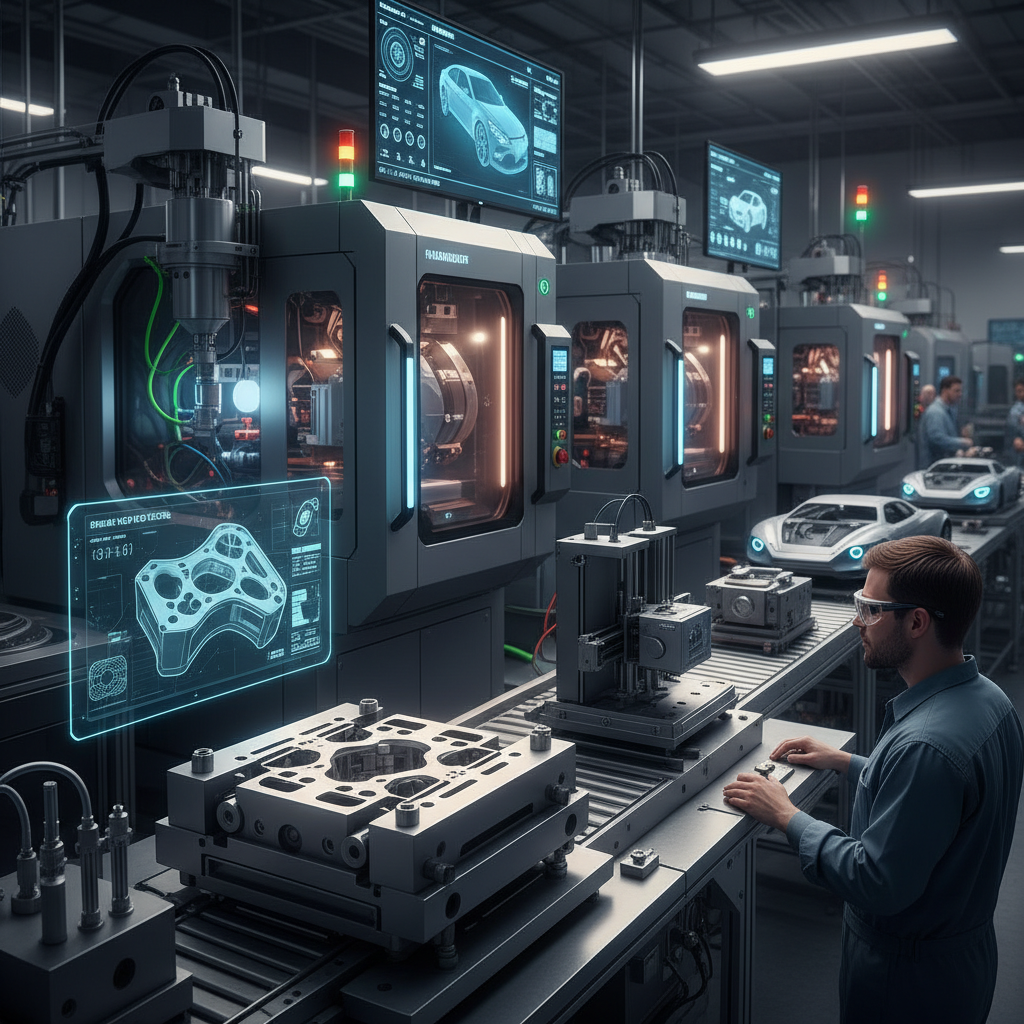
As manufacturers seek to remain competitive, understanding the top injection molding tooling solutions available is essential. A study released by Grand View Research highlights that advancements in technology, such as the use of 3D printing for rapid prototyping and the integration of smart factory components, are reshaping how tools are designed and used. Companies that adapt to these innovations not only improve their operational effectiveness but also push the boundaries of what is possible in product design and functionality.
In this context, we will explore the top five injection molding tooling solutions that every industry professional should be aware of by 2025. By leveraging these solutions, manufacturers can streamline their processes, reduce time-to-market, and ultimately drive profitability in a competitive global marketplace.
Emerging Trends in Injection Molding Tooling Solutions for 2025
As we look towards 2025, the injection molding industry is poised for significant transformations driven by technological advancements and emerging trends. One of the most notable trends is the integration of Industry 4.0 technologies, which leverage IoT, AI, and machine learning to enhance efficiency in tooling solutions. According to a recent report by Deloitte, manufacturing firms that adopt smart technologies can expect productivity increases of up to 30%. This shift allows for real-time monitoring of machinery, predictive maintenance, and optimized workflows, significantly reducing downtime and operational costs.
Additionally, there is a growing emphasis on sustainability within injection molding tooling solutions. As sustainability becomes a priority for manufacturers, a report by Grand View Research states that the global market for sustainable tooling solutions is projected to reach $7.3 billion by 2025. Companies are increasingly investing in eco-friendly materials and energy-efficient machines to minimize their carbon footprint. The development of biodegradable polymers and recycled materials as alternatives to traditional plastics is part of this trend, which not only addresses environmental concerns but also meets the rising demand for sustainable products in the market.
Innovative Materials Revolutionizing Injection Molding Processes
The injection molding industry is undergoing a significant transformation, thanks to innovative materials that are revolutionizing traditional processes. One of the key advancements is the development of high-performance thermoplastics, which offer superior strength, thermal stability, and chemical resistance. These materials not only enhance the durability of molded parts but also allow for greater design flexibility, enabling manufacturers to produce more complex geometries without compromising on quality.
 Furthermore, the rise of bio-based and recycled materials is reshaping sustainability in injection molding. These alternatives reduce dependency on fossil fuels and contribute to a circular economy, appealing to environmentally conscious consumers and companies. As manufacturers increasingly prioritize sustainable practices, the incorporation of these innovative materials is essential. By leveraging advanced composites and additive manufacturing techniques, the industry can optimize production efficiency while minimizing waste, marking a significant shift towards a greener future in injection molding practices.
Advancements in Automation and Smart Manufacturing in Tooling
The evolution of automation and smart manufacturing in the field of injection molding tooling is set to revolutionize production efficiency and product quality by 2025. Recent industry reports indicate that the global market for automation in manufacturing is expected to grow by over 30% annually, driven by advancements such as AI-driven data analytics and robotics integration. These technologies allow for real-time monitoring and adjustments, minimizing downtime and waste. In this landscape, tools that incorporate IoT capabilities will not just streamline operations but also enhance predictive maintenance, thereby reducing operational costs.
Tips: Invest in training your workforce on new automation tools. Skilled personnel can significantly maximize the benefits of advanced technologies. Additionally, consider integrating modular tooling solutions that can easily adapt to production changes. This flexibility can greatly improve response times to market demands and reduce lead times, creating a more agile manufacturing environment.
By adopting smart manufacturing practices, companies can utilize insights from data to inform design and process improvements. The integration of automation not only optimizes production processes but also fosters collaboration across teams, ensuring that all stakeholders are in sync. With the projected rise in automated solutions, businesses embracing these advancements will likely see a substantial return on investment, positioning themselves as leaders in the competitive injection molding landscape.
Sustainability Practices Shaping the Future of Injection Molding

As the demand for sustainable manufacturing practices grows, the injection molding industry is adapting by integrating eco-friendly solutions into tooling processes. This shift not only contributes to reducing the environmental impact, but also aligns with the evolving expectations of consumers who prioritize sustainability. Advanced materials, such as bio-based plastics and recycled polymers, are being increasingly employed, allowing manufacturers to reduce their carbon footprints while maintaining high standards of quality and performance in their products.
Moreover, innovative tooling designs are being developed that minimize waste and maximize efficiency. Techniques like soft-tooling and 3D printing are emerging as valuable alternatives, offering significant reductions in material usage and production time. The focus on energy-efficient machinery and processes further underlines the industry's commitment to sustainability, promoting a circular economy approach in which resources are reused and recycled wherever possible. As these sustainability practices continue to shape the future of injection molding, manufacturers that adopt these changes will not only contribute to a greener planet but also enhance their competitive edge in the market.
Cost-Effective Strategies for Optimizing Tooling Efficiency in 2025
In 2025, the landscape of injection molding tooling solutions promises to be transformed by innovative and cost-effective strategies aimed at enhancing efficiency. One key approach is the adoption of advanced materials that reduce manufacturing costs while improving durability and performance. By selecting high-grade polymers and composites, manufacturers can significantly lower their tooling expenses and extend the lifecycle of molds, resulting in better return on investment.
Another vital strategy involves the integration of automation and smart technology within the tooling process. Implementing automated systems can streamline production, reduce human error, and improve precision. Additionally, the use of IoT (Internet of Things) devices to monitor tooling performance in real-time allows for predictive maintenance, minimizing downtime and maximizing productivity. By leveraging these technological advancements, businesses can optimize their tooling efficiency, achieving greater output without inflating costs.
2025 Top 5 Injection Molding Tooling Solutions You Need to Know
| Solution |
Key Features |
Cost-Effectiveness |
Optimization Benefits |
| Smart Tool Design |
Utilizes CAD and simulation software |
Reduces material costs by 15% |
Increases production speed by 20% |
| 3D Printing Mold Prototypes |
Rapid prototyping with additive manufacturing |
Shortens design cycles by 30% |
Enhances customization capabilities |
| Advanced Cooling Techniques |
Improved coolant flow designs |
Lowers energy costs by 10% |
Reduces cycle times significantly |
| Automated Tool Maintenance |
Scheduled servicing with IoT technology |
Minimizes downtime costs |
Extends tool lifespan by 25% |
| Material Selection Optimization |
Uses data analytics for best material choice |
Reduces scrap rates by 20% |
Improves part durability and performance |