
Natural gas remains a practical fuel for factories that need steady steam, controllable heat, and reliable production schedules. The International Energy Agency’s Energy Efficiency 2023 report puts industry’s share at about 37% of global energy use. That scale makes boiler performance more than a purchasing detail. It affects fuel bills, operating routines, and the heat available at the production line.
This guide introduces ten Natural Gas Steam Boiler manufacturers serving markets worldwide. It considers practical comparison points: rated steam output, operating pressure, combustion controls, efficiency claims, service coverage, and the availability of replacement parts. A boiler room offers clear evidence. Operators can inspect burner response, condensate return, and the condition of insulation, not just a brochure’s headline rating. The U.S. Department of Energy’s Improving Process Heating System Performance sourcebook also emphasizes system-level assessment. A boiler’s real performance depends on how the complete heating system is operated and maintained.
There is no single best choice for every facility. A compact food plant and a large chemical site face different steam loads, water conditions, and downtime costs. Rankings can simplify a complex market, but they cannot replace engineering checks or a site-specific quotation. That matters. Manufacturer specifications should be verified against applicable test methods and actual operating conditions. Readers should also ask about commissioning, maintenance support, and emissions data before comparing suppliers. A short list is useful; careful questions make it more useful.
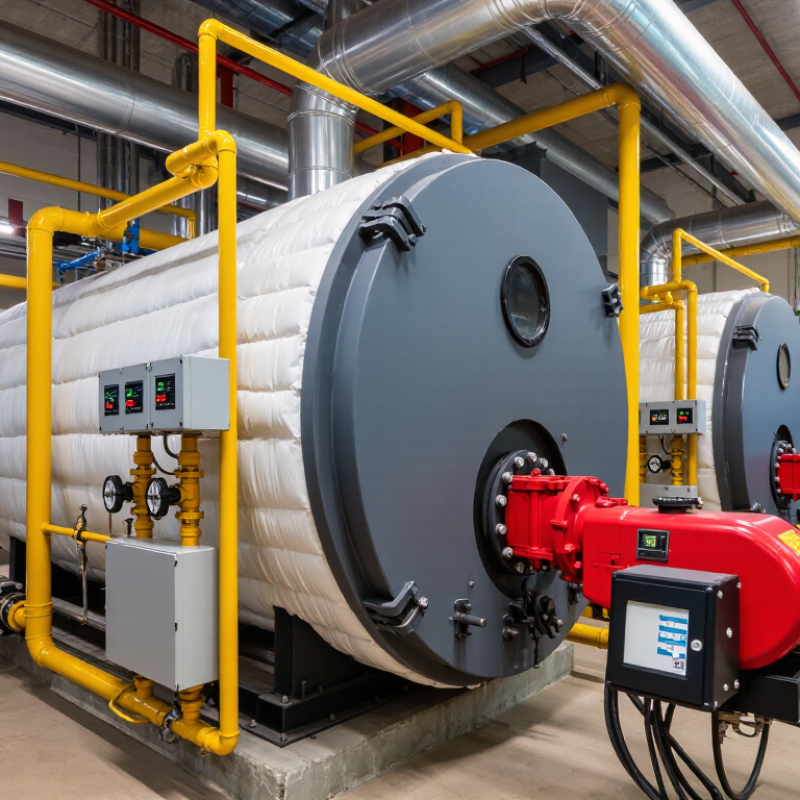
Natural gas steam boilers convert combustion heat into pressurized steam for industrial processes and building services. Fire-tube models pass hot gases through tubes surrounded by water, making them suitable for steady, moderate-capacity loads. Water-tube designs carry water inside heated tubes and are often chosen for higher pressures or rapid response. Once-through units can supply steam without a large drum, but require precise feedwater control. The right type depends on pressure, load variation, water quality, available space, and maintenance expertise—not capacity alone.
A burner mixes gas and air; a furnace transfers heat to boiler surfaces. Where fitted, a steam drum separates vapor from water. Feed pumps, level controls, gauges, safety valves, blowdown lines, and economizers support operation. Small details matter. Deposits on heat-transfer surfaces or a poorly adjusted burner can waste fuel and disrupt steam delivery.
The International Energy Agency reports that industry accounts for about 37% of global energy use (IEA, Industry), underscoring the value of efficient process heat.
Food plants use steam for cooking and cleaning; paper mills, chemical facilities, and hospitals use it for drying, processing, and sterilization.
Sizing can be messy: demand shifts by hour, and an oversized boiler may cycle too often.
How Global Boiler Manufacturers Are Evaluated
A fair comparison starts with the same duty point: steam output, operating pressure, feedwater temperature, and fuel conditions. Without that baseline, efficiency figures can look stronger than they are. The International Energy Agency’s Energy Efficiency 2023 report estimates that industry uses about 37% of global final energy. That makes fuel performance a substantial part of a boiler’s lifetime operating cost. Evaluators should request test conditions and review whether efficiency was measured using a recognized method, such as ASME PTC 4. Small details matter.
Emissions are assessed alongside useful heat, not in isolation. The IEA’s Global Energy Review 2024 reports energy-related carbon dioxide emissions of 37.4 billion tonnes in 2023, underscoring the value of transparent fuel and emissions data. Buyers can compare measured emissions at specified loads, burner turndown, startup behavior, and controls response. A catalogue rating is not enough. Reliability also needs evidence: inspection records, service response times, spare-parts access, and operating references for similar pressure and capacity. A spreadsheet alone can still mislead. Published figures may use different boundaries, and site conditions can change results. Review the test report, not just the headline number.
Leading natural gas steam boiler manufacturers differ more in engineering focus than in catalog size. One pressure-vessel specialist builds robust units for demanding, continuous-duty plants. A fire-tube manufacturer serves facilities needing steady steam and straightforward maintenance. A water-tube producer focuses on large loads and faster response. Details matter. A modular-boiler maker offers compact units that can be staged as demand changes. Another manufacturer emphasizes low-emission burner integration and careful combustion control.
A sixth profile centers on packaged boilers, with major components assembled for simpler installation. A custom engineering firm adapts boiler dimensions and connections to tight plant rooms. One service-oriented manufacturer supports commissioning and replacement parts across broad regions. A heat-recovery specialist designs systems that capture useful energy from exhaust. The tenth profile pairs boiler controls with monitoring tools for operators tracking pressure, fuel use, and water conditions. Fit varies. These profiles are not a verified ranking; they describe distinct strengths buyers can investigate. Compare rated steam output, turndown, efficiency test conditions, and maintenance access. Ask for operating references under similar loads, not only headline specifications. A polished brochure cannot show how quickly a technician can reach a drain valve.
Natural gas steam boiler manufacturing reflects regional industrial priorities. European producers often emphasize compact layouts, heat recovery, and precise controls for factories with limited plant space. In East Asia, large production networks can support a wide range of capacities and shorter equipment lead times. North American suppliers commonly serve food processing, healthcare, and institutional facilities, where packaged systems and accessible service matter. These patterns are not guarantees; individual factories vary.
Regional strengths also shape engineering choices. Some manufacturers focus on high-pressure process steam, while others specialize in modular units that can be installed in smaller boiler rooms. A stainless-steel feedwater line, clear inspection access, and stable burner controls may matter more than headline output. Details matter. Export experience, local technician coverage, and spare-parts availability can differ even among manufacturers in the same region. Buyers should verify performance data and service commitments for the actual project, not rely on broad regional reputations.
Tips: Compare quoted efficiency at the same operating conditions, including load range and feedwater temperature. Ask for a reference installation with similar steam demand. Check the site. A polished brochure cannot reveal how quickly a technician can reach your facility, and that practical gap deserves careful thought.
Natural gas steam boilers vary in burner design, heat-transfer layout, and control sophistication. Fire-tube models often suit steady, moderate steam demand, while water-tube designs can respond better to larger or changing loads. The right choice depends on pressure, peak demand, feedwater quality, and available floor space. Efficiency deserves more than a brochure number. A technician can compare stack temperature, excess oxygen, blowdown, and condensate return during operation. Small settings matter. A poorly tuned burner may waste fuel even when the boiler itself is well designed. A neat efficiency figure can mislead if it reflects ideal test conditions rather than a real plant.
Service support is just as practical as boiler technology. Ask how quickly trained technicians can respond, which replacement parts are stocked nearby, and whether commissioning includes combustion checks. Request clear maintenance intervals and operator training, especially for water treatment and safe startup procedures. Check the details. A detailed manual helps, but it cannot replace hands-on support when a pressure control trips during a busy shift. Compare warranty terms carefully, and confirm who handles routine inspections. No single service package fits every facility. That comparison can be imperfect, because local staffing and spare-part access change over time. A site visit and a written service plan provide stronger evidence than broad promises.
Copyright © 2025 The Toolroom Inc. All Rights Reserved.
Website Design St Louis by IQComputing