Top 5 Tips for Choosing the Right Hand Pallet Truck?
Choosing the right Hand Pallet Truck is crucial for efficiency in any warehouse or retail setting. These trucks play a vital role in transporting goods safely and seamlessly. Yet, many organizations struggle with selecting the ideal model. Each hand pallet truck comes with specific features and capacities, which can make the choice overwhelming.
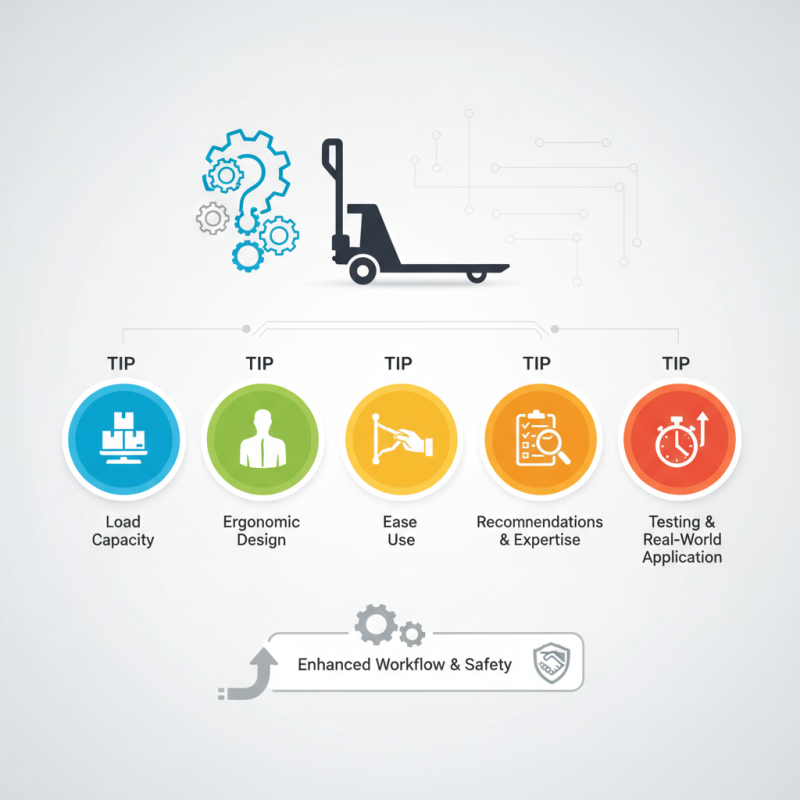
It’s important to evaluate how the truck aligns with your specific needs. Consider aspects like load capacity, ergonomic design, and ease of use. A poorly chosen hand pallet truck can lead to reduced productivity and increase the risk of accidents. Relying on recommendations or reviews can be beneficial, but it’s essential to rely on expertise when making your decision.
Finding the perfect hand pallet truck may require testing a few options. You may encounter models that look good on paper but fail in practical application. Observing how they perform in real-life situations can reveal their true value. It's not just about purchasing tools; it’s about investing in reliable equipment that enhances workflow and safety.
Understanding the Different Types of Hand Pallet Trucks Available
When selecting a hand pallet truck, understanding the various types available is crucial. Different models cater to specific needs. Standard hand pallet trucks are versatile and commonly used in warehouses. They are designed for general lifting tasks and can handle different pallet sizes. However, they may not be suitable for heavy-duty operations.
For businesses requiring more specialized solutions, advanced models exist. Some hand pallet trucks have scales integrated for precise weight measurements. Others come with ergonomic designs, reducing strain on the operator. These options enhance efficiency and worker safety. Still, they often come with a higher price tag. Choosing the right type can be a reflection of specific operational needs.
Consider the surface where the truck will be used. Rough or uneven floors may require trucks with robust wheels for stability. ADLS (adjustable, low-profile, and special) trucks fit narrow aisles but may struggle in wider spaces. Reflecting on these limitations can lead to better decision-making and operational efficiency. An initial assessment of your environment and specific requirements is key. Every choice has implications, making informed selections vital.
Assessing the Load Capacity and Weight Ratings for Your Needs
When choosing the right hand pallet truck, assessing load capacity and weight ratings is vital. The load capacity indicates how much weight the truck can safely handle. Overloading can lead to equipment failure and safety hazards. Consider your typical loads. If you often transport heavy items, select a truck with a higher capacity rating.
Weight ratings should align with your specific needs. Different trucks offer varying weight capacities. Don’t overlook the importance of these ratings. A truck suitable for lighter loads may not perform well under heavier weights. Also, remember the total weight of the pallet and goods combined. It’s essential to account for this in your selection.
Another tip is to test the handling of different models. A lighter truck may seem appealing, but if it struggles under occasional heavier loads, reconsider your choice. Ensure that the truck moves smoothly even when loaded. Reliability in daily operations is crucial for productivity. Balancing load capacity and ease of handling can significantly affect your workflow efficiency.
Top 5 Tips for Choosing the Right Hand Pallet Truck
| Tip Number | Tip Description | Load Capacity (kg) | Weight Rating (kg) | Recommended Use |
| 1 | Assess Your Load Capacity Needs | 1500 | 2000 | Standard Warehouse Tasks |
| 2 | Consider Fork Width | 1200 | 1500 | Narrow Aisle Operations |
| 3 | Evaluate Maneuverability | 1000 | 1300 | Tight Spaces |
| 4 | Look for Ergonomic Features | 2000 | 2500 | Heavy Lifting with Comfort |
| 5 | Check for Durability and Maintenance | 1500 | 2000 | Long-Term Use |
Evaluating the Ergonomics and Ease of Use Features
When selecting a hand pallet truck, ergonomics play a crucial role. Workers using these trucks often face physical strains. A well-designed truck can minimize discomfort and enhance productivity. Look for trucks with a comfortable handle height. It should allow for natural wrist positioning. The grip should feel secure yet soft to prevent slipping during use.
Also consider the ease of maneuverability. Trucks should glide smoothly, even with heavy loads. Test the turning radius, ensuring it fits your workspace. Pay attention to wheel composition as well. Polyurethane wheels, for example, create less noise and allow for smooth operations.
Another important aspect is the weight capacity. Trucks have various load limits. Choose one that meets your daily demands. If your operations vary, a truck with adjustable features could be beneficial. Long-term use can reveal potential design flaws, so observe how the equipment holds up over time. Keep these tips in mind as you search for a hand pallet truck that meets both your operational needs and comfort preferences.
Considering the Maneuverability and Size of the Pallet Truck
When selecting a hand pallet truck, maneuverability and size are crucial factors. A well-designed pallet truck allows operators to navigate tight spaces efficiently. According to a report by the Material Handling Industry of America (MHIA), approximately 70% of warehouse injuries stem from poor equipment design. Ensuring the right size helps prevent accidents and improves workflow.
Consider the dimensions of both the pallet truck and your workspace. If your aisles are narrow, opt for a compact truck. Many models feature a turning radius of less than 56 inches, making them suitable for confined spaces. Additionally, the weight capacity is vital. Most hand pallet trucks can handle loads between 2,200 to 5,500 pounds, but it’s essential to assess your typical load realistically. Overloading a truck can lead to mechanical failures and safety hazards.
Evaluate the ergonomics of the pallet truck as well. A comfortable handle height can reduce strain on operators. A 2020 study by the Occupational Safety and Health Administration (OSHA) found ergonomic handling equipment can decrease worker injuries by nearly 50%. Lastly, don’t overlook the wheel type. Nylon wheels suit smooth floors, while rubber wheels perform better on uneven surfaces. Choosing the right combination can significantly affect efficiency and safety in your operations.
Reviewing Maintenance and Warranty Options Before Purchase
When considering a hand pallet truck, maintenance and warranty options can significantly impact your purchase decision. Reports indicate that 25% of operational downtime in warehouses is due to equipment failure. Regular maintenance can prevent such failures and extend the life of your equipment. Look for options that offer a clear maintenance schedule and easy access to replacement parts.
Choosing a warranty is equally important. Many industry experts suggest opting for extended warranty options. A reliable warranty can cover unexpected repairs that could otherwise be costly. Statistics show that 60% of businesses that invest in extended warranties report increased operational efficiency. This might stem from reduced repair-related downtime and improved planning for equipment upkeep.
Think about the maintenance plan and coverage before committing. Some trucks might require more frequent service, while others could be more resilient. Analyzing user reviews can shed light on potential issues. Observing the experiences of others can help identify patterns that may not be evident initially. So, weigh your options carefully and consider the long-term implications of your choice.