Why is Plastic Injection Molding Cost Effective for Manufacturing?
Plastic injection molding stands as a pivotal process in modern manufacturing. According to Dr. Emily Chang, a leading expert in the field, "Plastic injection offers unmatched precision and efficiency." This method allows manufacturers to produce complex parts quickly. It reduces waste and maximizes material use, leading to lower overall costs.
The versatility of plastic injection molds plays a crucial role. They can create a variety of components, from small gears to large housings. This flexibility makes it possible for businesses to cater to diverse markets. However, potential flaws can arise in the design and molding process. Often, the initial setup can be costly and time-consuming. Companies need to invest time in prototypes to ensure durability and function.
Despite some challenges, the advantages are significant. Speed and reliability are key benefits that support high-volume production. Manufacturers have reported increased profitability due to reduced cycle times. Yet, the sustainability aspect requires reflection. As the industry evolves, addressing environmental impacts becomes essential for future success.
Overview of Plastic Injection Molding Process
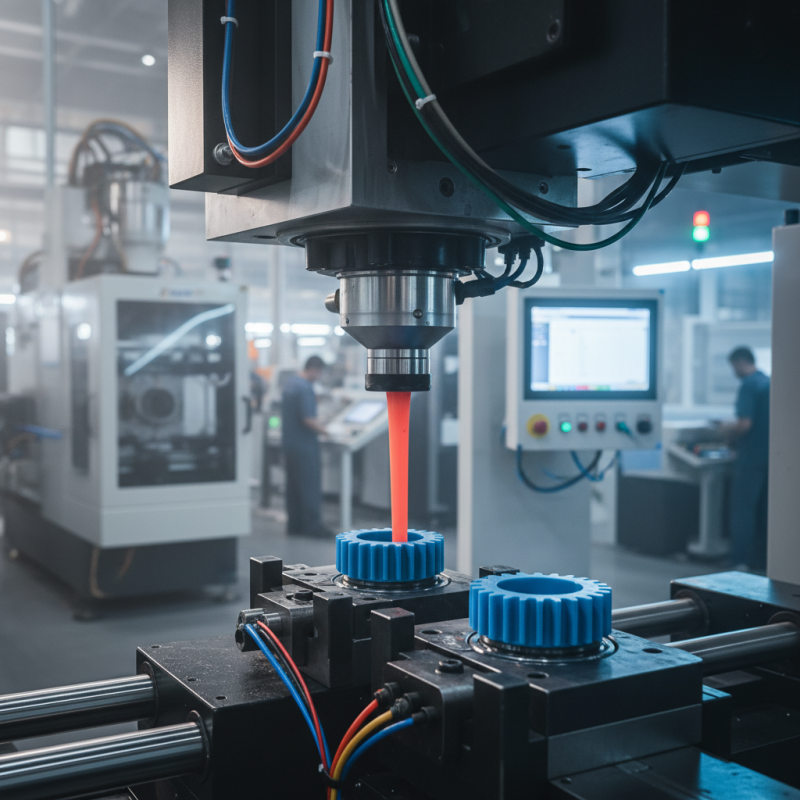
The plastic injection molding process plays a crucial role in manufacturing. This technique starts with heated plastic pellets. The pellets melt and are injected into a mold. Once the plastic cools, it solidifies into the desired shape. The speed of this process is astonishing. Multiple parts can be produced in a single cycle.
However, the initial setup costs can be high. Creating molds requires precision and time. Small manufacturers may struggle with these upfront expenses. There is also a need for skilled technicians to oversee the process. Issues can arise if the mold design is flawed. Adjustments might lead to delays and increased costs, which can be frustrating.
Despite these challenges, the efficiency of injection molding is apparent. Once production begins, the process can produce large quantities rapidly. This efficiency often outweighs the initial hurdles. In the end, companies must weigh the costs against the benefits for their specific needs. Balancing quality and efficiency remains a significant undertaking.
Factors Influencing Cost-Effectiveness in Manufacturing
Plastic injection molding stands out as a highly cost-effective manufacturing process. Several factors contribute to its efficiency. For example, the ability to produce complex shapes reduces the need for assembly. This lowers labor costs significantly. Additionally, the process can be easily scaled, making it versatile for different production runs.
The choice of raw materials affects cost. High-quality plastics may require a larger initial investment. However, they often yield a better return due to their durability and performance. Factors like recycling also play a role. Using recycled plastics can reduce expenses while promoting sustainability.
**Tip:** Always consider the long-term benefits of material choices. Sometimes, spending slightly more upfront saves money in the long run.
Production speed is another important factor. Injection molding can produce thousands of parts per hour. This high output leads to lower costs per unit. Companies should monitor machine efficiency and maintenance. An idle machine is costly in production.
**Tip:** Regular maintenance can prevent unexpected breakdowns. Keeping your machinery in good shape is key to maximizing efficiency.
Cost-Effectiveness Factors in Plastic Injection Molding
Comparative Analysis: Injection Molding vs. Other Manufacturing Methods
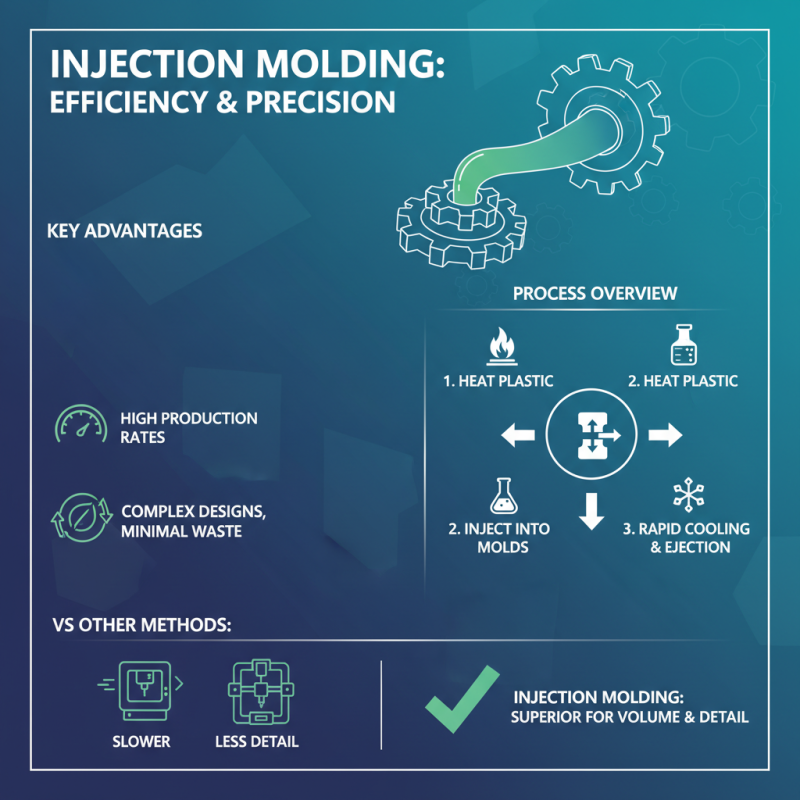
Injection molding stands out in the manufacturing landscape due to its efficiency and precision. It allows for high production rates, making it ideal for large volumes. The process involves heating plastic and injecting it into molds. This creates intricate designs with minimal waste. Other methods, such as CNC machining or 3D printing, can be slower and may not achieve the same level of detail.
However, injection molding has its drawbacks. The initial cost of creating molds can be high. Smaller production runs may not justify this expense. Sometimes, the molds wear down over time, impacting consistency. In contrast, additive manufacturing might offer more flexibility for prototypes. Yet, it lacks the speed of injection molding for mass production.
Another factor to consider is material choice. Injection molding typically uses specific thermoplastics that might not suit every application. Alternative methods can use a broader range of materials but may compromise on strength. Evaluating the right approach depends on specific project needs and cost considerations. Each manufacturing process has its strengths and weaknesses, demanding careful analysis before selection.
Material Efficiency and Waste Reduction in Injection Molding
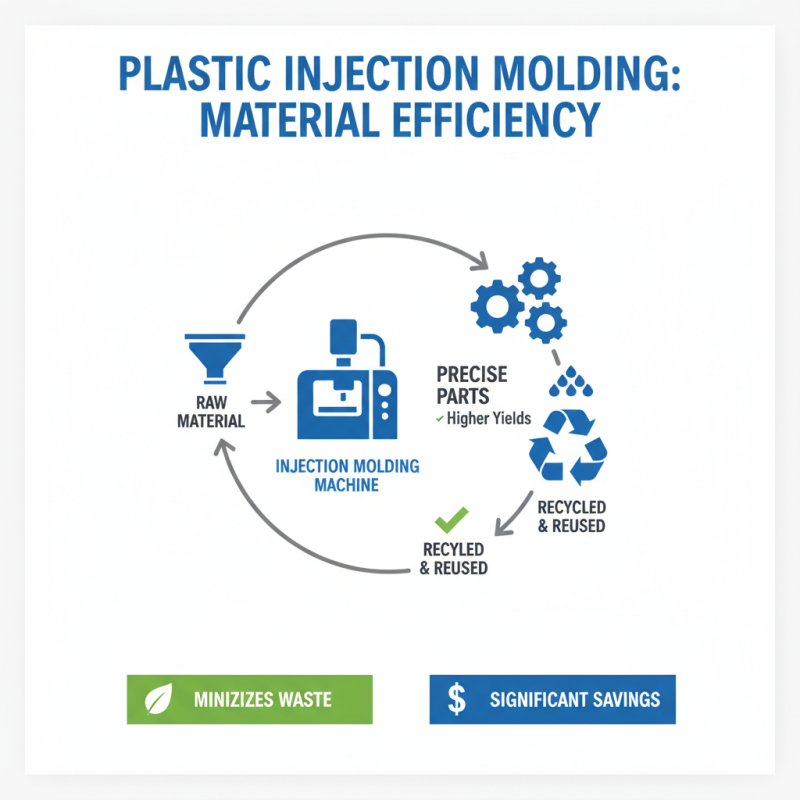
Plastic injection molding stands out for its material efficiency. This process minimizes waste by using only the necessary amount of raw material. Excess material is often recycled and reused, cutting down costs further. Manufacturers achieve higher yields as each cycle produces precise parts from the start. This efficiency can lead to significant savings over time.
However, not everything is perfect. Sometimes, issues arise during production, leading to defects or excess material. This can result in increased costs and wasted resources. Companies must constantly monitor and refine their processes to minimize these inefficiencies. Optimizing settings and employee training can help address these challenges.
Moreover, the choice of materials can impact waste levels. Some options may lead to more scrap than others. Careful selection can enhance both performance and sustainability. Finding the right balance in materials is essential. It's a journey towards greater efficiency, but one worth taking in the long run.
Long-Term Financial Benefits of Using Injection Molding for Production
Plastic injection molding offers significant long-term financial benefits for manufacturers. This method allows for high-volume production with minimal labor costs. The initial investment might seem steep, but the overall savings are substantial. Molding provides quick turnaround times, which helps businesses respond to market demand efficiently.
The ability to create complex shapes adds to the appeal. Manufacturers can reduce waste and lower material costs over time. Using injection molding, companies often see a decrease in product cost per unit as production scales up. This nearly always outweighs the upfront expenses associated with machines and molds.
Tips: Always reassess your production needs. Sometimes, smaller quantities can be just as effective. Consider running tests to see how the cost adjusts with different volumes. Analyzing these factors helps make informed decisions for your business. Keep in mind that not all materials work well in injection molding—evaluate your options carefully to avoid unnecessary expenses.