
PET Clear Tape is a transparent polyester film tape used when a job needs a neat appearance and a stable backing. You may find it sealing lightweight packages, holding labels in place, protecting printed surfaces, or securing components during assembly. Its clear film lets colors, text, and edges remain visible. That detail matters on a product box or a carefully aligned label.
The exact use depends on the tape’s adhesive, thickness, and rated service conditions. Some products are designed for electrical insulation or higher-temperature processes, while others suit ordinary bundling and surface protection. They are not interchangeable. Dust, moisture, rough surfaces, and rushed application can weaken adhesion. Small details matter.
Donatas Satas, an established author on pressure-sensitive adhesive technology, is a useful reference for understanding how adhesive, backing, and application conditions work together. I cannot verify a direct quotation from him about PET Clear Tape, so I will not invent one. A concise, original principle for this guide is: “Match the tape to the surface and service conditions.” It is a simple rule, not a substitute for product specifications. Before choosing a roll, check its technical data and test it on the actual material. A quick trial can reveal lifting edges or visible residue. That extra step is easy to skip—and worth reconsidering.
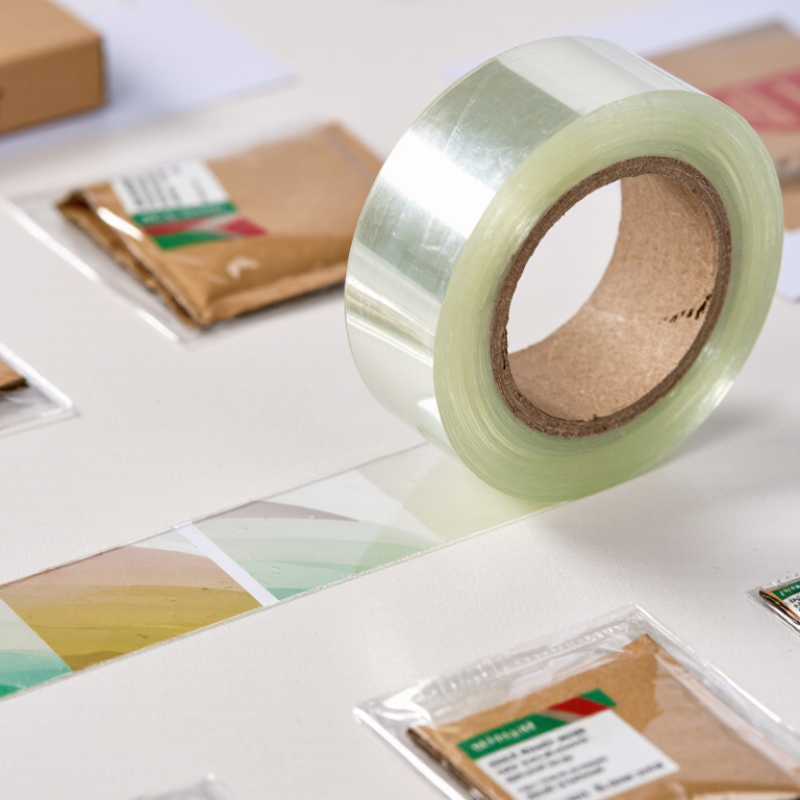
PET clear tape is a pressure-sensitive tape with a transparent polyethylene terephthalate (PET) backing. The film gives the tape dimensional stability and a smooth, glossy surface. “Clear” does not mean invisible: light, surface texture, and adhesive thickness can change how it looks on glass or printed packaging. PET film is typically made by melting resin, extruding it through a flat die, then stretching it in two directions. That orientation improves strength. The film is cooled, treated to help the adhesive bond, and coated with acrylic or another pressure-sensitive adhesive. After drying or curing, it is slit into rolls. Small coating differences matter.
PlasticsEurope’s Plastics—The Fast Facts 2023 reports 400.3 million tonnes of global plastics production in 2022; that figure covers all plastics, not PET tape. The scale is a useful reminder that material choices deserve scrutiny. The UN Environment Programme’s 2023 report, Turning off the Tap, estimates that packaging accounts for 36% of plastics produced, with 85% of plastic packaging ending in landfill or as unregulated waste. PET tape is only one small application, but adhesive layers can complicate material recovery. No tape is perfect. A clear roll may still leave residue, and its backing and adhesive may not separate easily during sorting.
What Is PET Clear Tape Used For?
Key Properties That Determine Its Uses
PET clear tape combines a transparent polyester film with an adhesive layer. The film is strong for its thickness and resists stretching, so it can hold a straight edge during application. Its clarity also matters. Labels, printed details, and aligned seams remain visible beneath the tape.
These properties suit PET tape for sealing light packages, bundling materials, protecting flat surfaces, and joining film or paper during production. A clear strip across a carton seam can keep the label readable. The film’s dimensional stability helps prevent the tape from creeping when tension is applied. It is less conformable than softer tapes, though, and may lift around tight curves or rough edges.
Adhesive choice changes the result. Some versions are designed for clean removal, while others prioritize a firm, lasting bond; the backing alone cannot predict residue or holding strength. Temperature, dust, and surface texture also affect performance. Test a small area first. That step is easy to skip, and sometimes the tape looks perfect until it is removed. PET tape should not be assumed suitable for electrical insulation or high-heat use unless its specifications explicitly support that purpose.
PET clear tape is used for packaging, electrical insulation, masking, and surface protection. Its polyester backing offers dimensional stability, strength, and resistance to stretching; the adhesive and tape construction determine suitability for a particular task. The ranges shown are representative backing-film thicknesses, not fixed specifications—actual products vary.
PET clear tape is useful when a package needs a neat, transparent seal without hiding its label. Its polyester film is generally stronger and more dimensionally stable than many thin stationery tapes, though performance depends on the adhesive and surface. For packaging, it can secure lightweight wrapping, close small mailers, or hold a protective sleeve in place. Press the strip down along the full seam, especially at the corners. Dusty cardboard can weaken adhesion. So can cold, damp surfaces.
In crafts, its clear finish helps attach acetate, paper layers, gift tags, and lightweight decorations while keeping edges visible. It also works for quick mock-ups, but it may leave residue or damage delicate paper when removed. Test a hidden corner.
For office work, PET tape can mend torn document sleeves, bundle cables temporarily, or cover a small label against handling. It is not a substitute for archival repair tape or a purpose-made heavy-duty carton seal. Choose a width that suits the job: narrow tape is easier to position, while wider strips cover seams faster. And yes, it can wrinkle. Lifting a crooked strip repeatedly may collect dust and leave a messier finish.
PET clear tape is used across industrial and commercial settings where visibility, clean application, and dependable bonding matter. In warehouses, suitable grades can secure cartons, bundle lightweight components, or hold protective film in place. Its transparent polyester backing lets workers inspect labels and package contents without removing the tape. In electronics and manufacturing, specific adhesive grades may help attach components or provide surface protection during assembly. Performance varies by thickness, adhesive, and temperature tolerance, so one type will not suit every task.
Tips: Test a small area first. Check the tape’s technical data for surface compatibility and service temperature. Dust, oil, or textured surfaces can weaken adhesion.
In retail and offices, PET clear tape can seal product boxes, attach price cards, and tidy display materials without obscuring printed details. It is also used for bundling documents and light packaging where a neat finish is useful. For heavier loads, outdoor exposure, or long storage, confirm that the selected grade is designed for those conditions. A clear tape may look sturdy but still lift at the edges; that detail is easy to overlook. Recheck adhesion after application, especially on recycled cartons or surfaces with a coating.
PET clear tape can look interchangeable on a roll, but the right choice depends on the job. Check the backing thickness, adhesive type, and stated temperature range before buying. A thin film suits neat bundling or light surface protection; thicker tape may resist tearing better around sharp edges. For smooth glass or metal, a stronger adhesive can hold well, but it may leave residue after removal. Fit matters.
Match the tape width to the surface and the pressure it will face. Narrow rolls work around small parts; wider rolls cover flat panels with fewer seams. If the taped item will warm up, check the manufacturer’s temperature data rather than guessing from the PET film alone. The adhesive often sets the limit. Test first. Apply a short strip to a clean, dry sample and leave it in place under typical conditions. Then check for lifting, haze, residue, or stretching. I have found this step easy to skip when a roll seems familiar, and that is where small surprises begin.
| Task | Why PET Clear Tape May Suit It | What to Look for | Important Check |
|---|---|---|---|
| Splicing films, foils, or paper webs | PET film provides a clear, dimensionally stable backing that can help hold a splice together during handling or processing. | Choose an adhesive compatible with the materials being joined, with suitable tack and peel strength for the process. | Test adhesion on the actual surfaces. Dust, coatings, and release treatments can affect bonding. |
| Protecting smooth surfaces | Clear PET tape can provide a thin barrier against handling marks, light abrasion, or contamination while keeping the surface visible. | Look for a clear backing, clean removal when required, and an adhesive designed for the surface and length of use. | Check for residue, surface discoloration, and adhesive transfer after the intended exposure time. |
| Electrical insulation | Some PET tapes are made for insulating applications and combine a polyester backing with an electrically insulating adhesive. | Select a tape with electrical ratings and approvals appropriate to the voltage, temperature, and application. | Do not assume that any clear PET tape is an electrical-insulation tape; verify its technical data and applicable safety requirements. |
| Assembly near heat | PET film can retain its shape better than many general-purpose packaging films, making it useful in some controlled-temperature processes. | Check the stated service-temperature range and whether it applies to continuous use, short exposure, or both. | Heat performance depends on the adhesive as well as the backing. Test under the real process conditions. |
| Joining or holding lightweight components | Clear PET tape can hold parts in place while allowing alignment marks or underlying components to remain visible. | Match tape width and adhesive strength to the component size, surface finish, and expected load. | For permanent bonding or structural loads, use a product specifically rated for that purpose rather than relying on general-purpose tape. |
| Packaging and document protection | Clear tape keeps labels or paper contents visible and can be convenient for light-duty sealing or reinforcement. | Choose an adhesive that bonds to the packaging material and consider the required seal strength and storage conditions. | For heavy cartons or long-term storage, compare the tape’s stated performance with the package weight and environment. |
Copyright © 2025 The Toolroom Inc. All Rights Reserved.
Website Design St Louis by IQComputing