
Blog

What Is a Modular Conveyor Belt and How Does It Work?

A Modular Conveyor Belt is built from interlocking plastic modules joined by hinge rods, creating a flexible, replaceable surface that moves products through production lines. Picture small food trays traveling around a tight curve, or wet containers passing over a belt that can be removed in sections for cleaning. Unlike a continuous fabric belt, its modular construction lets maintenance teams replace a damaged section instead of the entire belt. That can reduce downtime, though the real benefit depends on correct belt selection, installation, and upkeep.

Industry context matters. MHI’s 2024 Annual Industry Report found that 55% of surveyed supply chain professionals planned to increase investment in supply chain technology. The report does not measure modular conveyor belt adoption specifically, so it should not be treated as proof of demand for this belt type. It does, however, reflect growing attention to automation and material flow. In practice, engineers assess product size, load, temperature, washdown conditions, belt speed, and transfer points before choosing a system. A poor match can cause product instability, excessive wear, or troublesome gaps at transfers.

One limitation of the available source material is that it provides no verifiable, attributable quotation from a named modular-conveyor expert. Rather than invent one, this introduction avoids putting words in an expert’s mouth. The sections ahead explain how the belt works, what its components do, and where its strengths—and compromises—become clear.
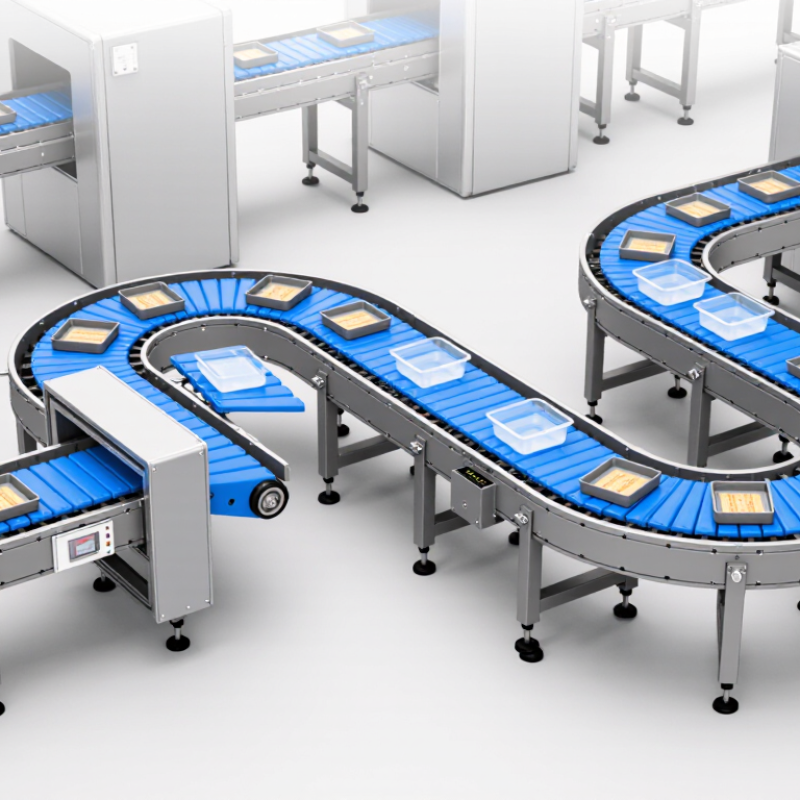
What Is a Modular Conveyor Belt and How Does It Work?

What Defines a Modular Conveyor Belt? Interlocking Plastic Modules and Rods

A modular conveyor belt is built from small, molded plastic modules joined by crosswise rods. Each module has hinge eyes along its edges; the rods pass through them, linking one row to the next. The result is a flexible belt that bends around sprockets without relying on a continuous fabric carcass. Look closely at a return run and you can often see the open grid, rod ends, and spaces where crumbs or wash water can pass. Module pitch, belt width, surface pattern, and rod material all affect tracking, load support, and cleanability. The design is practical, but not automatically right for every line.

MHI’s 2024 Annual Industry Report found that 55% of surveyed supply-chain professionals planned to increase technology investment. That figure is not specific to conveyor belts, but it reflects growing attention to equipment performance and uptime. Modular construction can help: damaged sections may be replaced without changing the whole belt. Yet the many joints need inspection. Worn hinge eyes, loose rods, or poor sprocket engagement can cause rough movement. Belt selection should match product size, temperature, cleaning routine, and load—not just conveyor length.

Tips: Check rod retention and sprocket alignment during routine inspections. Confirm the module’s open area suits the product; small items can catch in gaps. A quick visual check helps, though it will not replace measuring wear.

How Do Modules Form a Belt? Common Pitches Include 12.7, 19.05, and 25.4 mm

A modular conveyor belt is built from small, interlocking plastic sections rather than one continuous sheet. Each module connects to its neighbor with hinge rods, creating a flexible surface that can wrap around sprockets. The pitch is the distance between matching points on adjacent hinge rods. Common pitches include 12.7, 19.05, and 25.4 mm. A 12.7 mm pitch offers closer spacing; larger pitches can provide a more open, robust structure. The right choice depends on product size, load, speed, and transfer requirements.

Modules form rows across the belt’s width, while rods link those rows into a continuous loop. For example, a technician can replace a damaged section without discarding the entire belt. Still, pitch alone does not determine compatibility. Sprocket tooth spacing, belt width, and the conveyor’s return path must also match. A small mismatch can cause uneven engagement or extra wear. Measure carefully.

Tips

Check the pitch from hinge center to hinge center, not from the module’s outer edges. Confirm sprocket compatibility and test the belt under its expected load. Real installations can behave differently from a drawing, so leave room for inspection and adjustment.

How Does the Conveyor Drive the Belt? Sprocket Teeth Engage the Module Links

A modular conveyor belt is not pulled forward by friction alone. Its molded plastic modules contain openings that mesh with sprocket teeth mounted on a powered shaft. As the shaft turns, each tooth enters a module opening and pushes the belt forward. The drive is positive and indexed. It helps limit slip when loads vary, though worn teeth or poor alignment can still cause uneven movement.

Picture a wet food-processing line. A sprocket tooth meets a link beneath the belt, while the return strand wraps around the opposite end. Several sprockets share the load across the belt width. Their spacing must match the module pitch; otherwise, teeth may ride on the links instead of engaging cleanly. The Modular Conveyor Express? No brands. The Conveyor Equipment Manufacturers Association’s guidance on conveyor design emphasizes matching components to operating conditions. In practice, that means checking belt pitch, shaft alignment, load, and operating speed before selecting a drive.

The 2024 MHI Annual Industry Report found that 55% of surveyed supply-chain professionals planned to increase investment in technology and innovation. That broader investment trend makes reliable conveyor drives worth attention, but automation is not a cure-all. A small alignment error can create noise, wear, or skipped engagement. Watch the return side, too. It is easy to overlook. After installation, inspect tooth contact and belt tracking under a real load; a no-load test can miss problems.

What Is a Modular Conveyor Belt and How Does It Work? — How Does the Conveyor Drive the Belt? Sprocket Teeth Engage the Module Links

Topic Typical Example or Value How It Works
Modular conveyor belt Interconnected rows of molded plastic modules Hinged modules form a continuous belt. Individual damaged modules can often be replaced without replacing the entire belt.
Module connection Transverse hinge rods connect adjacent rows The rods pass through aligned hinge openings, allowing the belt to flex around sprockets while keeping the rows linked.
Drive sprocket Example: 12 teeth engaging a belt with a 25.4 mm pitch Sprocket teeth enter the belt’s drive openings or engage its molded links. This positive engagement transfers motor rotation to the belt.
Illustrative sprocket pitch diameter Approximately 97.8 mm for a 12-tooth sprocket and 25.4 mm pitch For a regular sprocket, the pitch diameter can be estimated as belt pitch ÷ sin(180° ÷ number of teeth). Actual dimensions depend on the belt and sprocket design.
Belt travel per sprocket revolution Approximately 304.8 mm in this example Travel is approximately the number of teeth multiplied by belt pitch: 12 × 25.4 mm. The belt advances one pitch for each tooth engagement.
Illustrative belt speed Approximately 9.14 m/min at 30 sprocket rpm Estimated speed equals travel per revolution multiplied by revolutions per minute: 0.3048 m × 30 rpm. Real speed can vary with system design and operating conditions.
Motor and gearbox Variable-speed gearmotor, selected for the required load and speed The motor supplies rotation; the gearbox reduces speed and increases available torque before driving the sprocket shaft.
Return run and support Return rails or rollers, as specified for the conveyor After passing around the end sprockets, the belt travels back toward the drive end. Supports guide the belt and help manage its weight and load.
Tracking and alignment Sprockets aligned across the shaft and matched to the belt pitch Correct alignment helps the sprockets engage evenly and reduces uneven wear, noise, and the risk of the belt climbing or binding.
Design note Values above are illustrative, not a universal specification. Choose belt pitch, sprockets, materials, shafting, and speed according to the belt manufacturer’s technical data and the conveyor’s load, temperature, and operating environment.

Which Belt Design Fits the Job? Compare Open-Area and Flush-Grid Surfaces

A modular conveyor belt uses interlocking plastic links, so damaged sections can be replaced without discarding the entire belt. Surface design matters as much as the material. Open-area belts have large gaps that let water and debris pass through. They suit washdown lines carrying wet produce, seafood, or freshly washed containers. Picture rinse water draining between links instead of pooling beneath a product. That helps, but it does not make cleaning automatic.

Flush-grid belts have smaller openings and a more continuous surface. They can support small items that might tip or fall through an open-area design, though crumbs and sticky residues may lodge around the links. The U.S. Centers for Disease Control and Prevention estimates that foodborne illnesses affect about 48 million people in the United States each year. That figure is not a belt-performance measure, but it underscores why cleanable equipment matters in food processing. The right choice depends on the product, drainage needs, and cleaning routine—not appearance alone. A flush grid can still be difficult to clean. Test both designs with the actual product and soil; a neat drawing rarely shows every snag.

Open-Area vs. Flush-Grid Modular Conveyor Belts

Qualitative design comparison on a relative 1–5 scale (higher indicates a stronger tendency). Actual performance depends on belt geometry, material, and application.

How to read this: Open-area surfaces generally allow more drainage and airflow, making them useful for washdown or cooling applications. Flush-grid surfaces provide a flatter conveying surface that can better support small or irregular items. Choose based on product stability, cleaning needs, and process conditions.

What Operating Data Matters? Check Load, Speed, Temperature, and Belt Width

A modular conveyor belt uses linked plastic modules joined by hinge rods, creating a flexible surface that can turn around sprockets. Its operating limits depend on the whole system, not the belt alone.

Record the product’s weight and contact pattern: a compact metal part can stress a few modules more than a broad, lightweight carton. CEMA’s Belt Conveyors for Bulk Materials treats capacity, belt width, and speed as connected design factors.

Measure the actual load, including accumulation and start-up conditions. Those details are easy to miss.

Speed affects throughput, wear, and motor demand. The U.S. Department of Energy’s Improving Motor and Drive System Performance guide estimates that motor-driven systems account for about 68% of electricity used in U.S. manufacturing. That figure covers many kinds of equipment, not conveyors alone, but it shows why speed changes deserve measurement.

Log belt speed under load, not just the drive’s setpoint. Temperature matters too: check both ambient heat and the product’s surface temperature, especially near ovens or washdown zones. Ask the belt supplier for its rated range; plastic type and exposure time can change performance.

Finally, confirm belt width against product size, side guides, and transfer gaps. A narrow belt may crowd packages. An unnecessarily wide one can complicate layout and cleaning.

Small mismatch, real trouble.

Copyright © 2025 The Toolroom Inc. All Rights Reserved.
Website Design St Louis by IQComputing