
China Top Magnetic Angle Sensor Manufacturers? This question deserves more than a supplier list. A reliable comparison should examine sensing accuracy, temperature drift, response time, package design, and production consistency. Magnetic Angle Sensor products may appear similar, yet their performance can differ sharply inside a motor, steering system, robot joint, or industrial actuator.
Dr. Jan Rabaey, a respected electronics researcher, once offered a useful engineering reminder: “Good sensing begins with understanding the physical signal, not merely selecting a component.” That principle matters when reviewing Chinese manufacturers. Strong candidates should explain their Hall-effect or tunneling-magnetoresistance technology clearly. They should also provide calibration methods, error curves, endurance data, and traceable quality records. Factory automation, wafer sourcing, final testing, and failure analysis deserve attention too. A polished datasheet is not proof enough.
Look beyond headline accuracy.
This guide will assess leading Chinese Magnetic Angle Sensor manufacturers through technical capability, customization experience, certification, delivery reliability, and application support. Automotive projects may require AEC-Q100 evidence, functional-safety planning, and stable operation across severe temperature cycles. Industrial buyers may value connector options, compact packaging, and fast engineering feedback more heavily. Cost still matters, but the cheapest sensor can become expensive after field recalibration, redesign, or delayed certification.
No ranking is perfect. Some supplier information remains incomplete, and marketing language can blur important differences. That limitation should be acknowledged, not hidden. The most dependable choice is usually the manufacturer that shares measurable data, answers difficult questions, and demonstrates repeatable production at realistic volumes.
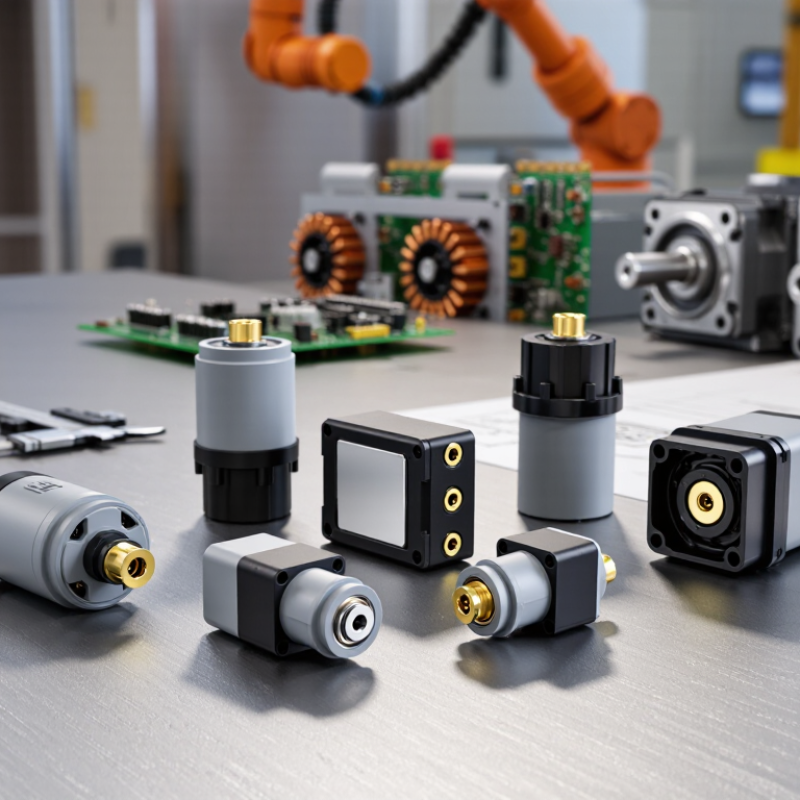
A magnetic angle sensor measures the rotational position of a shaft without physical contact. It detects changes in a magnetic field and converts them into an electrical angle signal. A small magnet usually sits near the sensing element. As the shaft turns, the field direction changes. The sensor then reports a position, such as 90 or 270 degrees.
This design reduces mechanical wear because there is no sliding contact inside the measurement path. It can support steering systems, valve controls, robotic joints, and industrial actuators. In a factory test, engineers may rotate a shaft slowly while checking signal stability at several points. Temperature, vibration, magnet alignment, and nearby metal parts can affect accuracy. Small installation errors matter.
Good magnetic angle sensor manufacturers should explain their calibration methods, operating limits, and test data clearly. Buyers should examine resolution, linearity, response time, output type, and protection against dust or moisture. A sensor may perform well in a laboratory but behave differently inside a vibrating machine. That gap deserves attention. I have found that simple alignment tools often prevent more problems than complex software corrections. Still, no sensor is perfect. The final design should include realistic tolerances, repeated testing, and a clear plan for replacement.
| Evaluation Dimension | Typical Technical Information | Why It Matters |
|---|---|---|
| Operating Principle | Detects the direction of a magnetic field and converts the angular position of a rotating magnet into an electrical signal. | Provides non-contact position measurement, which reduces mechanical wear and eliminates the need for a sliding electrical contact. |
| Common Sensing Technologies | Hall-effect, AMR (anisotropic magnetoresistive), and TMR (tunnel magnetoresistive) technologies are widely used. | The technology affects sensitivity, noise performance, magnetic-field tolerance, power consumption, and cost. |
| Measurement Range | Many magnetic angle sensors measure from 0° to 360°; some applications use a limited mechanical range such as ±45°, ±90°, or ±180°. | The required angular range determines the magnet arrangement, signal-processing method, and calibration strategy. |
| Output Interfaces | Typical outputs include analog voltage, PWM, SENT, SPI, and I²C, depending on the sensor architecture. | The interface determines wiring complexity, controller compatibility, update rate, diagnostics, and resistance to electrical noise. |
| Resolution | Digital magnetic angle sensors commonly use internal signal conversion in the approximately 12-bit to 16-bit class, although the effective resolution depends on noise and system conditions. | Higher nominal resolution does not automatically provide higher real-world accuracy; signal quality and calibration are also critical. |
| Accuracy and Linearity | Practical accuracy ranges from below 1° to several degrees, depending on the sensor, magnet, air gap, temperature, calibration, and mechanical alignment. | System-level accuracy is normally determined by the complete magnetic and mechanical assembly rather than the IC alone. |
| Rotational Speed | Supported speed depends on sample rate, internal filtering, interface bandwidth, pole-pair configuration, and application requirements. | High-speed motor and actuator applications require sufficient update rate and low signal-processing latency. |
| Magnet Requirements | Diametrically magnetized or multipole ring magnets are commonly used. Magnet grade, diameter, axial position, and field uniformity must match the sensor design. | Magnet geometry and field strength directly influence angle error, operating gap, and temperature stability. |
| Air Gap and Alignment | The allowable air gap and radial or axial offset are application-specific and must be verified using the sensor's mechanical and magnetic specifications. | Changes in gap, eccentricity, tilt, or shaft runout can introduce periodic angle error and reduce repeatability. |
| Operating Temperature | Industrial and automotive versions are commonly specified across extended temperature ranges, often including approximately −40°C to +125°C; the exact range is device-specific. | Temperature changes affect sensor offset, sensitivity, magnet strength, mechanical dimensions, and overall angle accuracy. |
| Environmental Protection | Protection may be provided by package selection, conformal coating, sealing, or a separate housing. Finished assemblies can be designed for demanding dust, moisture, and vibration conditions. | The sensor package and installation method must match the application's exposure to water, oil, chemicals, vibration, and contamination. |
| Power Supply | Supply requirements vary by device; many modern magnetic angle ICs operate from low-voltage rails such as 3.3 V or 5 V. | Voltage compatibility, current consumption, transient protection, and electromagnetic compatibility must be checked at system level. |
| Calibration Features | Calibration may compensate for offset, gain, nonlinearity, magnet eccentricity, and temperature effects through hardware, software, or both. | Calibration can improve system accuracy when the magnet and sensor cannot be manufactured or assembled with ideal tolerances. |
| Typical Applications | Electric motor commutation, valve position feedback, robotics, industrial actuators, steering systems, throttle and pedal position sensing, and rotary controls. | The application determines the required accuracy, response time, diagnostics, environmental rating, and functional-safety level. |
| Manufacturer Selection Criteria | Evaluate verified datasheets, magnetic design support, calibration capability, production consistency, quality systems, traceability, testing capacity, lead time, and customization support. | A reliable supplier must be able to control both the electronic sensing element and the complete magnet-sensor assembly process. |
Note: Actual performance depends on the selected sensing IC, magnet geometry, mechanical tolerances, calibration method, operating temperature, and final application design.