
Blog

How to Choose an Electric Crucible Melting Furnace in 2026?

Choosing an Electric Crucible Melting Furnace in 2026 is not just a question of capacity. The right choice depends on the metal, batch size, target temperature, and production rhythm. A furnace that works well for occasional brass melts may not suit daily aluminum production. Small details matter. Crucible compatibility, insulation, temperature control, and safe loading all affect real-world performance.

Metallurgist John Campbell’s first rule for good castings is often stated simply: “Start with a good quality melt.” That principle helps frame this guide. A furnace should support stable, repeatable melting—not merely reach a headline temperature. Compare rated capacity with your typical charge, and check how clearly the supplier specifies operating limits, power requirements, and maintenance needs. Ask about replacement crucibles, too. A low purchase price can look less attractive when consumables are hard to source.

This overview explains how to assess furnace type, capacity, controls, efficiency, and supplier support before buying. It also highlights practical trade-offs for workshops and production teams. Specifications deserve scrutiny. They do not tell the whole story. Installation conditions, operator workflow, and the alloys you actually melt can change the decision. Even a careful shortlist may miss something; that is worth admitting. Use the guide to build better questions, then confirm critical details with the manufacturer before committing.
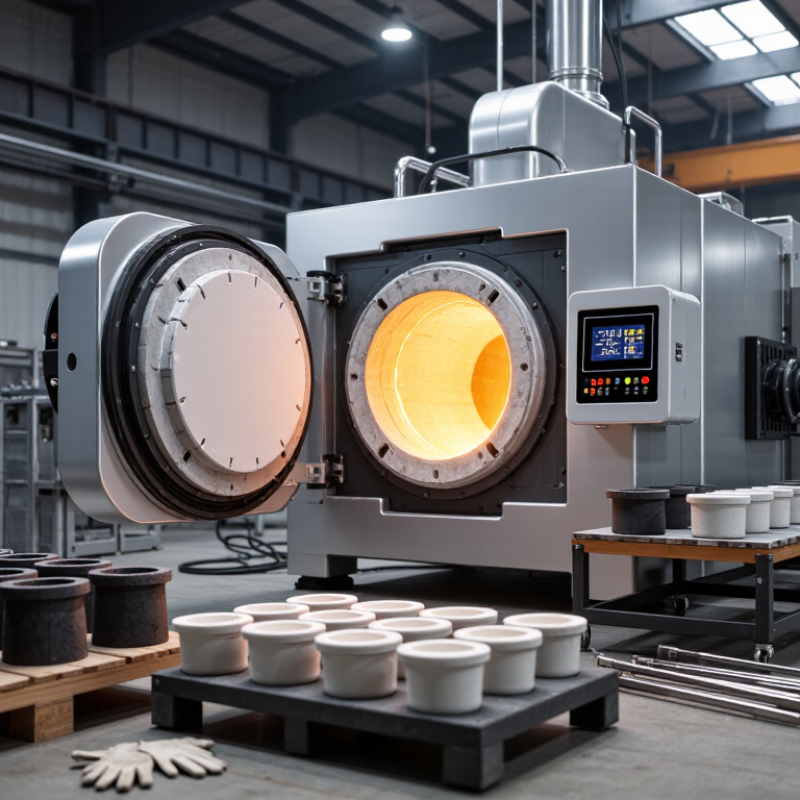
How to Choose an Electric Crucible Melting Furnace in 2026?

Define Production Requirements and Select the Appropriate Furnace Capacity

Choose furnace capacity from the metal you need to melt per hour, not from the largest batch you can fit. Record typical and peak demand, batch weight, alloy type, and planned operating hours. A 300-kilogram batch may require more than a 300-kilogram-rated furnace if production needs rapid turnaround. Check the manufacturer’s rated melt rate for your specific metal and working conditions. Allow for charging time, temperature control, and periods when the furnace must hold molten metal. Small details matter.

Tips: Compare the usable capacity with your normal batch size. Keep a simple production log for several shifts, including delays and rejected pours. Leave room for realistic growth, but avoid paying for capacity that will sit idle.

Consider how operators will load the furnace and whether melting and holding happen in the same unit. A large furnace can reduce the number of batches, yet oversized loads may slow heating and complicate temperature control. Check electrical supply capacity and expected peak demand with a qualified electrical professional. Ask for performance data under conditions close to your operation, rather than relying only on a headline rating. There is no perfect estimate; production schedules change, and I would revisit the figures after a few months of actual use.

How to Choose an Electric Crucible Melting Furnace in 2026?

Estimate the nominal furnace capacity per heat from your daily melt target.

Planning estimate assumes three heats per day and an 80% usable load per heat. For example, a 600 kg daily target suggests about 250 kg nominal capacity per heat. Adjust for alloy, melt-cycle time, operating hours, and production downtime before selecting a furnace.

Compare Heating Methods, Temperature Range, and Melting Performance

How to Choose an Electric Crucible Melting Furnace in 2026?

Compare Heating Methods, Temperature Range, and Melting Performance

Start with the metal, not the furnace catalogue. NIST lists aluminum’s melting point at 660.3°C and copper’s at 1,084.6°C. Your operating target must exceed the alloy’s liquidus temperature, while allowing for heat loss during charging and pouring. A higher maximum rating alone does not guarantee a better melt. It may simply mean more energy use.

Resistance heating warms the crucible and surrounding chamber, making it suitable for steady, controlled batches. Induction heating transfers energy electromagnetically to conductive metal and can shorten melt cycles when the charge and coil are well matched. There is a catch. Crucible material, load size, and power control all affect real performance. The U.S. Department of Energy’s Improving Process Heating System Performance sourcebook highlights temperature control and heat transfer as important process-heating considerations. Track melt time, temperature variation, and energy per kilogram in actual trials.

Look closely at the details. A small sensor error can leave a thin crust unmelted or overheat the metal near the heating zone. Ask suppliers for test data using a comparable charge, not an empty-furnace rating. Calibrate the thermocouple. And check recovery after each pour; production schedules rarely resemble ideal laboratory runs.

Check Crucible Compatibility with Metals, Alloys, and Operating Conditions

In 2026, match the crucible to the metal, not just the furnace’s maximum temperature. NIST Chemistry WebBook data lists melting points of 660.32°C for aluminum, 1084.62°C for copper, and 1538°C for iron. These figures are starting points, not operating targets. Allow for superheat, holding time, and repeated heating cycles. A crucible that survives one melt may still crack after several thermal cycles.

Chemistry matters just as much. Check whether the crucible material can react with the melt, alloying additions, or fluxes. Graphite can suit some melts under controlled, non-oxidizing conditions, but oxygen can consume it. Ceramic choices also vary: alumina, silica, and magnesia do not behave identically across alloys and temperatures. ASM Handbook, Volume 15: Casting, discusses how refractory selection and melt practice affect casting quality. Read the crucible maker’s compatibility chart, then confirm it against your exact alloy and atmosphere. Small differences matter.

Tips: Ask for compatibility data at your actual holding temperature, not only the furnace rating. Inspect for hairline cracks and glaze changes before each run. Keep a simple log of alloy, temperature, hold time, and crucible condition; the pattern may be imperfect, but it can reveal early wear.

Evaluate Energy Use, Controls, Safety Features, and 2026 Standards

When choosing an electric crucible melting furnace in 2026, compare energy use under your actual workload. Ask for measured kilowatt-hours per kilogram, not just the heater’s rated power. A furnace may use less energy per batch when properly sized and insulated. Check how often you melt, the alloy’s target temperature, and the time spent holding heat. Small details matter.

Controls should make repeatable operation practical. Look for clear temperature readings, programmable ramp-and-hold settings, independent over-temperature protection, and a record of operating data. Confirm that sensors suit your working temperature and can be checked or replaced. A display can look precise while a poorly placed sensor reads uneven heat. I would not judge control quality by screen size.

Safety and compliance need equal attention. Inspect lid or door interlocks, grounding, emergency shutoff, and protection against accidental contact with hot surfaces. Plan suitable ventilation for the materials and process. In 2026, verify applicable electrical, workplace, and emissions requirements for your location and installation; rules can vary. Ask the supplier for test records and installation documents, then have a qualified professional review the site. It takes time. Skipping that review can leave a capable furnace poorly matched to the room, power supply, or daily workflow.

Compare Total Ownership Costs, Maintenance Needs, and Supplier Support

An electric crucible melting furnace should be compared by cost per usable melt, not sticker price. A lower quote can hide electrical upgrades, ventilation work, lifting equipment, or operator training. Ask suppliers to estimate energy use for your alloy, batch size, and daily melting schedule. Check those assumptions against your utility rates and production records. Small differences add up.

Maintenance affects both output and safety. Review the expected life and replacement cost of the crucible, refractory lining, heating elements, and temperature sensors. Ask how often inspections are recommended, how long a routine lining change takes, and which tasks require a qualified technician. Keep a written log of melt cycles and repairs; it can reveal wear patterns that a brochure cannot show. Real conditions vary.

Supplier support is part of ownership cost. Get response-time commitments, commissioning scope, training hours, and a clear list of stocked spare parts in writing. Confirm whether troubleshooting is remote or on-site, and whether travel or labor is billed separately. Request customer references with similar metals and throughput. A careful supplier will discuss limitations, not promise identical results in every shop. That matters.

How to Choose an Electric Crucible Melting Furnace in 2026? — Compare Total Ownership Costs, Maintenance Needs, and Supplier Support

Comparison Dimension Compact Resistance Furnace Medium Induction Furnace Large Resistance Furnace
Typical application Small foundries, laboratories, and frequent alloy changes Production foundries needing rapid melting and responsive temperature control Higher-volume melting where a larger batch capacity is useful
Indicative molten-metal capacity 50–100 kg per batch 100–250 kg per batch 200–500 kg per batch
Indicative purchase budget (USD) $15,000–$35,000 $35,000–$90,000 $45,000–$110,000
Planning electricity use Approximately 650–900 kWh per tonne melted Approximately 500–750 kWh per tonne melted Approximately 650–900 kWh per tonne melted
Annual throughput used for comparison 100 tonnes 200 tonnes 350 tonnes
Estimated annual electricity cost $7,800–$10,800 $12,000–$18,000 $27,300–$37,800
Electricity-cost assumption Illustrative industrial tariff of $0.12/kWh. Actual consumption and tariff depend on alloy, charge condition, operating schedule, furnace setup, and local utility rates.
Routine maintenance planning allowance $2,000–$6,000 per year $4,000–$10,000 per year $5,000–$12,000 per year
Maintenance items to check Crucible and refractory condition, heating elements, thermocouples, contactors, and insulation Crucible/refractory, induction coil and cooling circuit, power electronics, sensors, and electrical connections Crucible and refractory, heating elements, temperature controls, insulation, and tilting or lifting mechanisms if fitted
Estimated 5-year ownership cost $64,000–$119,000 $115,000–$230,000 $206,500–$359,000
5-year cost includes Indicative purchase budget + five years of estimated electricity and routine maintenance allowances. Excludes labor, financing, taxes, installation, building or electrical upgrades, production losses, and major unplanned repairs.
Maintenance profile Generally straightforward; element and refractory life depend on temperature, duty cycle, and operating practices. Requires attention to cooling-water quality and flow, coil condition, and power-electronics service requirements. Similar checks to a compact resistance furnace, with potentially greater refractory and mechanism service needs due to larger capacity.
Supplier support to request Written warranty scope; commissioning and operator training; spare-parts list and lead times; service contact and response-time commitment; troubleshooting documentation; and availability of qualified technicians.
Best-fit buying priority Lower initial cost, simpler operation, and modest batch sizes Faster melting and potentially lower energy use, subject to workload and installation requirements Higher batch capacity and throughput, with careful evaluation of power supply and floor-space needs
Key questions before ordering Confirm the metal and alloy, usable capacity, required melt rate, daily operating hours, electrical service, cooling needs, installation scope, safety features, and the supplier’s guaranteed performance conditions.

Planning note: All figures are illustrative 2026 budget estimates in USD, not supplier quotations or guaranteed performance. Costs vary by region, furnace specification, metal, duty cycle, utility tariff, and installation scope. Request comparable written quotations using the same throughput and operating assumptions.

Copyright © 2025 The Toolroom Inc. All Rights Reserved.
Website Design St Louis by IQComputing