Why Choose a Geomembrane Welding Machine for Your Project?
In the realm of construction and environmental engineering, the geomembrane welding machine has become essential. Experts like Dr. John Thompson, a leading specialist in geomembrane technology, emphasize its importance by stating, “Selecting the right welding machine can significantly enhance project efficiency and durability.”
These machines provide robust solutions for various applications, such as landfill liners and water containment systems. The precision offered by a geomembrane welding machine can lead to significant cost savings. Ensuring proper sealing prevents leaks and environmental contamination. However, one must note that improper use often leads to project delays and additional expenses.
Though effective, not every project requires a geomembrane welding machine. Understanding specific project needs can save resources. Investing in this technology without proper planning may result in inadequate applications. Always consider the unique requirements of your project before deciding on utilizing a geomembrane welding machine. Engaging with industry experts can yield insights that help navigate these challenges.
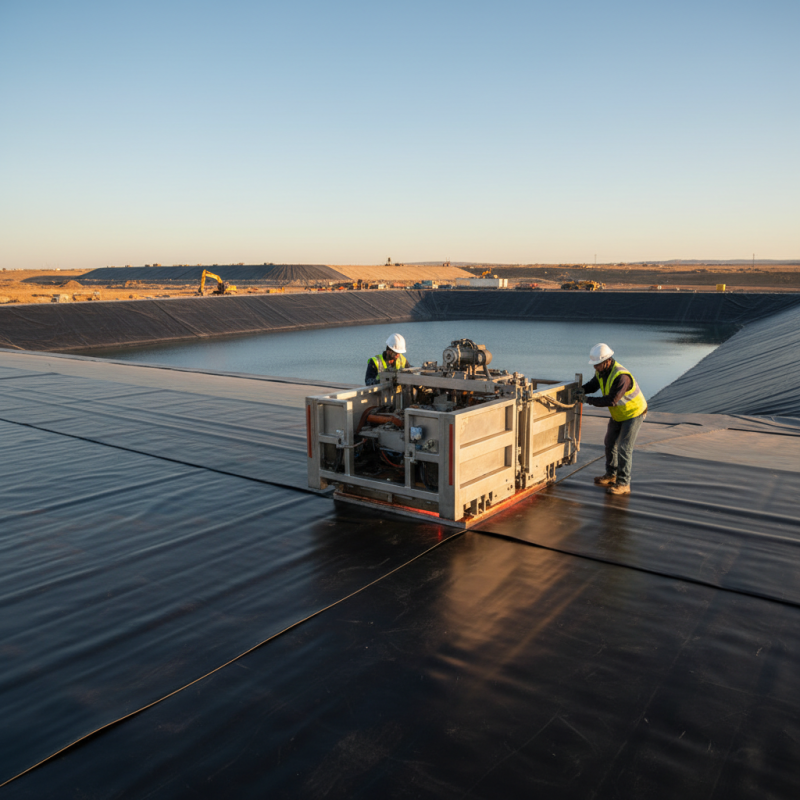
Benefits of Using a Geomembrane Welding Machine in Construction Projects
Geomembrane welding machines are becoming essential in modern construction projects. They offer significant advantages when dealing with containment systems. These machines create reliable seams, ensuring that geomembranes perform effectively in various applications, such as landfill liners and water reservoirs. According to a report by the Geosynthetic Research Institute, over 70% of project failures in containment systems are due to inadequate seam integrity.
One core benefit is the speed of installation. With innovative technology, these machines can weld large areas in shorter timeframes. For instance, studies reveal projects using automated geomembrane welders can reduce installation time by up to 50%. This efficiency translates into cost savings. Faster projects reduce labor costs and the overall timeline, leading to quicker project delivery.
However, not all welding techniques yield the same quality. Poorly executed seams can lead to significant leaks. Engineers must ensure that operators are well-trained. The skill of the welder plays a crucial role in the outcome. Often, there are compromises when balancing speed and quality. Ensuring the right temperature and speed during the welding process remains a topic for ongoing debate within the industry. This highlights the need for careful consideration and planning.
Benefits of Using a Geomembrane Welding Machine in Construction Projects
Key Features to Look for in a Geomembrane Welding Machine
When selecting a geomembrane welding machine, consider its essential features. Look for adjustable temperature settings. This allows operators to customize heat for different materials. Proper temperature control ensures strong and durable seams. Without it, you risk weak welds. Check the welding speed as well. Faster machines can improve productivity. However, speed must not compromise the quality of the weld.
Another critical feature is the type of welding technology. Look for machines that use hot wedge or side-wall welding. These methods provide high-quality seams, especially for thicker geomembranes. Durability of the machine matters too. Choose one made from robust materials. This ensures it withstands harsh environmental conditions. Regular wear and tear are common. Machines may require maintenance often, and that can be inconvenient.
Portability is another aspect to think about. Lightweight machines are easier to transport. This feature is crucial for large projects with varying site locations. However, lightweight does not always mean less sturdy. Some lightweight models can still offer exceptional performance. Ultimately, careful consideration of these features leads to better welding results. Yet, keep in mind that no machine is perfect. Each has its limitations, and users must adapt to those.
Types of Geomembrane Welding Techniques and Their Applications
Geomembrane welding techniques are crucial for many construction projects. They create strong seals for containment systems and liners. Hot wedge welding is one popular method. It uses a heated wedge to melt two geomembrane sheets together. This technique is efficient and yields long-lasting results. Often, workers find it easier to manage on-site.
Another widely used technique is extrusion welding. This method feeds molten material into the joint. It is particularly useful for complex geometries and thicker materials. Many professionals appreciate its flexibility. However, it requires skilled operators to achieve optimal results. Lesser-skilled workers may struggle, leading to weak seams that need rework.
Finally, there’s the use of infrared welding. It employs heated plates to join surfaces seamlessly. This technique is less common but highly effective for thin geomembranes. Although it can be costly, the quality of the bond is superb. Installation challenges can arise in strong winds or cold weather. Each technique has its pros and cons, and careful consideration is important for project success.
Cost-Effectiveness of Investing in a Geomembrane Welding Machine
Investing in a geomembrane welding machine can lead to significant cost savings for your projects. Traditional welding methods require more labor and time. With a welding machine, the process becomes faster and more efficient. Reduced labor hours can translate into lower project costs. The equipment also minimizes material waste, which further boosts savings.
However, it's essential to consider the initial investment. A geomembrane welding machine can be costly upfront. Some may question whether the long-term benefits outweigh this initial expense. It's a valid concern. The quality of the welds can directly impact the project's durability and longevity. Poor welds lead to leaks, which can be expensive to repair. The right machine ensures higher quality, reducing potential future costs.
Maintenance and operational skills are other factors to ponder. Keeping the welding machine in good condition requires regular checks. Operators need proper training to use the machine effectively. An untrained operator could compromise quality. While the investment might seem daunting, it can pay off when managed well. Careful consideration can make the difference in project success.
Safety Considerations When Operating Geomembrane Welding Equipment
Operating geomembrane welding equipment involves several safety considerations. Personal protective equipment (PPE) is a must. Workers should wear gloves, safety goggles, and masks. This gear protects against harmful fumes and sharp edges. It’s essential to evaluate the workspace for hazards before starting any project. A cluttered environment can lead to accidents.
Training is crucial. Workers should understand how to operate the machinery safely. Regular safety drills can help reinforce proper procedures. They should also be aware of emergency shutdown protocols. Miscommunication can be dangerous. Having clear signage and a buddy system can minimize risk.
Injury can happen in a split second. Inspect the equipment regularly for any wear and tear. Flawed machinery can lead to serious accidents. It's wise to keep a first aid kit nearby. Make sure that everyone knows its location. The goal is to create a safe and efficient working environment. However, even the best systems can fail, so constant vigilance is necessary.