What Is a Drain Pump and How Does It Work?
A Drain Pump is a small but essential machine that removes unwanted water from appliances, basements, sinks, and industrial systems. It does not make water disappear. It gives water enough pressure to travel through a discharge hose or pipe. That simple action protects equipment from overflow, standing water, and possible corrosion.
Pump engineer Igor J. Karassik offered a useful principle: “A pump is a device that adds energy to a liquid.” This idea explains how a Drain Pump works. An electric motor turns an impeller inside the pump housing. The impeller creates movement and pressure. Water enters through the inlet, passes across the rotating blades, and exits through the outlet. A check valve may help prevent backflow when the motor stops.
The process sounds straightforward. It is not always perfect. A blocked filter, kinked hose, worn impeller, or trapped air can reduce performance. Even a quiet pump may be struggling. Watch the details. Listen for unusual humming. Check whether water drains slowly. Inspect the hose for sharp bends and debris.
Understanding these parts makes troubleshooting safer and more practical. It also helps users choose the right pump capacity, power rating, and discharge height. A pump designed for light appliance drainage may fail in a deep basement application. That mistake is common. This guide examines the main components, operating cycle, maintenance needs, and warning signs of a Drain Pump. The goal is clear: explain the technology accurately, while recognizing that real systems can behave differently from diagrams.
What Is a Drain Pump?
What Is a Drain Pump?
A drain pump is a small motorized device that removes used water from an appliance. It is common in washing machines, dishwashers, and some condensate systems. The pump uses a rotating impeller to push water through a drain hose. A filter usually catches lint, hair, coins, or food particles before they reach the impeller.
During a wash cycle, a control board sends power to the pump after the appliance finishes cleaning. The motor spins, creates pressure, and moves wastewater toward a standpipe or household drain. A check valve may help prevent dirty water from flowing backward. The process sounds simple, but hose height and air leaks can affect drainage. Small design details matter.
The ENERGY STAR Residential Clothes Washer Specification, Version 8.0, reports that certified washers use about 20% less energy and 30% less water than standard models. Less water does not make the pump unimportant. It can make restricted flow easier to notice. A partial blockage may leave water sitting inside the drum, while a worn impeller may produce a low humming sound without strong discharge. The U.S. Department of Energy’s appliance test procedures also emphasize consistent drainage conditions during washer performance testing. That point is easy to overlook. A drain pump is not a cure for every drainage problem; a crushed hose, clogged filter, or faulty sensor can create similar symptoms. Reliable diagnosis starts with checking the filter, hose, electrical connection, and pump movement in that order.
What Is a Drain Pump and How Does It Work?
A drain pump uses a small electric motor and impeller to move wastewater through a discharge hose. As discharge height increases, the pump typically delivers less water per minute.
The chart shows representative flow rates for a typical household centrifugal drain pump at different discharge heights. Actual performance varies with pump design, hose length, hose diameter, and blockages.
What Are the Main Parts of a Drain Pump?
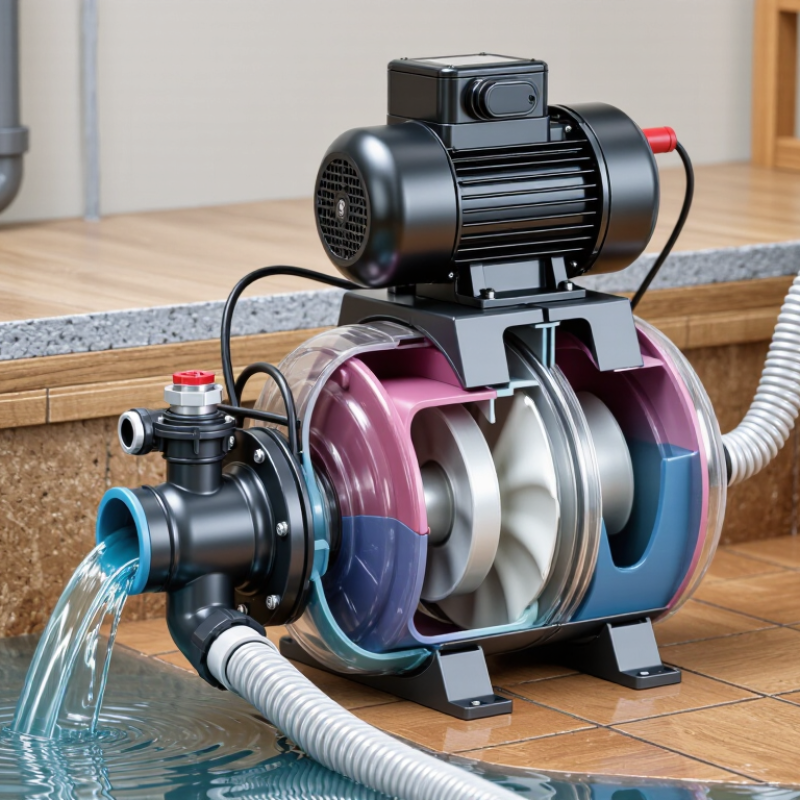
A drain pump is a small centrifugal pump that removes used water from an appliance. Its main parts work as one compact system. The electric motor supplies rotational force. A shaft transfers that force to the impeller, which has curved blades. As the impeller spins, it pushes water through the volute, or pump chamber, and toward the outlet hose. The housing keeps pressure stable and protects moving parts.
The inlet filter catches lint, hair, coins, and other debris before they reach the impeller. A blocked filter can reduce flow or create a harsh buzzing sound. The outlet connector joins the pump to the drain hose, while a check valve helps prevent dirty water from flowing backward. Many modern assemblies also include wiring terminals, seals, and a water-level or overflow sensor. These parts are small, but their failure can stop the entire drainage cycle.
The U.S. Department of Energy’s Residential Clothes Washer Test Procedure uses 295 cycles per year as a standard usage assumption. That workload explains why motor bearings, seals, and impeller blades need careful inspection. The Hydraulic Institute also identifies blockage, cavitation, and poor alignment as common causes of pump loss. In field repairs, I have found that the filter is blamed too quickly. A clean filter does not prove the motor is healthy. Sometimes the real fault is a worn impeller or a loose electrical connection. Simple parts can hide complicated failures.
How Does a Drain Pump Move and Remove Water?
A drain pump is a compact mechanical device that removes used water from an appliance or drainage system. It does not absorb water. Instead, it uses a rotating impeller to create pressure and guide water through an outlet hose.
When power reaches the pump motor, the impeller spins inside a small chamber. Water enters through the inlet, usually by gravity or from a connected tub. The spinning blades push water outward and toward the discharge port.
This movement creates a steady flow. The pump then sends water through the hose and into a standpipe, drain, or approved wastewater connection.
The pump must overcome hose resistance, height, and trapped air. A narrow hose can slow the flow. A kink can stop it completely. Small objects may also block the impeller, causing noise or weak drainage. During routine service, technicians often find lint, hair, or coins near the pump filter. Cleaning these areas can restore water movement, but not always. A worn impeller may spin while moving very little water. That detail is easy to miss.
A working pump usually produces a consistent humming sound. Loud rattling, repeated clicking, or a burning smell suggests a fault. Disconnecting power before inspection is essential. Water and electricity create serious hazards. Correct hose placement also matters, because excessive height can exceed the pump’s lifting ability. Even a new pump may drain poorly when installation conditions are wrong.
Where Are Drain Pumps Commonly Used?
Drain pumps are common wherever water must leave a system against gravity or through a narrow outlet. In washing machines, the pump removes dirty water after the wash and rinse cycles. Dishwashers use similar pumps to clear food-contaminated water from the sump. Their small impellers spin rapidly, creating pressure that pushes water through a drain hose.
They also appear in air-conditioning systems, where they lift condensation into a suitable drain line. This matters when the indoor unit sits below the building’s main drainage point. In basements, sump pumps move collected groundwater from a pit to an outdoor discharge area. Some boats use drain pumps to remove bilge water, while commercial kitchens may use larger units for wastewater transfer.
Good maintenance starts with the application. Technicians usually check the pump’s flow rate, head height, hose condition, and electrical protection. A clogged filter can make a healthy motor sound defective. So can a kinked hose. Small details matter. An overlooked float switch may stop the pump completely. Not every pump failure means the motor is worn out; poor installation, debris, or repeated dry running can be responsible. A practical inspection should include unusual vibration, slow drainage, leaks around fittings, and water returning after shutdown. The exact design varies, and assumptions can lead to the wrong replacement.
What Factors Affect Drain Pump Performance?
A drain pump removes wastewater by spinning an impeller inside a small housing. The impeller creates pressure and pushes water through the outlet hose. Its performance depends on more than motor power.
Lift height is a major factor. A pump moves less water when it must push wastewater higher. Long hoses, sharp bends, and narrow outlets also increase resistance. A partially blocked filter can reduce flow, even when the motor sounds normal. The first diagnosis is not always right. A clean-looking hose may still contain sludge near its bends.
Water temperature and thickness matter too. Hot, greasy water can stress seals and change flow behavior. Heavy loads may create more wastewater than the pump can remove during one cycle. Frequent operation can also raise motor temperature. Ventilation around the pump helps it cool. Secure mounting matters because vibration can loosen connections and create leaks.
Practical checks should include the filter, hose route, impeller, electrical supply, and discharge height. Listen for grinding, humming, or repeated clicking. These sounds can indicate trapped debris, a worn bearing, or weak starting power. A measured flow test gives better evidence than sound alone. No test is perfect, though. Pump performance can change as parts wear, so maintenance records and regular inspections remain useful. Replacing a damaged seal early may prevent water from reaching the motor.