How to Choose the Right Agitators for Global Sourcing?
Choosing the right Agitators for global sourcing requires more than comparing prices, motor ratings, and delivery dates. Equipment must match the process, vessel geometry, fluid behavior, and local operating conditions. A supplier may offer an impressive catalogue. However, that catalogue cannot replace practical engineering review.
Experienced buyers examine viscosity, density, solids concentration, temperature, corrosion risks, and required mixing time. They also inspect impeller diameter, shaft strength, seal design, motor efficiency, and maintenance access. A small pilot test can reveal problems that drawings often hide. For example, a thick liquid may leave stagnant material near the tank wall. A fast motor will not automatically solve that problem.
James Y. Oldshue, a respected mixing specialist and author of Fluid Mixing Technology, stated, “Mixing is the process of reducing nonuniformities in order to achieve a desired degree of uniformity.” His principle remains useful when evaluating Agitators across international supply chains. The best selection connects measurable process results with dependable equipment design.
Global sourcing also demands careful supplier verification. Review manufacturing experience, quality records, material certificates, testing procedures, spare-parts support, and communication capability. Ask for references from comparable applications. Confirm that technical documents use consistent units and clearly identify performance assumptions.
No selection method is perfect. A spreadsheet can hide real operating difficulties. A low purchase price may create higher installation or maintenance costs later. That deserves honest reflection. The right Agitators should deliver stable mixing, safe operation, manageable energy use, and support throughout their service life. Careful questions usually produce better decisions than attractive promises.
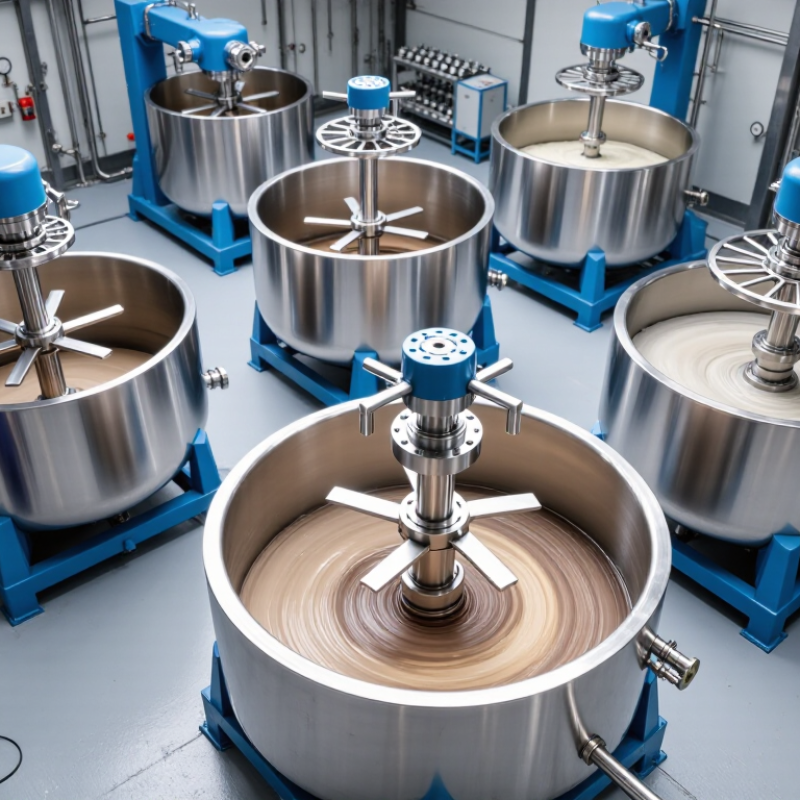
Define the Agitation Requirements for Your Process
How to Choose the Right Agitators for Global Sourcing?
Define the Agitation Requirements for Your Process
Start with the process, not the equipment catalogue. Record liquid viscosity, density, temperature, solids concentration, and batch volume. Describe the mixing objective clearly. Is the goal blending, suspension, heat transfer, gas dispersion, or crystallization control? Each duty demands different flow patterns and power levels.
Measure the hardest operating condition. A liquid may become ten times thicker during cooling. Settled particles may also require higher torque during restart. Include vessel diameter, liquid height, baffle design, and impeller clearance. These details strongly affect circulation and shear. A small laboratory test can reveal dead zones that calculations miss. I have seen specifications fail because “uniform mixing” was never defined.
Energy deserves early attention. The U.S. Department of Energy reports that motor-driven systems use about 70% of industrial electricity. Agitator efficiency therefore affects operating cost, not only purchase price. The International Energy Agency reported that industry consumed approximately 37% of global final energy in 2022. Request power data at normal, minimum, and maximum loads. Ask for torque, speed range, seal conditions, and materials compatibility. Do not accept a single horsepower figure without process evidence. It looks convenient, but it may hide poor scale-up assumptions. A practical specification should also include cleaning method, inspection access, control philosophy, and local service capability. These requirements make global sourcing more reliable, even when the first specification needs revision.
Compare Agitator Types, Designs, and Operating Principles
Choosing an agitator for global sourcing starts with the operating principle, not the catalog photograph. Propeller agitators create axial flow for low-viscosity liquids and blending. Turbine designs generate stronger radial flow, helping gas dispersion and heat transfer. Anchor agitators scrape near vessel walls, making them suitable for viscous materials. Helical-ribbon units move thick products slowly through the tank. They consume more torque, but sometimes deliver better batch consistency.
Design details can change performance sharply. A baffled tank limits vortexing, while an unbaffled tank may waste power through surface rotation. Impeller diameter, clearance, speed, shaft stiffness, seal design, and wetted materials should match viscosity, solids content, temperature, and cleaning requirements. The U.S. Department of Energy reports that motor systems use about 69% of electricity in U.S. manufacturing. That figure makes gearbox efficiency and variable-speed control more than purchasing details. They affect operating cost across many years.
Global buyers should request power curves, mixing-time tests, material certificates, and spare-part compatibility. IEC 60034-30-1 efficiency classes help compare motor performance across markets, although they do not prove mixing quality. A laboratory test with water can mislead when the real product behaves like syrup. I would also question oversized motors; extra capacity sounds safe, yet it may increase energy use and reduce controllability. Supplier claims need independent verification. Sometimes, a simpler agitator with the correct impeller wins.
How to Choose the Right Agitators for Global Sourcing?
Comparison of common agitator types by typical suitability for axial mixing, radial mixing, gas dispersion, and heat-transfer duties.
Scores use a typical engineering suitability scale from 1 to 5, where 5 indicates strong suitability for the stated duty. Hydrofoil and pitched-blade designs generally provide efficient axial circulation, Rushton turbines are commonly selected for gas dispersion and radial flow, and anchor agitators are well suited to viscous products and wall heat transfer.
Evaluate Materials, Performance, and Compliance Standards
How to Choose the Right Agitators for Global Sourcing?
Material selection shapes an agitator’s service life, safety, and maintenance cost. Start with the process fluid, not the supplier’s standard catalogue. Record acidity, temperature, viscosity, solids, and cleaning chemicals. Stainless steel may suit many duties, but chloride exposure can cause pitting. Coatings can help, yet damaged surfaces may hide corrosion. Check shaft, impeller, seal, and fastener materials separately. They do not always share the same resistance.
Performance data should reflect real operating conditions. Ask for torque, power consumption, speed range, mixing time, and expected shear. A small laboratory test can reveal dead zones near the tank wall. Measure changes in viscosity, temperature, and fill level. These details matter during scale-up. Do not rely only on motor horsepower. A powerful motor may still deliver poor circulation. A spreadsheet can mislead.
Compliance requires documented evidence, not confident promises. Request material certificates, welding records, inspection reports, test results, and traceable serial numbers. Confirm applicable pressure, electrical, machinery, food-contact, or hazardous-area requirements for the installation location. Local rules may differ from the manufacturing country’s rules. Have qualified engineers review drawings and declarations before purchase. Suppliers sometimes provide incomplete files. That should slow the decision, not end it. Leave room for independent inspection, because assumptions often appear after commissioning.
Assess Global Suppliers, Costs, Logistics, and After-Sales Support
Choosing agitators for global sourcing requires more than comparing catalog prices. Start with the process itself: tank volume, viscosity, solids content, temperature, and required mixing time. A supplier should explain impeller selection with calculations, not vague claims. Ask for test data using a fluid close to yours. Small details matter. During factory audits, inspect welds, shaft alignment, seals, and motor protection. I once saw a low-cost unit pass a video call but arrive with unclear wiring labels. That delay was avoidable.
Assess suppliers through documented quality controls and repeatable communication. Request material certificates, inspection records, dimensional drawings, and a sample factory acceptance checklist. Reliable teams answer technical questions directly and record design changes. Their authority should come from evidence, not polished presentations. Check production capacity against your schedule. A supplier promising ten units may still lack enough test equipment. Confirm who approves deviations and how problems are escalated. This step feels slow, yet it protects the project.
Build total cost around the delivered agitator, not the quotation alone. Include tooling, export packing, freight, insurance, duties, installation, spare seals, and commissioning support. Compare delivery terms carefully. A cheaper ex-works offer can become expensive after port handling and inland transport. Ask for a realistic logistics plan with crate dimensions, weights, lead times, and backup routes. After-sales support needs equal attention. Define response times, remote troubleshooting, replacement-part availability, and technician travel costs. Keep a small critical-spares kit onsite. It is not always necessary. But production downtime is usually less forgiving than expected.