
Blog

How to Choose the Best Warming Chafing Dish in 2026?

Choosing the right Warming Chafing Dish in 2026 is not just a matter of appearance. It affects serving temperature, setup time, and how smoothly a buffet runs. The National Restaurant Association’s 2024 State of the Restaurant Industry report projected U.S. restaurant sales of $1.1 trillion that year, with 15.7 million people employed in the sector. Those figures point to a large, busy foodservice environment where dependable serving equipment matters. They do not, by themselves, prove that one chafing dish performs better than another.

Temperature deserves close attention. The FDA Food Code 2022 sets 135°F as the minimum for hot holding, a useful benchmark when assessing a unit’s heat source and operating instructions. A dish that looks polished may still disappoint if its lid fits poorly, its frame wobbles, or its fuel setup is awkward during service. Small details matter. Think about a crowded buffet table, a server lifting the lid repeatedly, and food that must remain accessible without losing heat. Capacity, material, portability, cleaning, and fuel compatibility all deserve a practical comparison.

This guide explains how to weigh those factors and match a Warming Chafing Dish to your menu, venue, and service style. It also separates documented guidance from product claims, since advertised performance can be difficult to compare across brands. There is no perfect choice for every event. Even a careful checklist can miss something.
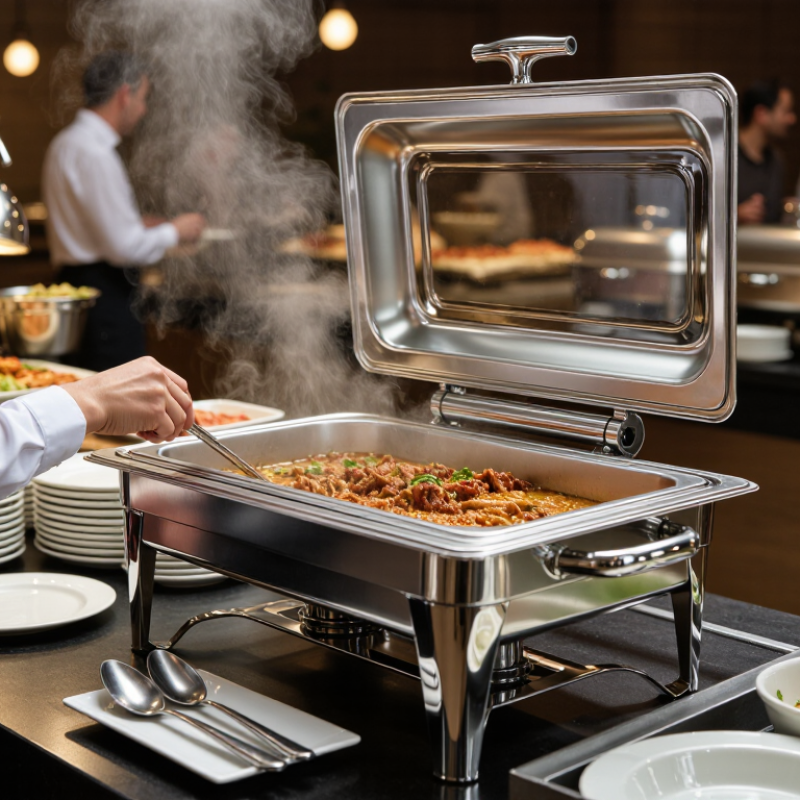
How to Choose the Best Warming Chafing Dish in 2026?

Understand How Warming Chafing Dishes Work

A warming chafing dish is designed to hold prepared food at serving temperature, not cook it from raw. In a common water-pan model, heat warms water beneath the food pan. The water releases steam, which spreads gentle, indirect warmth across the dish. That distinction matters. The food is less likely to scorch than over a direct flame, though edges can still dry out during long service.

Steam is gentle. A fuel-heated unit relies on small burners beneath the water pan; an electric model uses a heating element, often with adjustable settings. Add water before heating, and check its level during service. If the pan runs dry, temperatures can rise unevenly and food may stick or lose moisture. A thermometer gives a more reliable check than touching the tray or judging by steam.

When comparing models, consider how quickly they heat, how steadily they hold warmth, and whether the water pan is easy to refill. A larger dish may look practical, but it can use more fuel and hold more food than a small gathering needs. Preheat the unit and place already-hot food inside; warming equipment may not heat chilled food evenly or quickly enough. Follow local food-safety guidance for hot holding. I might focus too much on capacity when shopping, but stable heat and simple temperature checks often matter more.

Compare Fuel, Electric, and Induction Heating Options

How to Choose the Best Warming Chafing Dish in 2026?
Compare Fuel, Electric, and Induction Heating Options

Fuel-heated chafers suit outdoor events and venues without nearby outlets. They warm food independently, but staff must monitor flames and replace fuel cans. Electric models offer steady, adjustable heat for indoor buffets with reliable power. Check cord placement, outlet capacity, and temperature controls before service. For compatible cookware, induction heats quickly and avoids an exposed flame. The U.S. Department of Energy’s Energy Saver guidance estimates induction transfers about 85% of its energy to cookware, compared with roughly 32% for gas. Those figures describe cooking efficiency, not the performance of every buffet warmer.

The best choice depends on service conditions, not just efficiency. A fuel unit may be practical for a short outdoor reception; an electric unit can suit a long indoor meal. Induction needs a compatible base and an approved vessel, so verify both in the equipment instructions. Still, a tidy efficiency number can mislead: real results depend on food volume, lid use, and temperature settings. Convenience matters.

Tips: Test the setup before guests arrive. Place a thermometer in the food, not against the pan, and check temperature during service. Keep cords away from walkways, and never assume one heat setting fits every dish. These small checks are easy to skip. Don’t.

Choose a Capacity and Pan Size for Your Serving Needs

For a warming chafing dish, choose pan size from the menu and refill rhythm, not guest count alone. A full-size steam-table pan measures about 12 by 20 inches; half- and third-size pans help separate dishes or keep smaller batches fresh. Pan depth changes usable capacity substantially. A deep pan may hold more, but it can be awkward to lift and slower to replenish. Test your actual menu in the pan, allowing room for serving utensils and avoiding overfilling. Rice, sliced meat, and sauced vegetables do not pack alike.

Estimate portions before buying. For example, a 4-ounce serving requires roughly 25 pounds of food for 100 guests, before accounting for seconds or leftovers. That estimate can be wrong for a hungry crowd. Build in a modest buffer, then consider whether staff can replace pans without interrupting service. The U.S. FDA Food Code (2022, section 3-501.16) sets hot holding at 135°F or above, so capacity matters only if the setup can maintain safe temperatures during service. A practical choice is often several smaller pans for varied dishes, or a larger pan for a popular staple with frequent replenishment. Test it during a realistic service period.

Compare pan footprints to match your serving setup: a full-size pan offers the largest area, while smaller pans can suit side dishes or varied menu items. These are approximate standard dimensions; pan depth affects capacity, so check the product specifications and chafing dish compatibility before choosing.

Assess Temperature Control, Materials, and Safety Features

Choosing a warming chafing dish starts with temperature control. Look for steady, adjustable heat rather than a single high setting. At a buffet, food should stay evenly warm without drying around the edges. Use a food thermometer to check the dish itself; steam alone can be misleading. Follow the unit’s instructions and relevant food-safety guidance. Small details matter.

Material affects cleanup and durability. Stainless steel resists rust and handles frequent washing, while thin, lightweight parts may dent or wobble. Check the pan’s fit, lid hinge, and handle comfort before buying. A lid that opens smoothly is useful when guests are waiting. So is a water pan that lifts out without awkward twisting. I once underestimated that last detail.

Safety features deserve equal attention. For electric models, inspect the cord, plug, and stability on a crowded serving table. For fuel-heated models, make sure the holder sits securely and stays away from napkins or tablecloths. Look for cool-touch handles and clear instructions for refilling or extinguishing heat. Test the setup on a level surface before service. If a control feels vague or a lid swings freely, pause and reconsider. A polished finish cannot make an unstable unit safe.

Select a Model That Fits Your Budget and Use Case

Choose a warming chafing dish for the events you actually host, not the biggest model on display. A family brunch may need one compact pan, while a long community buffet may need several dishes and frequent refills. Consider serving time, table space, and how easily you can carry and store the equipment. Measure first. It is easy to forget the storage cupboard.

Set a budget that includes the dish, fuel or power source, replacement pans, and cleaning supplies. A basic model may suit occasional use, while frequent catering can justify sturdier materials, secure lids, and easier temperature adjustment. A cheap model can be a false saving, though not always. Compare the parts that affect your routine, rather than paying for features you may never use.

Match the heating method to your venue. Fuel-based models can work where outlets are unavailable, but require careful handling and ventilation; electric versions need a suitable power supply and cable placement away from walkways. Check the pan capacity against your usual portions, not a generous estimate for a rare event. If possible, inspect the lid hinge and handles in person. Small details matter. A lid that is awkward to lift gets annoying fast, and I might still underestimate that when shopping.

How to Choose the Best Warming Chafing Dish in 2026? - Select a Model That Fits Your Budget and Use Case

Chafing Dish Type Typical Budget (USD) Heat Source Typical Capacity Best Use Case Main Advantages Points to Consider
Basic full-size chafer $40–$100, usually without fuel Chafing fuel beneath a water pan One full-size food pan; commonly about 8–9 qt Occasional home buffets, potlucks, and small events Low upfront cost; portable; does not require an electrical outlet Requires fuel and supervision. The water pan helps transfer heat but does not heat food by itself.
Roll-top stainless-steel chafer $100–$250 Chafing fuel beneath a water pan One full-size food pan; commonly about 8–9 qt Frequent catered events and self-service buffet lines Roll-top lid stays attached and can be opened without setting it aside; durable presentation Costs more and is heavier than a basic lift-off-lid model. Fuel is an ongoing expense.
Half-size chafer $30–$90, usually without fuel Chafing fuel beneath a water pan Typically one half-size food pan; capacity varies by pan depth Side dishes, sauces, desserts, or small gatherings Uses less counter space; practical for serving smaller portions or several menu items Holds less food than a full-size chafer; check that the food pan and frame are compatible.
Electric countertop chafer $80–$250 Plug-in electric heating element, often with adjustable temperature control Commonly one full-size pan or multiple smaller pans Indoor buffets where a suitable outlet is available No chafing-fuel cans to replace; heat output can often be adjusted Requires a nearby outlet and careful cord placement. Heating power and temperature control differ by model.
Portable electric food warmer $30–$120 Plug-in electric warming base Varies; often designed for one removable serving pan Home entertaining, office lunches, and simple indoor food service Often compact and easy to set up; a useful option for modest budgets May not include a traditional chafer frame or water pan. Confirm pan dimensions and whether it is intended for holding or cooking.
Induction-ready chafer system $150–$400 or more, excluding an induction unit if needed Compatible induction warmer or induction-capable heating base Usually one full-size pan; verify system-specific compatibility Venues with compatible induction equipment and frequent indoor service Can provide controlled, fuel-free warming when paired with compatible equipment Not every stainless-steel pan works with induction. Check the cookware requirements, power supply, and total system cost.

Buying note: Prices are approximate US retail ranges for generic equipment and can vary by material, included pans, accessories, and seller. A chafer is generally intended to keep properly heated food warm, not to bring cold food up to a safe serving temperature. Follow the equipment instructions and applicable food-safety guidance.

Copyright © 2025 The Toolroom Inc. All Rights Reserved.
Website Design St Louis by IQComputing