Best Tips for Choosing a Large Flow Drainage Pump?
When selecting a Large flow drainage pump, expert advice is invaluable. John Stevens, a renowned pump specialist, emphasizes, "Choosing the right pump can save you time and money." Understanding the key factors makes the decision easier.
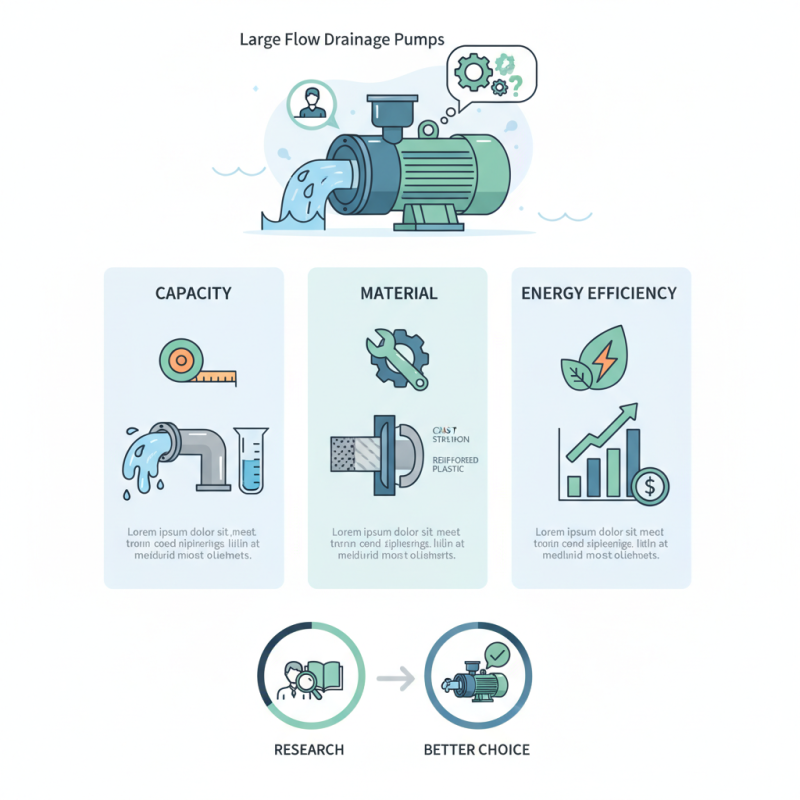
A large flow drainage pump is essential for efficient water removal in various applications. These pumps are widely used in construction sites, agricultural fields, and flood control systems. It's crucial to assess the pump's capacity, material, and energy efficiency.
The market offers many options. However, buyers may struggle with the technical specifications. It’s easy to overlook details like the pump's maximum flow rate or optimal power source. This can lead to frustration and unnecessary expenses. Taking the time to research and consult experts can greatly enhance your choice.
Understanding the Importance of Large Flow Drainage Pumps
Large flow drainage pumps play a crucial role in managing water effectively in various industries. These pumps are essential during heavy rainfall or flooding situations. According to a report from the American Society of Civil Engineers, inadequate drainage regularly costs billions in infrastructure damages each year. This highlights the importance of investing in reliable drainage solutions.
Selecting the right large flow drainage pump can greatly reduce potential losses. Engineers emphasize the need for pumps with high efficiency ratings. A pump with an efficiency of over 80% can significantly decrease operational costs. Pumps should also be equipped with features that monitor flow rates and alert operators of any deviations. Data shows that systems with real-time monitoring reduce failure rates by nearly 30%.
However, improper selection can lead to significant issues. Not every pump suits every application. Some installations may experience cavitation problems or reduced life spans if the pump is not calibrated correctly. Regular maintenance and a thorough understanding of the environment can help identify the best options. Choosing the right pump isn't just about specifications; it requires expertise and insight into specific needs.
Key Factors to Consider When Selecting a Drainage Pump
When selecting a large flow drainage pump, several key factors stand out. Flow rate is crucial, measured in gallons per minute (GPM). For instance, pumps with a flow rate between 50 to 100 GPM can effectively manage moderate drainage tasks. However, projects may require pumps with higher capacities, reaching over 200 GPM. Understanding the specific needs of your project is vital.
Another important factor is the pump's head height. This determines how high water can be lifted. A pump with a 20-foot head is suitable for typical residential applications. For industrial setups, this figure can increase significantly. Experts suggest examining the total dynamic head (TDH) calculations, as poor assessments can lead to pump performance issues.
DIY enthusiasts should remember that installation plays a critical role as well. Pumps may require specific orientation, intake position, and power supply considerations. Always prioritize reliability in pump selection. Checking for certifications or third-party testing results helps ensure the chosen unit meets safety and performance standards. As the National Pump and Metering Conference indicates, approximately 30% of pump failures are due to improper selection or installation.
Consider these tips during your selection process: always review specifications thoroughly, consult with professionals if uncertain, and be aware of potential system limitations. A proactive approach can save time and money.
Types of Large Flow Pumps and Their Applications
When selecting a large flow drainage pump, it’s crucial to understand the different types available. Centrifugal pumps are widely used due to their efficiency and versatility. They can handle a variety of fluids, making them suitable for agriculture, construction, and industrial applications. These pumps work best in open systems, moving large volumes of water quickly. Proper sizing is essential; undersized pumps may fail to meet demands.
Submersible pumps are another option, often used in confined spaces. These compact devices are designed to operate underwater, making them ideal for dewatering basements or excavations. While they save space, maintenance can be challenging. It’s vital to assess the environment before choosing this type. Consider factors such as debris levels and potential for clogging.
Finally, positive displacement pumps offer a different approach, excelling in specific scenarios where pressure is vital. These pumps move fixed volumes with each cycle, ensuring consistent flow rates. However, they can be more complex and less forgiving of varying conditions. Assessing your needs will determine the best fit, avoiding hastily made decisions. Each type has limitations that require careful evaluation.
Evaluating Pump Specifications for Optimal Performance
Choosing the right large flow drainage pump involves careful evaluation of several key specifications. Start by considering the pump's flow rate. This is crucial for determining its ability to handle the volume of water efficiently. For residential and industrial use, pumps range from 100 to 10,000 gallons per minute. Understand your specific needs to ensure optimal selection.
Next, examine the pump’s head pressure. This specification indicates how high the pump can lift water. A pump that can only handle low head applications might not suffice in deep installations. Pay attention to the materials used in the pump's construction. Corrosion-resistant materials are essential for longevity.
Here are some tips: always check the warranty and support offered. Reliable manufacturers often provide robust customer service. Consider energy efficiency ratings too; pumps that consume less energy can save you money in the long run. Lastly, don’t ignore compatibility with your existing systems. A mismatch can lead to costly repairs or even failure.
These details matter. Make informed choices by reviewing all specifications closely. Consulting with professionals can provide valuable insights. Avoid impulsive decisions; investing time in research pays off significantly.
Maintenance Tips for Ensuring Long-lasting Pump Efficiency
Maintaining a large flow drainage pump is crucial for its efficiency. Regular maintenance can prevent costly repairs. One effective tip is to inspect the pump regularly for debris. Debris can cause clogs and lead to pump failure. Keeping the surrounding area clean helps avoid this issue.
Lubrication plays a key role in pump longevity. Ensure all moving parts are well-lubricated. Neglecting this can lead to increased friction and heat, reducing efficiency. Check oil levels periodically. If levels are low, add the recommended lubricant. This small action makes a big difference.
Monitor the pump's performance closely. Watch for unusual noises or vibrations. These can indicate an underlying problem. If something feels off, don’t hesitate to address it. Seeking professional help can save time and money. Regular checks help maintain optimal performance and extend the pump’s lifespan.
Performance Metrics of Large Flow Drainage Pumps