
Choosing Air Bubble Wrap for global shipping is not as simple as selecting the thickest roll. A package may face vibration on a truck, pressure inside a container, and sudden temperature changes at a port. I have seen delicate ceramic pieces arrive safely after careful wrapping, while overpacked items still suffered corner damage. The difference was usually preparation, not luck.
Start with the product’s shape, weight, and fragility. Small bubbles can cushion compact items and fill narrow spaces around cosmetics, glassware, or electronic accessories. Larger bubbles may protect lightweight products from broader impacts, but they can compress during long transport. A thicker film is not always better. It may increase package size, shipping cost, and unnecessary material use.
Check the wrap’s seal strength, bubble retention, and resistance to tearing. For electronics, consider anti-static Air Bubble Wrap, especially when the item has exposed components. Moisture protection may also matter in humid routes, although bubble wrap alone is not a complete barrier. Combine it with a suitable outer carton, edge protection, and enough internal cushioning to prevent movement.
Test the full packing method before placing a large shipment. Drop-test a representative box from practical handling heights, then inspect both the product and the wrap. That step can reveal weak corners or excessive empty space. I once underestimated the effect of repeated compression. The first test passed; the later shipment did not. Reliable global packaging comes from evidence, not assumptions, and it should be reviewed for each product, route, and carrier.
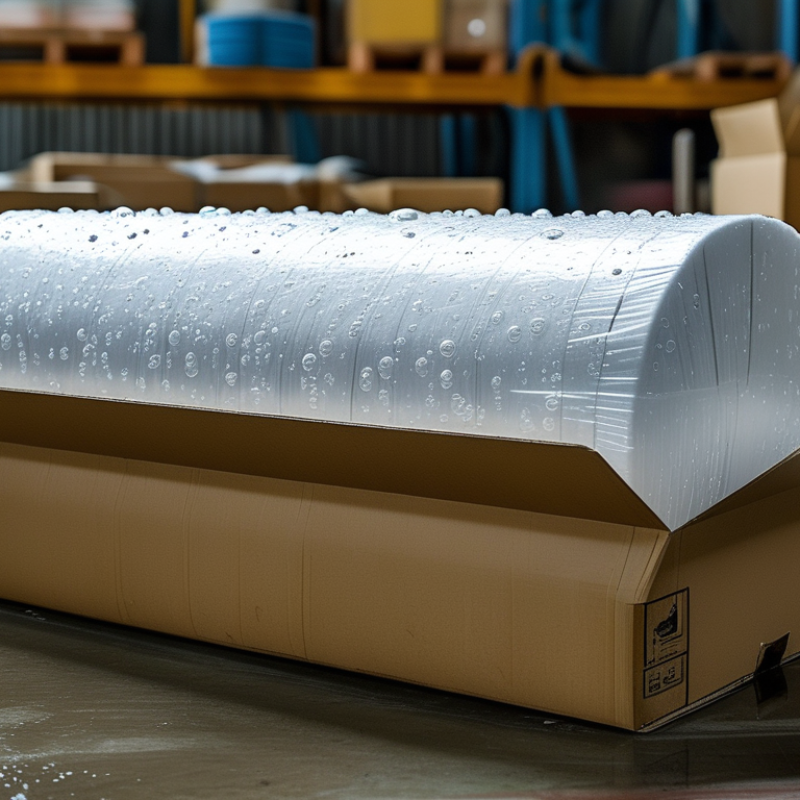
How to Choose Air Bubble Wrap for Global Shipping?
Map Fragility and Route Risks with ISTA 3A and ASTM D4169 Tests
Choosing air bubble wrap starts with the product’s actual fragility, not bubble size alone. A glass dispenser, for example, needs edge protection and movement control around its neck. Bubble wrap cushions impact, but it cannot correct an oversized carton. Measure product weight, dimensions, sharp corners, and acceptable cosmetic damage. Then map likely route hazards. Air freight, parcel hubs, road transfers, and humid storage create different stresses.
ISTA 3A helps simulate parcel delivery conditions for individual packaged products. Its sequence may include conditioning, drops, vibration, and compression. Use the test to compare wrap thickness, cell size, and restraint methods. Do not treat a passing result as permanent proof. Packaging changes can alter it. A heavier carton or a new fulfillment route may require retesting.
ASTM D4169 evaluates shipping units against defined distribution cycles and assurance levels. Select a cycle that resembles the intended handling environment, then document test severity. For long international routes, consider vibration exposure and repeated impacts. No test perfectly reproduces a door-to-door journey. That limitation matters. A crushed corner may indicate poor carton strength rather than inadequate wrap. Packing teams often add more plastic when better void control would work. That choice deserves another test. Record temperature, humidity, wrap orientation, overlap, and closure method during each trial.
Practical selection matrix for matching bubble-wrap construction, product fragility, package configuration, and international route hazards. Test values are representative engineering targets and should be confirmed through package-specific laboratory testing.
| Product / Fragility Profile | Typical Product Mass | Main Damage Sensitivity | Global Route Risk Map | Recommended Bubble-Wrap Construction | Typical Wrap Thickness | Suggested ISTA 3A Focus | Suggested ASTM D4169 Focus |
|---|---|---|---|---|---|---|---|
| Low-fragility molded plastic parts | 0.2–2.0 kg | Surface scuffing, abrasion, minor impact, loose-part movement | Low to Medium Parcel handling, vibration, compression from adjacent cartons | Small-cell bubble wrap with a durable outer film; use dividers when multiple parts share one carton | 3–6 mm | Drop sequence, random vibration, and concentrated impact at carton corners | Distribution Cycle 13; compression and vibration profiles selected for parcel delivery |
| Painted or polished metal components | 0.5–5.0 kg | Finish damage, edge dents, contact abrasion, corrosion after condensation | Medium Long dwell times, humidity changes, mixed-load handling | Medium-cell wrap with non-abrasive film; add edge pads and a moisture-barrier bag where required | 6–10 mm | Drop and vibration testing with finish inspection after each sequence | Distribution Cycle 13 with atmospheric conditioning; evaluate abrasion and carton restraint |
| Household glassware | 0.2–2.5 kg | Fracture, rim chipping, point impact, glass-to-glass contact | High Repeated drops, rough transfer points, pallet overhang, temperature variation | Large-cell or multi-layer bubble wrap combined with individual compartments and rigid edge protection | 10–16 mm | Multiple rotational and face/corner drops, vibration, and concentrated impact | Distribution Cycle 13; use compression, impact, and vibration conditions representative of the intended transport system |
| Consumer electronics with screens | 0.5–8.0 kg | Screen cracking, connector damage, enclosure deformation, electrostatic or cosmetic damage | High Air-cargo transfers, conveyor drops, vibration, pressure changes, and temperature cycling | Anti-static bubble wrap where appropriate, medium-cell cushioning, rigid carton suspension, and corner blocks | 6–12 mm | Drop, vibration, low-pressure simulation where applicable, and package integrity checks | Distribution Cycle 13 with shock, vibration, compression, and atmospheric conditioning selected for air shipment |
| Precision instruments | 1.0–15.0 kg | Calibration drift, internal component shock, connector failure, structural resonance | High Extended vibration, transshipment, temperature/humidity shifts, and uneven loading | Large-cell bubble wrap used as a secondary layer around a fitted foam or molded-pulp suspension system | 10–20 mm | Low- and high-level vibration, sequential drops, compression, and handling simulation | Distribution Cycle 13 with carefully selected vibration spectrum and shock severity; verify functional performance |
| Small medical or laboratory glass containers | 0.1–3.0 kg | Breakage, leakage, label damage, cap displacement, contamination risk | High Frequent handling, upright-to-side orientation changes, temperature and humidity variation | Small-cell wrap around each container, molded separators, absorbent secondary containment, and leak-resistant outer packaging | 6–12 mm | Drop and vibration testing with leak inspection and orientation changes | Distribution Cycle 13 with conditioning and package integrity evaluation; regulatory requirements may also apply |
| Flat-pack furniture panels | 5.0–30.0 kg | Corner crush, edge impact, surface scratches, panel flexing | Medium Forklift contact, pallet compression, stacking, and warehouse transfer | Heavy-duty large-cell wrap on faces with reinforced corner guards and edge protectors | 10–20 mm | Compression, edge/corner drops, vibration, and pallet-level handling | Distribution Cycle 13 or a palletized cycle appropriate to the distribution system; assess stacking strength |
| Automotive or industrial metal assemblies | 5.0–40.0 kg | High-energy impact, oil or moisture exposure, corrosion, deformation at protrusions | Medium to High Heavy-load handling, pallet movement, compression, and outdoor staging | Heavy-duty bubble wrap with reinforced film, localized blocks around protrusions, and corrosion-control packaging when needed | 10–25 mm | Compression, vibration, shock, and package handling with protrusion inspection | Distribution Cycle 13 or the applicable unit-load cycle; include environmental conditioning and load stability checks |
| Cosmetic bottles and personal-care containers | 0.1–2.0 kg | Cracking, pump or cap damage, leakage, label scuffing, cosmetic defects | Medium to High Parcel drops, temperature swings, compression, and liquid movement | Small- or medium-cell wrap with individual pockets, cap protection, and a leak-resistant secondary bag | 6–12 mm | Drop, vibration, compression, and leakage inspection after conditioning | Distribution Cycle 13 with atmospheric conditioning and package closure verification |
| High-value artwork or framed displays | 2.0–25.0 kg | Surface scratching, frame distortion, glazing breakage, corner impact, vibration damage | High Manual handling, orientation changes, stacking, and long-distance vibration | Non-abrasive bubble wrap over a protective interleaf, rigid corner blocks, face clearance, and a double-carton system | 10–20 mm | Sequential drops, vibration, compression, and visual inspection of frame and surface condition | Distribution Cycle 13 with shock, vibration, compression, and environmental conditioning appropriate to the shipment |
Selection notes: Bubble-wrap thickness alone does not determine package performance. Confirm the product’s fragility level, unsupported spans, corner geometry, carton size, stacking load, and expected distribution environment. ISTA 3A and ASTM D4169 test severity should be selected according to the actual shipping mode, package weight, handling system, and distribution cycle rather than applied as universal values.