
Blog

China Top 10 Metering Equipment Manufacturers

China’s industrial growth has created a broad market for accurate, dependable measurement. This guide to China Top 10 Metering Equipment Manufacturers introduces companies serving sectors such as water treatment, energy, chemicals, and manufacturing. Their products may include flow meters, pressure instruments, level sensors, and related monitoring systems.

A manufacturer’s reputation depends on more than a product catalogue. Buyers often compare measurement range, stated accuracy, materials, calibration support, communication options, and after-sales service. A meter installed on a clean-water line, for example, may face very different conditions from one handling hot, abrasive process fluids. Details matter.

The companies featured in this overview are considered through practical factors, including product coverage, technical capabilities, industry experience, and available customer support. Public information can change, and a ranking should not be treated as a guarantee of performance. It is a starting point.

Before shortlisting suppliers, confirm that a model suits your medium, operating temperature, pressure, installation space, and required measurement range. Ask for current datasheets and calibration documentation, and clarify service arrangements before placing an order. Field conditions can expose gaps that a brochure cannot show. That deserves attention.

This guide aims to help procurement teams and engineers ask better questions, not replace technical evaluation. The right Metering Equipment depends on the application, operating environment, and support available after installation. A careful comparison is worth the effort.
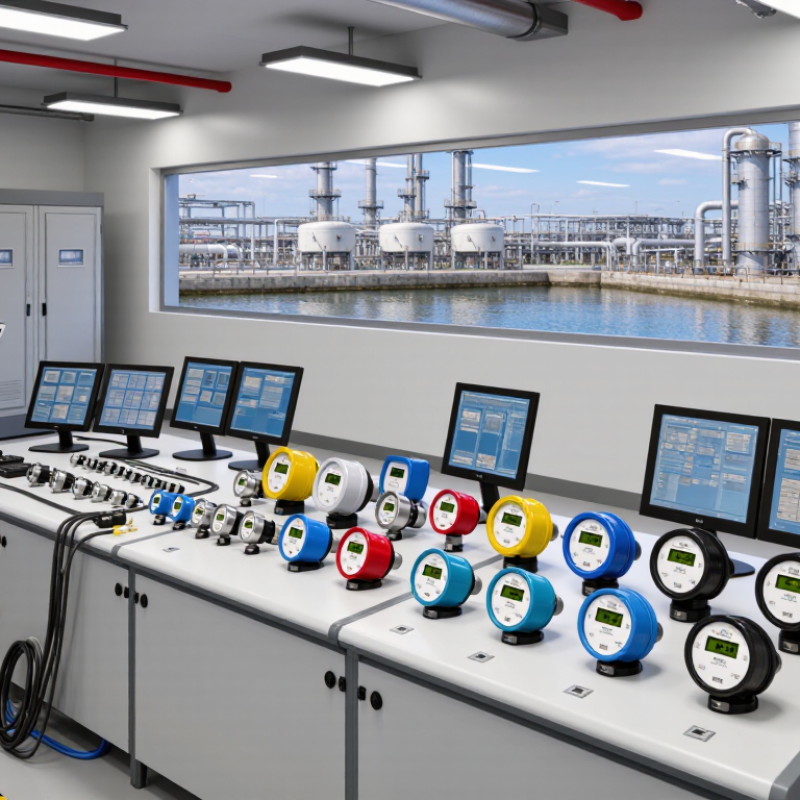
China Top 10 Metering Equipment Manufacturers

How Metering Equipment Manufacturers Are Classified in China

In China, metering-equipment manufacturers are best classified by what they measure, where their products are used, and how readings are collected. Main product groups cover electricity, water, gas, and heat. Each requires different sensors, calibration methods, and installation conditions. The China Electricity Council reported national electricity consumption of about 9,220 billion kWh in 2023. That scale helps explain why electricity-meter suppliers serve utilities, factories, and commercial buildings—not one uniform market. But market size alone says little about product quality.

Another useful distinction is between mechanical meters and electronic or smart systems. Smart meters can add remote communication and interval data; simpler models may suit basic billing points. Manufacturers are also grouped by application, such as utility, industrial-process, and building submetering. Accuracy class, operating environment, data interfaces, and verification capability deserve close attention. The Council reported roughly 6,074 billion kWh of secondary-industry electricity use in 2023, underscoring the demands of industrial measurement. These categories can overlap. A factory meter may also support energy management. Buyers should check test reports and relevant Chinese standards, rather than relying on catalog labels alone. Data sheets are not field evidence.

Criteria for Selecting the Top 10 Manufacturers

A useful “top 10” list should explain how each metering equipment manufacturer was assessed. Compare measurement accuracy, repeatability, operating range, and performance under changing temperatures or flow conditions. Check whether product specifications are clear and supported by test records. Calibration procedures matter. Ask how often equipment needs recalibration and whether service support is available after installation. Small details matter.

Also examine manufacturing consistency, material quality, customization capability, and delivery reliability. Request sample inspection reports and practical references for equipment used in similar settings. Compare warranty terms and the availability of replacement parts. No scoring model is perfect; a supplier may excel technically but offer limited support in a particular region. Treat rankings as a starting point, not proof of fit. Review the evidence behind each claim, and note where information is missing.

Tips: Prepare a short checklist before contacting suppliers. Ask each one the same questions, such as how accuracy is verified and how quickly faults are handled. Keep the answers in writing. A neat brochure can help, but it cannot replace clear test data or a realistic service plan.

Profiles of 10 Leading Chinese Metering Equipment Manufacturers

China’s leading metering equipment manufacturers serve different needs, from household utility readings to industrial process control. One profile centers on electricity meters, with attention to accuracy, display clarity, and long-term stability. Another focuses on water meters, where low-flow sensitivity and resistance to sediment matter. A third develops gas meters, while a fourth specializes in heat measurement for building systems. Small details count: a readable screen, a sealed casing, and accessible wiring can make installation less frustrating.

Other profiles cover industrial flow meters, remote data communication, and calibration equipment. One manufacturer may prioritize factory automation; another may offer configurable instruments for varied pipe sizes. A separate profile might focus on testing and calibration, helping buyers assess measurement consistency before deployment. These differences are more useful than broad claims about being “advanced.” Ask for test methods and operating conditions.

The remaining profiles include suppliers with broad product ranges, firms focused on contract manufacturing, and exporters experienced in adapting documentation and support for overseas buyers. Not every capability is equally strong. A polished catalogue can still leave questions about spare parts, software updates, or service response times. Request sample specifications, installation guidance, and warranty terms, then compare them against the actual site requirements. There is room for improvement in how clearly some suppliers present this evidence.

China Top 10 Metering Equipment Manufacturers – Profiles of 10 Leading Chinese Metering Equipment Manufacturers

No. Anonymous Manufacturer Profile Main Equipment Common Measurement Technology Typical Applications Relevant Standards or References
1 Electricity Metering Specialist Single-phase and three-phase static electricity meters; smart meters with remote communication options Electronic voltage and current sampling; digital energy calculation; communication interfaces vary by model Residential, commercial, and industrial electricity consumption measurement IEC 62052-11; IEC 62053-21; China’s DL/T 645 communication protocol, where supported
2 Advanced Metering Infrastructure (AMI) Supplier Smart electricity meters, data concentrators, and meter-reading system components Electronic energy measurement combined with wired or wireless data communication Utility meter reading, consumption monitoring, and distribution-network management IEC 62052 and IEC 62053 series; communication standards depend on the system and market
3 Ultrasonic Water Meter Manufacturer Residential and bulk ultrasonic water meters Transit-time measurement using ultrasonic signals; designs may have no moving measuring parts Water utilities, building water management, and district metering ISO 4064; OIML R 49
4 Mechanical Water Meter Manufacturer Multi-jet, single-jet, and other mechanical water-meter designs Water flow drives a measuring element; the register records accumulated volume Household water billing and general-purpose water measurement ISO 4064; OIML R 49
5 Utility Gas Meter Manufacturer Diaphragm gas meters and selected electronic or smart-meter variants Displacement measurement in diaphragm designs; electronic models may add remote reading or shut-off functions Residential and small commercial natural-gas consumption measurement OIML R 137; applicable national requirements depend on the destination market
6 Industrial Gas Metering Specialist Turbine, rotary, and ultrasonic gas meters Measurement by rotor speed, displacement, or ultrasonic transit time, depending on meter type Gas transmission, distribution stations, and industrial process measurement OIML R 137; ISO 17089-1 for ultrasonic gas meters, where applicable
7 Heat Meter Manufacturer Heat meters comprising a flow sensor, temperature sensors, and a calculator Calculates thermal energy from measured flow and the temperature difference between supply and return Building heating systems, district heating, and energy allocation EN 1434; OIML R 75
8 Electromagnetic Flowmeter Manufacturer Inline and insertion electromagnetic flowmeters Electromagnetic induction for measuring the flow of electrically conductive liquids Water and wastewater, chemical processing, and other conductive-liquid services ISO 20456
9 Mass Flowmeter Manufacturer Coriolis mass flowmeters and related flow-measurement systems Coriolis measurement; instruments may also report density or temperature, depending on model Chemical, food and beverage, pharmaceutical, and liquid-transfer processes ISO 10790 guidance for Coriolis flowmeters
10 Flow Calibration Equipment Manufacturer Liquid or gas flow calibration rigs and meter test systems Comparison against reference instruments or calibrated standards under controlled test conditions Meter production testing, verification, and metrology laboratory work Applicable metrology regulations and documented calibration procedures depend on the test facility and market

Note: These are anonymous, technology-based industry profiles, not named or ranked company records. Product availability, measurement ranges, approvals, and standard compliance vary by manufacturer and model; verify details against current product documentation.

Product Portfolios and Technical Capabilities

Metering equipment portfolios vary by sector, measurement range, and installation environment. A strong comparison covers electricity, water, gas, and heat meters, plus communication modules and data software.

The U.S. Energy Information Administration’s 2022 Form EIA-861 data counted about 119 million advanced electricity meters. That represented roughly 72% of U.S. electricity meters. The figure highlights the scale of connected-meter deployment, not a guarantee of performance.

A top-ten review should compare product coverage alongside stated accuracy, operating range, and interoperability.

Technical capabilities matter in daily use.

Check whether meters support remote reading, event logs, and secure data transfer. For industrial sites, inspect flow or load ranges, measurement stability, and calibration procedures. Ask how products perform in cold rooms, humid meter cabinets, or areas with weak signals. Fit matters. A broad catalogue can still leave gaps in a specific application, and a polished datasheet cannot replace field testing.

Tips: Request test certificates, sample communication logs, and documented error limits. Compare like with like: meter class, flow or load range, and test conditions should match. Confirm maintenance needs and replacement-part availability before purchase. Small details count. Even experienced buyers may overlook them.

Industries Served and Manufacturer Comparisons

Metering equipment serves very different jobs across water utilities, chemical plants, food processing, and energy systems. A manufacturer suited to municipal water networks may not fit a high-pressure process line. Compare the ten leading suppliers by application, not by catalog size alone. Check the stated flow range, fluid compatibility, operating temperature, and pressure limits. These details can decide whether a meter performs reliably on a clean-water pipe or a line carrying viscous liquids.

For industrial plants, repeatability, response time, and integration with control systems often matter most. Food producers may prioritize hygienic surfaces and simple cleaning, while wastewater operators need equipment that tolerates solids and changing flow. Ask manufacturers for calibration procedures, installation guidance, spare-parts availability, and service coverage near the site.

Request test data under conditions close to the intended application. A polished specification sheet is not enough. Field conditions can be messier than the test bench, and comparisons sometimes miss that.

It is also worth checking how easily technicians can inspect the meter and replace components. Lower purchase cost may mean higher maintenance effort; actual lifecycle costs depend on site conditions and should be verified, not assumed.

Copyright © 2025 The Toolroom Inc. All Rights Reserved.
Website Design St Louis by IQComputing