
Blog

China Top 10 High Torque Brushless DC Motor Manufacturers

Choosing a supplier for a High Torque Brushless Dc Motor takes more than comparing catalog prices. The right motor must deliver dependable torque at the required speed, fit the available space, and handle the heat generated during real operating cycles. A robotic joint, conveyor drive, and electric pump may all need high torque, yet their duty cycles and control requirements differ. Small details matter.

This guide introduces ten manufacturers and offers a practical starting point for evaluating their products. It considers factors buyers can verify, including torque-speed curves, continuous and peak ratings, thermal design, feedback options, customization, and technical support. A peak torque figure alone can be misleading; the motor may sustain it only briefly. Ask for operating data, drawings, and test conditions before making a decision. Then compare those details against your actual load, mounting limits, and control system.

The list should not be treated as a universal ranking. Manufacturer capabilities, product availability, and service coverage can change, while a strong supplier for one application may be a poor fit for another. There is no perfect shortcut. Use the profiles to narrow your options, then confirm specifications directly with each company. A careful review may take longer, but it can reveal trade-offs that a polished product page leaves out. That uncertainty deserves attention, too.
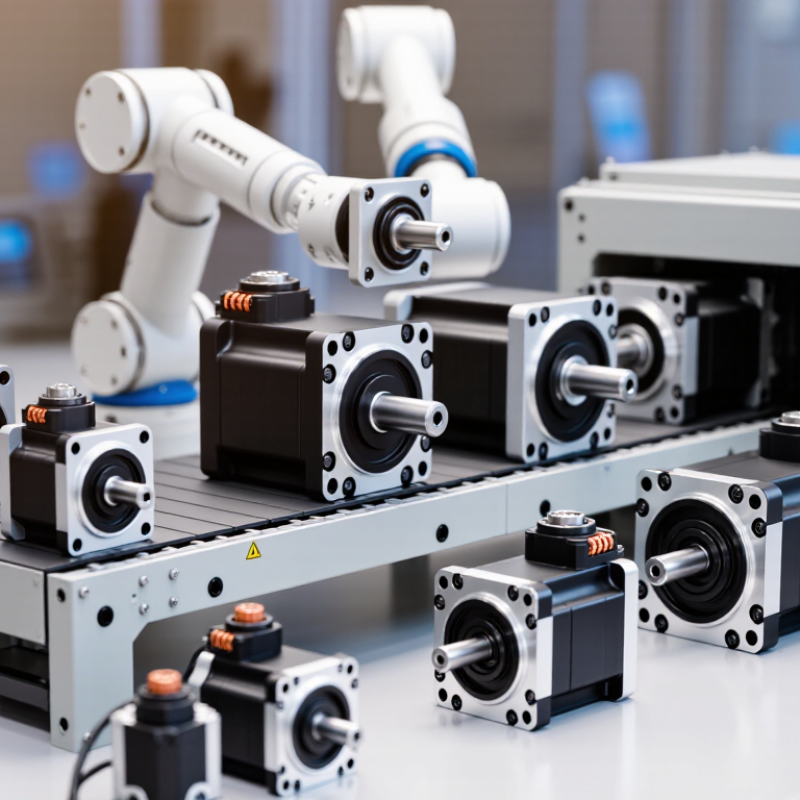
China Top 10 High Torque Brushless DC Motor Manufacturers

What Defines a High-Torque Brushless DC Motor?

A high-torque brushless DC motor produces substantial turning force for its size, especially at low speeds. Torque depends on motor design and the current supplied by its controller. Strong magnets, carefully shaped rotor and stator parts, and effective windings can all help. But size alone tells little.

Check the torque curve. A peak rating may last only seconds, while continuous torque depends on the motor’s ability to shed heat. Copper windings warm under load; poor cooling can reduce performance or shorten service life. Look for the rated current, operating speed, and test conditions behind each figure. Details matter.

The application matters too. A motor driving a conveyor faces different demands from one turning a robotic joint through repeated starts and stops. Match the shaft, mounting, controller, and load to the job. A gearbox may increase output torque, but it is separate from the motor’s own torque rating. I would not treat one impressive number as a complete specification. Datasheets can leave gaps, so confirm how torque was measured and whether the stated value is continuous or peak. A label alone is not enough.

How China’s BLDC Motor Manufacturing Industry Is Organized

China’s BLDC manufacturing industry is organized as a connected supply chain, not a single factory model. Materials suppliers provide copper wire, magnets, electrical steel, and insulation. Component specialists produce shafts, bearings, stamped laminations, and drive electronics. Motor makers then assemble and test units for appliances, pumps, tools, and vehicle systems. Some focus on high-volume standard motors; others build custom designs for equipment makers.

Regional clusters help coordinate this work. Suppliers and assembly plants in the Pearl River Delta and Yangtze River Delta can shorten sourcing and delivery loops. Demand is substantial, though automotive figures are not BLDC-specific. The China Association of Automobile Manufacturers reported 12.866 million new-energy vehicle sales in 2024. That scale supports demand for electric-drive components, but it does not reveal how many BLDC motors were made. The boundary between motor makers and electronics suppliers is not always neat. In practice, integration varies by product and customer.

Tips: Ask for rated torque, speed curves, thermal limits, and test conditions—not peak torque alone. Check whether quoted performance applies to the complete motor or only a prototype. Small details matter.

China’s Top 10 High-Torque Brushless DC Motor Manufacturers

China’s Top 10 High-Torque Brushless DC Motor Manufacturers deserve comparison by more than peak torque. Buyers should check continuous torque, thermal limits, efficiency, and controller compatibility. A motor may deliver a strong starting pull but lose performance when heat builds inside a compact housing. Small details matter.

The International Energy Agency has estimated that motor-driven systems consume roughly 45% of global electricity, underscoring the value of efficient design. The U.S. Department of Energy also reports that motor systems account for a large share of industrial electricity use. These figures help explain demand for efficient drives, but they do not rank suppliers. A useful shortlist should examine test conditions, torque curves, winding options, and documented quality controls. Ask for operating data at the intended voltage and duty cycle, not only a headline rating. A rating alone proves little. China’s manufacturers vary in engineering depth and production consistency; even a polished datasheet can leave questions unanswered. That is worth checking. For demanding equipment, request sample testing under realistic load, then compare temperature rise, noise, and repeatability before placing a large order.

High-Torque BLDC Motor Torque vs. Speed

Illustrative torque values for a constant 1 kW mechanical output, calculated using torque (N·m) = 9550 × power (kW) ÷ speed (rpm). Actual motor output varies with design, operating conditions, and efficiency.

How the Leading Manufacturers Compare in Technology and Applications

Comparing China-based high-torque brushless DC motor manufacturers requires more than checking peak torque. Look at continuous torque, speed range, thermal limits, and efficiency under the intended load. A motor that handles a brief startup surge may overheat during a long conveyor shift. That matters. Ask for test conditions, not just a headline specification.

Technology choices differ with the application. Compact motors with integrated drivers can simplify wiring in mobile equipment, while separate controllers may offer finer tuning in industrial machinery. Hall sensors support reliable low-speed control; sensorless designs can reduce components but may respond less smoothly near startup. Noise, vibration, and heat deserve attention too. A quiet sample on a workbench may behave differently inside a metal enclosure.

Compare suppliers using the same voltage, load, duty cycle, and mounting constraints. Request drawings, temperature-rise data, and sample testing before treating catalog figures as settled facts. One limitation in any manufacturer comparison is that published data may use different test setups. That makes rankings less useful than application fit. A small mismatch in shaft dimensions or cooling airflow can erase an apparent performance advantage.

What to Consider When Choosing a Chinese Motor Supplier

China Top 10 High Torque Brushless DC Motor Manufacturers

Choosing a Chinese motor supplier requires more than comparing torque figures and unit prices. A high-torque motor may run smoothly on a test bench but overheat inside a compact machine. Ask for the rated and peak torque, duty cycle, voltage range, and thermal limits. Small details matter. Request test conditions, not just headline results.

Review how the supplier controls production. Ask whether sample motors and production units use the same winding process, magnets, and inspection steps. Check reports for temperature rise, vibration, noise, and performance under load. If possible, inspect a sample with your own controller and load. A neat report helps, but it cannot replace a relevant test. Listen for clear answers about tolerances and failure handling.

Discuss customization, lead times, spare parts, and communication before placing an order. Confirm which specifications will appear on the drawings and acceptance documents. A low quote can become costly if connector changes or shaft tolerances are unclear. One point is easy to miss: even experienced buyers may assume technical terms mean the same thing to both sides. Put critical requirements in writing, then review them together.

China Top 10 High Torque Brushless DC Motor Manufacturers - What to Consider When Choosing a Chinese Motor Supplier

Evaluation Dimension Data to Request How to Evaluate It Why It Matters
Continuous and Peak Torque Rated continuous torque (N·m), peak torque (N·m), and permitted peak duration Compare the torque figures with the load profile and confirm the test conditions for each rating. Peak torque is generally available only for a limited period; continuous torque is more relevant to sustained loads.
Torque–Speed Performance Torque–speed curve, rated speed (r/min), and operating voltage Check that required torque is available at the actual operating speed, not only at stall or low speed. Motor torque changes with speed and operating conditions; a curve is more informative than a single torque value.
Thermal Performance Winding temperature limits, insulation class, cooling method, and duty-cycle rating Request test details at the intended ambient temperature, mounting arrangement, and duty cycle. Heat affects allowable continuous output, reliability, and service life.
Motor and Controller Compatibility Bus voltage range, phase current, Hall-sensor or sensorless configuration, and controller model specifications Confirm electrical interfaces, commutation requirements, and protection settings for the proposed drive. A motor’s performance depends on the drive and control setup as well as the motor itself.
Efficiency and Power Consumption Efficiency data or test results at representative load and speed points Compare results at operating points relevant to the application rather than relying on a single maximum-efficiency figure. Efficiency influences electrical demand and heat generation during operation.
Mechanical Fit and Output Shaft Frame dimensions, shaft diameter and length, mounting pattern, mass, and allowable radial or axial loads Review dimensioned drawings and verify interfaces against the machine design before ordering samples. Dimensional compatibility and permitted shaft loads affect installation and mechanical reliability.
Protection and Operating Environment IP rating, ambient-temperature range, and any stated limits for dust, moisture, or vibration Match the declared protection level and environmental limits to the installation conditions; request supporting documentation. Environmental suitability depends on the motor’s enclosure and the conditions where it will be installed.
Quality Control and Traceability Inspection plan, production test records, lot identification, and handling of nonconforming products Ask which checks are performed on each unit or batch and how test results can be linked to delivered products. Documented controls help assess consistency between samples and production orders.
Compliance Documentation Applicable declarations, test reports, and material documentation for the target market and product configuration Check that documents apply to the exact motor and controller configuration being purchased. Regulatory and customer requirements vary by market and finished-product application.
Sampling, Lead Time, and After-Sales Support Sample availability, quoted production lead time, warranty terms, spare-part support, and response process Confirm terms in writing and evaluate a sample under the intended operating conditions before approving production. Clear commercial and support arrangements help manage qualification, delivery, and service expectations.

Note: Torque, speed, voltage, and environmental requirements are application-specific. Compare suppliers using the same test conditions and a written specification.

Copyright © 2025 The Toolroom Inc. All Rights Reserved.
Website Design St Louis by IQComputing