
Choosing a China Best Tee Head Bollard Manufacturer and Supplier requires more than comparing prices. A Tee Head Bollard may look simple, yet its dimensions, steel grade, wall thickness, and finish affect how it performs in daily use. Think about the setting: a dock exposed to salt air, a warehouse yard with frequent vehicle movements, or a pedestrian area needing clear boundaries. Each requires careful specification. Small details matter.
Reliable suppliers should explain their manufacturing process and provide clear product information. Ask about material certificates, dimensional checks, welding procedures, coating options, and inspection records. Confirm the bollard’s intended application and installation requirements before placing an order. A sample or technical drawing can help reveal mismatches early. A polished brochure is not enough. Verify the details.
Experience also shows in communication. Can the supplier answer questions about custom heights, base plates, surface treatments, packaging, and lead times? Do they share realistic production schedules and identify what they cannot provide? These checks help buyers compare manufacturers on evidence, not promises. Still, no checklist removes every risk; specifications can be misunderstood, and a finish that suits one climate may not suit another. That deserves a second look. This guide outlines practical ways to assess Chinese Tee Head Bollard manufacturers and suppliers, from product quality and customization to documentation and after-sales support, so buyers can make a more informed decision.
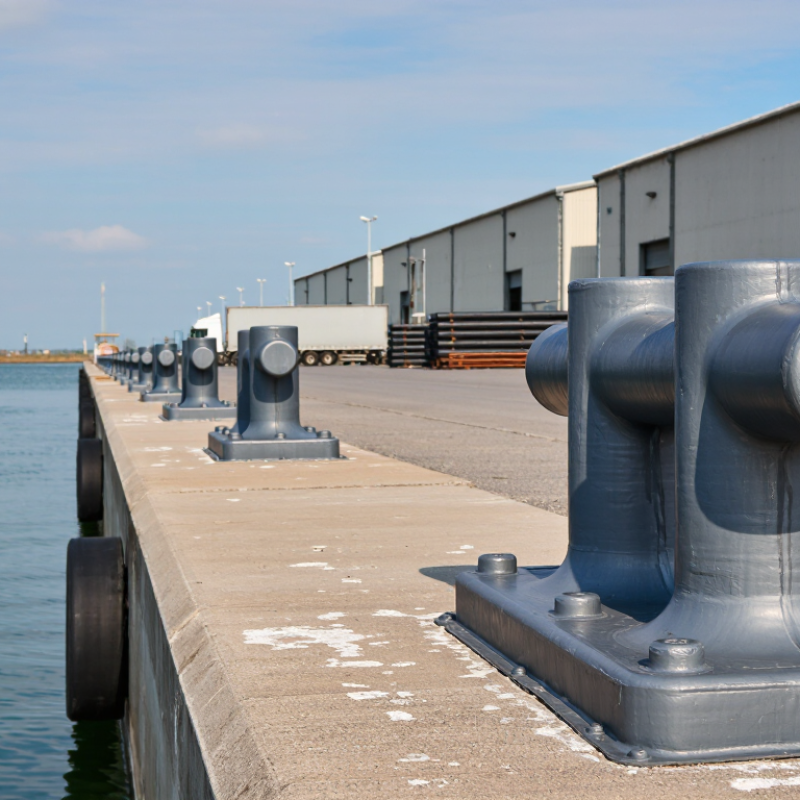
A tee head bollard is a fixed post with a short horizontal bar across its top, forming a clear T shape. The upright post creates a visible boundary, while the crossbar gives pedestrians a distinct feature to notice and can offer a handhold. Simple, but useful. Unlike a plain post, its profile is easy to recognize from a distance and at street level.
Design starts with the site. A bollard beside a walkway may need a different height and spacing from one placed near a vehicle access area. The post’s diameter, wall thickness, and material affect its strength and weight. Steel is commonly selected for its durability, while a suitable coating can help resist moisture and surface corrosion. The crossbar should be securely joined to the post, with smooth edges and no sharp corners. Small details matter.
Installation is part of the design, not an afterthought. A buried base needs suitable foundations; a surface-mounted version depends on its base plate and anchors. Designers should consider ground conditions, expected contact, and maintenance access before choosing a configuration. A cap can help keep water and debris out, though its fit needs checking over time. There is no universal specification. Measure twice. Real site conditions can expose assumptions that looked fine on a drawing, so final dimensions and fixing details should be checked by a qualified professional.
Tee head bollards are commonly used where people need a clear boundary without a solid fence. Their T-shaped tops can support a chain, making them useful around pedestrian plazas, building entrances, and waterfront walkways. A linked row can guide foot traffic while leaving sightlines open. On a promenade, for example, bollards may separate a walking route from service access near the edge.
They also appear in parking areas, loading zones, and industrial yards, where they help mark restricted vehicle access. In older streets or landscaped spaces, their compact form can feel less imposing than a barrier panel. Still, appearance is not protection. A standard bollard may guide traffic but may not be designed to stop a moving vehicle. That detail is easy to overlook. Buyers should check the product’s material, anchoring method, spacing, and stated impact performance against the site’s needs. Chains can also become an obstruction if they cross a busy route, so placement deserves careful review.
Typical applications: Tee head bollards are used to secure mooring lines at ports, docks, piers, wharves, and marine terminals. The chart uses a binary indicator: “Common” identifies a typical application; it does not represent market share or usage frequency.
A tee head bollard’s performance starts with material choice. Cast steel can offer strong load capacity and a shape suited to heavy mooring demands. Ductile iron may provide useful strength and impact resistance, while fabricated steel allows makers to tailor dimensions. The right option depends on vessel size, berth design, and expected line loads. One material does not fit every quay.
Manufacturing details matter just as much. Casting creates the bollard’s body, but uneven cooling can leave internal defects if the process is poorly controlled. Reliable production includes checks for cracks, dimensional accuracy, and sound metal. Welded steel units need consistent joint preparation and inspection. Mounting faces should sit flat; even a small mismatch can complicate installation. Small details matter.
Coatings help slow corrosion from salt spray and standing water. Common protections include hot-dip galvanizing or marine-grade paint systems, selected for the site and maintenance plan. Coating thickness and surface preparation affect how long protection lasts. It is easy to focus on the finish and overlook the foundation. That can be a mistake. Buyers should request material grades, inspection records, and coating specifications, then confirm they suit actual operating conditions. A tough bollard still depends on sound anchoring, correct installation, and regular inspection. No coating lasts forever, and real service conditions can be harsher than a product sheet suggests.
Tee-head bollards should be checked against the project’s specified standards, not judged by appearance alone. Requirements vary with use, load, material, and exposure to salt water. A bollard for a sheltered quay may face different demands from one exposed to heavy vessel movement. Confirm the required material grade, dimensions, and load rating before comparing suppliers. Fit matters.
Quality checks should include measurements of the shaft, base plate, and tee head, plus a review of welds and surface finish. Look for cracks, sharp defects, uneven welds, or distortion. For steel units, verify material records and the specified corrosion-protection system. Coating thickness and surface preparation should be checked against the project documents. A fresh coat of paint is not proof of sound steel.
Ask how load capacity was established and whether testing or engineering calculations are available for the intended installation. Inspection records should identify the product, materials, checks performed, and any test results. These records help with traceability. Visual inspection remains useful, but it cannot confirm every internal or structural issue. I would not accept a tidy finish as a substitute for clear evidence. Verify requirements with the project engineer or relevant port authority before approval.
China’s manufacturing scale is substantial, but scale alone does not prove a bollard supplier’s quality. World Steel Association’s World Steel in Figures 2025 reports that China produced 1,005.1 million tonnes of crude steel in 2024. Buyers should still verify the material used in each Tee Head Bollard, rather than infer quality from national output or a polished catalog.
Request dimensioned drawings, material certificates, and a clear description of casting, forging, or fabrication processes. Check the bollard’s intended load, installation method, anchor layout, and corrosion protection against the project specification. Ask for test reports tied to identifiable samples, not just a general claim of strength. Details matter. A neat photograph cannot show wall thickness, internal defects, or coating preparation.
Review the supplier’s quality records and traceability procedures, and confirm whether inspection can cover raw materials, production, and finished units. ISO 9001 certification can indicate a documented quality system, but it does not certify a specific bollard design. Specify acceptance criteria in writing, including dimensions, finish, and required tests. I would not rely on a sample alone; production batches can vary, and that is easy to overlook. Have a qualified engineer review load requirements before placing a large order.
Copyright © 2025 The Toolroom Inc. All Rights Reserved.
Website Design St Louis by IQComputing