
Blog

Which Is China Top Ceramic Irregular Nozzle Manufacturer?

Choosing the right Ceramic Irregular Nozzle Manufacturer requires more than comparing product photos or advertised prices. Irregular nozzles often guide abrasive slurries, molten materials, gases, or highly concentrated fluids. Their uneven channels can create pressure changes, dead zones, and unexpected wear. A reliable supplier must understand those details before recommending a design.

Dr. Elena Morris, a ceramic process engineer with experience in advanced flow components, states, “A nozzle succeeds when its geometry, material, and operating conditions are evaluated as one system.” This principle is easy to overlook. It also explains why identical-looking nozzles can perform very differently in production. Alumina, zirconia, silicon carbide, and other ceramics offer different balances of hardness, thermal stability, chemical resistance, and fracture sensitivity.

This guide examines which Ceramic Irregular Nozzle Manufacturer may offer the strongest combination of engineering skill, manufacturing control, and service reliability. It considers dimensional tolerance, surface finish, firing consistency, inspection records, and customization capability. Factory experience matters. So does communication.

A polished website is not proof.

The best manufacturers should explain their testing methods clearly. They should discuss nozzle drawings, operating temperature, pressure, media composition, and expected service life. However, no supplier can guarantee performance without complete application data. That is an important limitation, and buyers should acknowledge it.

Real evaluation may require sample testing, flow measurements, and field feedback. Small defects can appear only after repeated thermal cycling or continuous exposure to abrasive particles. Therefore, this comparison focuses on practical evidence rather than impressive claims. It aims to help engineers and purchasing teams make a careful, technically informed decision.
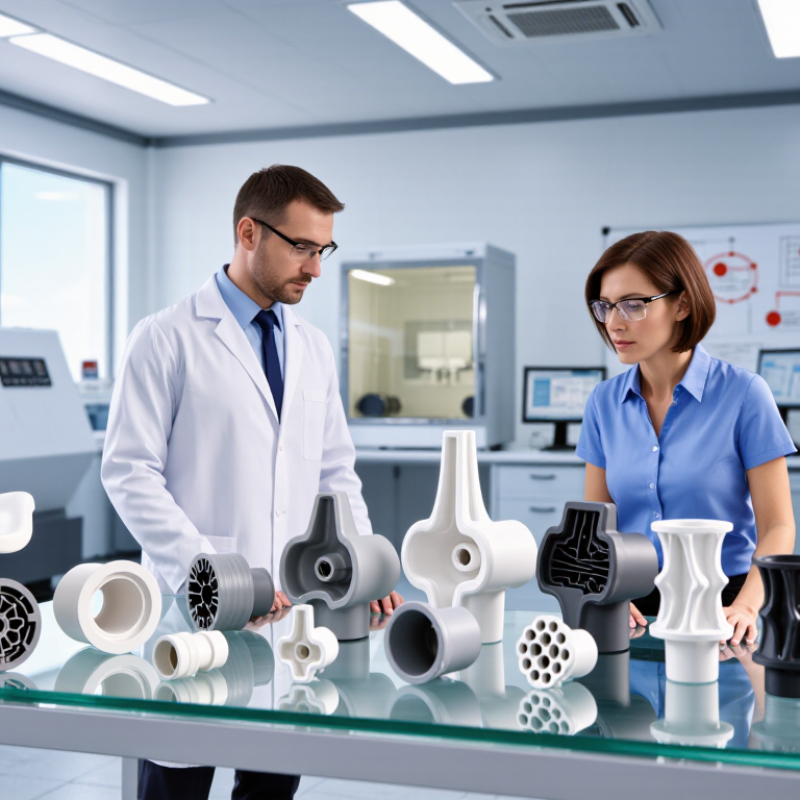
Which Is China Top Ceramic Irregular Nozzle Manufacturer?

Definition and Industrial Role of Ceramic Irregular Nozzles

Which Is China’s Top Ceramic Irregular Nozzle Manufacturer?

Definition and Industrial Role of Ceramic Irregular Nozzles

A ceramic irregular nozzle is a precision component with a non-circular outlet or uneven internal channel. Its geometry directs gas, liquid, slurry, or abrasive particles toward a specific area. Unlike standard round nozzles, it can create wider coverage, a shaped spray pattern, or controlled impact. The design often uses technical ceramics because they resist heat, corrosion, wear, and chemical attack.

In industrial practice, these nozzles support thermal spraying, surface treatment, cleaning, coating, and material processing. A carefully shaped outlet can reduce dead zones inside a chamber. It may also improve material distribution across a curved or narrow workpiece. I have found that small dimensional changes can affect pressure loss and spray balance. That detail matters.

Very small errors matter.

When assessing a leading Chinese manufacturer, buyers should examine more than production capacity. Material purity, sintering control, dimensional inspection, and batch traceability are essential. Useful evidence includes tolerance reports, flow testing, thermal-shock testing, and service records from comparable applications. Engineers should also check whether the supplier can adjust the nozzle shape without weakening thin edges.

Ceramics are not unbreakable. Poor packaging, sudden temperature changes, or incorrect installation can cause failure. A reliable manufacturer should explain these risks clearly, rather than promise unlimited service life. Some specifications remain uncertain until testing begins. Pilot samples and measured operating data therefore provide stronger evidence than attractive catalog claims.

Key Performance Standards for Evaluating Chinese Manufacturers

Which Is China Top Ceramic Irregular Nozzle Manufacturer?

Evaluating a Chinese ceramic irregular nozzle manufacturer requires more than checking export volume. A 2024 Grand View Research assessment reports steady growth in the advanced ceramics market, driven by wear resistance and thermal stability. That growth increases supplier choice, but not necessarily quality. Buyers should inspect zirconia or alumina grade, firing records, pore structure, and dimensional control. For irregular nozzles, a small contour error can shift spray direction and pressure loss.

Ask for measurable evidence. Each batch should include nozzle diameter, wall thickness, surface roughness, flow rate, and pressure-drop results. ASTM C1161 can support flexural-strength testing for advanced ceramics. ISO 9001 certification is useful, but it does not replace product-level inspection. A reliable factory should provide calibration records, sample reports, and traceability from powder preparation to final machining.

Look closely.

Production experience matters in hidden ways. Skilled technicians understand shrinkage during sintering, especially around curved channels and uneven walls. Request pilot samples under your actual pressure, temperature, and media conditions. Compare flow consistency across at least ten pieces, not one attractive sample. Some suppliers publish impressive strength values while omitting thermal-shock or erosion results. That omission deserves questions.

I would also review failure photos and corrective-action records; they reveal more than a polished brochure. Even careful evaluation has limits, because laboratory performance may differ from field wear.

Leading Candidates in China’s Ceramic Irregular Nozzle Market

Which Is China’s Top Ceramic Irregular Nozzle Manufacturer?

Leading Candidates in China’s Ceramic Irregular Nozzle Market

China’s leading candidates are not judged by catalog size alone. Buyers should examine alumina or zirconia purity, firing stability, nozzle geometry, and inspection records. Grand View Research valued the global advanced ceramics market at about US$11.8 billion in 2023. It also forecasts steady growth through 2030. This trend supports demand for wear-resistant spray components.

The strongest Chinese manufacturers usually provide dimensional reports, sample testing, and controlled sintering data. Look for ISO 9001 systems, batch traceability, and measured tolerance after firing. MarketsandMarkets identifies Asia-Pacific as a major growth region for industrial spray nozzles. Its research links demand to automation, process efficiency, and reduced material waste. Irregular nozzles need more than standard machining. Their internal channels must remain smooth at changing angles.

The ranking is not perfectly clean.

A practical shortlist should compare erosion resistance, flow consistency, lead time, and engineering support. Ask for test results using the actual slurry, gas, or coating material. A nozzle performing well with water may fail under abrasive powder. That detail is often missed. Independent laboratory verification can reveal hidden porosity or unstable outlet dimensions. Price alone is a weak filter. A lower quote may conceal shorter service life, inconsistent batches, or expensive replacement downtime. Manufacturer claims still require careful checking.

Manufacturing Processes, Materials, and Quality Control

Which Is China’s Top Ceramic Irregular Nozzle Manufacturer?

Manufacturing an irregular ceramic nozzle begins with a precise drawing and a stable forming method. Engineers select alumina, zirconia, or silicon carbide according to temperature, wear, and chemical exposure. Alumina suits many industrial applications because it balances hardness, insulation, and cost. Zirconia offers higher toughness, but its processing demands closer control. Some shapes require dry pressing, while narrow passages may need injection molding or precision extrusion.

Experienced manufacturers inspect powder particle size before forming. Small changes can affect flow channels and final dimensions. After shaping, controlled drying prevents warping and hidden cracks. Sintering follows a carefully managed temperature curve. A few degrees can change shrinkage. That detail matters. Machining may then refine the outlet, mounting surface, or internal bore.

Reliable quality control should include dimensional measurement, visual inspection, density testing, and pressure or flow testing. Non-destructive checks can reveal surface defects, although they cannot detect every internal weakness. In factory audits, I would request batch records, calibration dates, and sample inspection data. Traceability should connect each nozzle to its material lot and firing cycle. No process is flawless. Occasional edge chipping can still appear after packaging or transport. A strong manufacturer investigates the cause instead of hiding the defect. This practical response often reveals more than a polished brochure.

Which Is China Top Ceramic Irregular Nozzle Manufacturer? - Manufacturing Processes, Materials, and Quality Control

Reference ranges are typical for technical ceramic nozzle production and may vary according to geometry, material grade, equipment, and application requirements.
Evaluation Dimension Manufacturing or Quality-Control Item Common Technical Details Why It Matters for Irregular Nozzles Recommended Acceptance Evidence
Design and Engineering CAD modelling and process simulation 3D CAD data, draft analysis, shrinkage compensation, wall-thickness review, and flow-path verification Irregular outlets and curved passages can create distortion, uneven flow, or difficult demoulding if not designed for ceramic shrinkage. Approved drawing, revision history, tolerance table, and documented design review
Material Selection Alumina ceramic Common grades contain approximately 95%–99.8% aluminium oxide; high hardness, electrical insulation, and good wear resistance Suitable for many wear, insulation, and moderate-to-high-temperature applications. Material certificate, chemical composition, density, open porosity, and lot traceability
Material Selection Zirconia ceramic Partially stabilised zirconia, commonly yttria-stabilised; high fracture toughness and low thermal conductivity Useful where irregular geometry requires improved resistance to chipping and mechanical impact. Stabiliser content, density, phase composition, strength, and fracture-toughness data
Material Selection Silicon carbide ceramic High thermal conductivity, high-temperature capability, hardness, and strong resistance to abrasion and corrosion Appropriate for severe wear, thermal cycling, and chemically aggressive service conditions. Material grade, density, porosity, thermal-property data, and dimensional inspection after firing
Powder Preparation Granulation, binder mixing, and moisture control Controlled particle-size distribution, binder percentage, slurry or granule uniformity, and moisture monitoring Consistent feedstock reduces internal voids, lamination, cracking, and density variation in complex sections. Batch records, particle-size analysis, viscosity or flowability results, and moisture records
Forming Process Dry pressing, isostatic pressing, injection moulding, or slip casting Process selection depends on size, wall thickness, production volume, internal passages, and geometric complexity. Complex irregular nozzles often require mould inserts, sacrificial cores, or near-net-shape forming before finishing. First-article report, green-density mapping, mould inspection, and visual inspection for forming defects
Debinding and Drying Controlled drying and thermal debinding Gradual temperature ramps, controlled atmosphere where required, and support fixtures for fragile green parts Uneven binder removal can cause warpage, blistering, cracks, or blockage in narrow passages. Debinding recipe, furnace records, weight-loss checks, and post-debinding visual inspection
Sintering High-temperature densification Validated firing profile with controlled heating rate, peak temperature, soak time, cooling rate, and setter configuration Sintering shrinkage is material-dependent and may affect outlet size, alignment, flatness, and concentricity. Furnace batch chart, dimensional-shrinkage record, density test, and lot identification
Machining and Finishing Diamond grinding, drilling, lapping, edge finishing, and internal-passage correction Diamond tooling is commonly used because fired technical ceramics are hard and brittle; coolant and tool wear require control. Post-sinter machining can improve critical dimensions, sealing faces, outlet profiles, and surface condition. Surface-roughness results, edge-condition inspection, tool-life records, and dimensional reports
Dimensional Accuracy Measurement of external and internal features CMM, optical measurement, calibrated gauges, and section-specific inspection fixtures; achievable tolerances depend on size and process. Accurate outlet geometry and passage alignment directly affect spray pattern, flow rate, pressure drop, and sealing performance. Inspection report against drawing datums, calibrated-equipment records, and first-article approval
Surface Quality Surface roughness, chips, cracks, pits, and glazing condition Surface requirements are application-specific; sealing faces and flow passages normally receive tighter inspection than non-functional surfaces. Defects at the outlet or sealing surface can alter flow distribution, increase leakage, or initiate mechanical damage. Magnified visual inspection, roughness measurement, crack inspection, and defect-limit standard
Functional Testing Flow, pressure, leakage, and spray-pattern verification Test medium, pressure, temperature, flow rate, leakage limit, and test duration should be defined by the application. Confirms that the irregular passage performs correctly rather than only meeting dimensional requirements. Recorded test conditions, calibrated instruments, acceptance limits, and lot-based test results
Mechanical and Thermal Quality Density, strength, thermal-shock resistance, and wear evaluation Tests are selected according to ceramic type and service conditions; density and open porosity are common material-control checks. Helps verify resistance to impact, thermal cycling, erosion, and long-term dimensional change. Laboratory test report, representative sample identification, and applicable ASTM or ISO test method
Quality Management Process traceability and nonconformance control Lot numbers, raw-material traceability, inspection status, corrective-action records, and controlled work instructions Traceability makes it possible to identify the source of defects in complex, multi-stage ceramic production. Quality manual, process flow chart, inspection plan, calibration records, and corrective-action documentation
Packaging and Shipment Protective packaging and final identification Individual separation, shock protection, moisture control where applicable, part marking, quantity verification, and export documentation Ceramic edges and thin irregular sections can be damaged by impact or vibration after final inspection. Packaging specification, final-count record, photographs, packing list, and shipment inspection checklist

How to Select the Right Ceramic Irregular Nozzle Supplier

Which Is China Top Ceramic Irregular Nozzle Manufacturer?

Selecting the right ceramic irregular nozzle supplier requires more than comparing prices. Grand View Research reports that the global advanced ceramics market is growing steadily, driven by wear resistance and high-temperature applications. MarketsandMarkets also projects technical ceramics to expand at roughly 6% annually. This growth attracts capable factories, but also creates confusion.

Check the material first. Alumina suits abrasive fluids, while zirconia handles stronger thermal shock. Ask for density, hardness, porosity, and thermal expansion data. A reliable Chinese manufacturer should provide inspection records for every production batch. ISO 9001 certification helps, but it is only a starting point. Request dimensional reports, flow tests, and sample parts made from the same process.

Look closely at the irregular geometry. A nozzle may appear smooth but still produce uneven spray patterns. Ask for a measured flow coefficient, orifice tolerance, and pressure test results. Independent laboratory reports are more convincing than attractive brochures. Also inspect edge finishing under magnification. Tiny chips can become serious defects during installation.

Supplier communication matters. Can the engineering team explain shrinkage after sintering? Can they adjust tooling without changing the ceramic grade? These answers reveal practical experience. I would not choose the lowest quotation too quickly. It may hide weaker inspection or unstable batches. A small pilot order is wiser, though it cannot predict every production problem. Verify packaging, traceability, replacement terms, and delivery records before signing a long-term agreement.

Which Is China’s Top Ceramic Irregular Nozzle Manufacturer?

How to Select the Right Ceramic Irregular Nozzle Supplier

A reliable supplier should be evaluated through a balanced procurement score rather than price alone. This suggested weighting prioritizes dimensional consistency, material performance, application testing, quality control, customization capability, delivery reliability, and total cost. Request inspection reports, sample testing, and documented process controls before making a final supplier decision.

Copyright © 2025 The Toolroom Inc. All Rights Reserved.
Website Design St Louis by IQComputing