
A home charger is more than a box on a garage wall. It needs to work through cold mornings, busy evenings, and years of daily use. For electric-vehicle owners, a dependable Home Charging Station can make overnight charging feel routine rather than complicated.
“The future of energy is electric,” says Fatih Birol, executive director of the International Energy Agency. That broader shift is reshaping China’s charging-equipment market. Chinese manufacturers offer products ranging from compact residential units to connected chargers with app controls, load management, and installation support. Features vary. So does the experience after purchase.
This guide introduces ten leading China-based Home Charging Station manufacturers and the details buyers should compare. We look at product range, charging performance, smart features, quality systems, warranty terms, and overseas service. A glossy product page tells only part of the story. Ask who handles a faulty unit, whether software updates continue, and how clearly installation requirements are explained. Those details matter in a real driveway.
There is no perfect shortlist. Company rankings can shift as products, service networks, and market conditions change. A familiar brand may not suit every vehicle or home. Still, comparing manufacturers side by side gives buyers a practical starting point—and a reason to ask better questions before choosing.
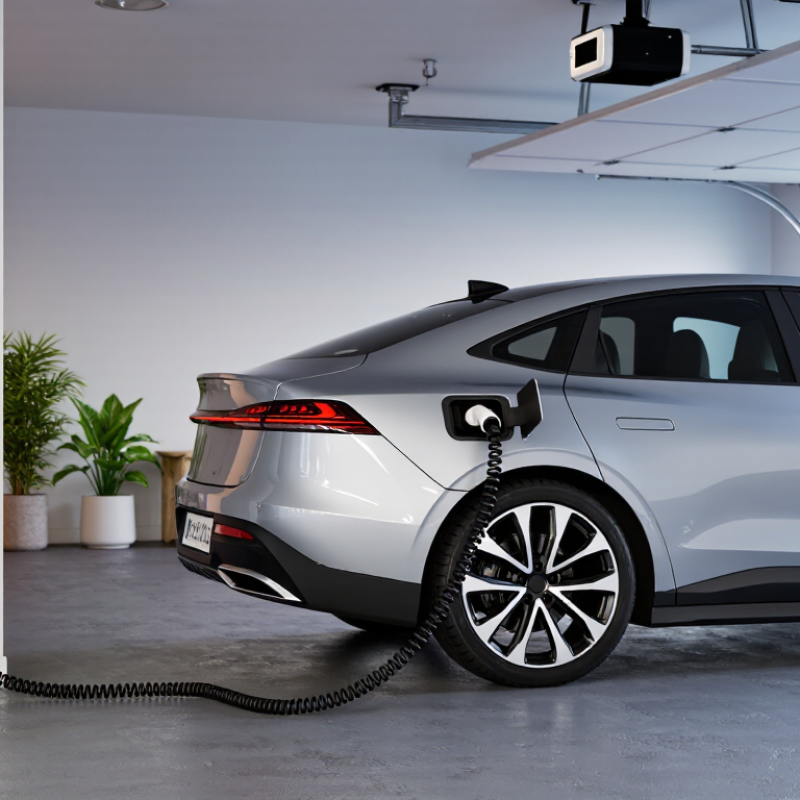
A home charging station connects an electric vehicle to a household power supply and manages the energy transfer. It is more than a socket. The unit communicates with the vehicle, checks the connection, and helps stop charging when a fault is detected. In most home setups, the vehicle’s onboard charger converts incoming AC power into battery-ready DC. That detail is easy to overlook.
Home stations are commonly classified by charging power and installation method. Lower-power units may use an existing outlet, while higher-power equipment often needs a dedicated circuit and professional assessment. Exact output depends on the electrical supply, the vehicle, and local installation conditions. A wall-mounted unit can keep a cable off the floor; a portable model can be moved, but may be less convenient for daily use. Small practical differences matter.
They can also be grouped as basic or connected models. Basic units provide controlled charging with few settings. Connected versions may offer scheduling, energy reports, and remote status checks through an app. These features can help households charge during quieter hours, though they add complexity. I would not treat “smart” as automatically better. Network access, signal strength, and clear operating instructions all affect the experience. Classification labels are useful, but they rarely tell the whole story. A site assessment is still needed.
Selecting China’s leading home charging station manufacturers requires more than comparing product catalogs or factory size. An evaluation should examine engineering capacity, production consistency, and documented after-sales support. Review power options, connector compatibility, enclosure ratings, and protection against overheating or electrical faults. Ask for recent test reports, traceable component records, and clear warranty terms. Evidence matters. Factory visits can reveal whether incoming components are inspected and finished units receive functional testing. Yet a polished showroom is not proof of dependable field performance.
Buyers can compare sample units using the same checklist: installation steps, cable handling, app setup, and charging stability. Record defects, response times, and spare-part availability rather than relying on sales presentations. Where possible, check references from installers who have supported units through a full seasonal cycle. That detail helps distinguish a strong process from a convincing brochure. Selection should also consider export experience, technical documentation, customization limits, and the manufacturer’s ability to explain failures. Even careful audits have gaps; a small sample may miss inconsistent batches or long-term wear. Treat rankings as a starting point, not a guarantee.
China’s home-charging market includes manufacturers with different technical strengths. A brand-free profile can describe ten useful categories without treating them as a ranking.
Details matter.
Buyers should check rated output, protection features, warranty terms, and compatibility with their home’s electrical supply. A polished app cannot compensate for unclear installation instructions. Claims about efficiency or durability also deserve evidence, such as test reports and defined operating conditions.
These profiles are practical ways to compare manufacturers, not verified descriptions of ten named companies. Some distinctions blur in real product lines. That is worth remembering.
Home charging equipment is more than a wall-mounted socket. Its control electronics manage communication between the vehicle and the power supply before charging begins. When comparing manufacturers, check whether the unit supports suitable charging levels, clear status indicators, and stable communication with common vehicle types. A reliable design can detect ground faults, leakage current, overcurrent, and abnormal heat. Small details matter. Look for a cable that resists twisting and an enclosure suited to its installation environment.
Safety depends on both the charger and the installation. Many systems include temperature monitoring, automatic shutdown, and protection against electrical faults. Dynamic load management can reduce the chance of overloading a home circuit when appliances run at the same time. Still, a feature list does not prove performance. A specification sheet can leave out how a device behaves after years of heat, dust, and repeated cable handling.
Certification should match the intended market and product configuration. Standards such as IEC 61851 and IEC 62196 address charging equipment and connectors; North American products may follow different applicable standards. Ask for verifiable certificates and test reports, not just a printed compliance claim. Check that model numbers match, and confirm installation requirements with a qualified electrician. Even a certified charger cannot correct poor wiring or an unsuitable circuit.
When comparing China-based residential charging manufacturers, match each unit to the home’s electrical panel, parking layout, and daily driving distance. A high advertised power rating is not automatically useful. The U.S. Department of Energy’s Alternative Fuels Data Center estimates that Level 2 charging adds about 10–20 miles of range per hour. Treat that as a guide, not a guarantee; vehicle limits and cold weather affect charging speed.
Ask suppliers for test reports covering temperature rise, electrical protection, enclosure durability, and operation across stated temperatures. Request the report date and testing standard, not just a certificate image. Cable reach, load management, and easy operation without an app can matter more than peak power. Small details count. Ask for proof.
Compare warranty coverage, spare-part access, software support, and response times for faults. The IEA’s Global EV Outlook 2024 reports nearly four million public charging points worldwide at the end of 2023, up 40% in one year. For a home unit, check connector compatibility and whether key functions require a subscription. Brochures alone are a weak basis for ranking suppliers; test evidence can be incomplete. Ask for references from similar residential installations, then verify them independently.
Use these ten practical criteria to compare suppliers without relying on brand names. Technical values below are common residential-market reference points, not specifications attributed to any individual manufacturer. Confirm each model’s datasheet, applicable local standards, and installation requirements before purchasing.
| No. | Comparison dimension | Residential reference point | What to confirm with the manufacturer |
|---|---|---|---|
| 1 | AC charging power | Common residential options include about 7 kW single-phase and 11 kW or 22 kW three-phase, where the vehicle and electrical supply support them. | Rated current, phase configuration, adjustable current settings, and compatibility with the vehicle’s onboard AC charger. |
| 2 | Supply voltage and installation | Residential AC equipment is commonly designed for approximately 220–240 V single-phase or 380–415 V three-phase supplies, depending on the market. | Permitted voltage range, circuit and cable requirements, earthing requirements, and whether a qualified electrician is required for installation. |
| 3 | Connector and regional compatibility | For mainland China, check compatibility with the applicable GB/T AC charging interface; other markets may use different connector standards, such as Type 2. | Connector standard, cable length, cable or socket configuration, and compatibility with the specific vehicle and destination market. |
| 4 | Electrical protection | Protection design may include overcurrent, overvoltage, undervoltage, overtemperature, and residual-current protection. Requirements depend on the product design and local electrical rules. | Protection functions, residual-current device type, DC fault-current detection, reset behavior, and required upstream protective devices. |
| 5 | Enclosure and outdoor suitability | Outdoor models should state an ingress-protection rating, such as IP54 or higher, where appropriate. The rating alone does not guarantee suitability for every exposure or installation location. | IP rating, operating-temperature range, UV and corrosion resistance, mounting conditions, and any restrictions on direct exposure to weather. |
| 6 | Smart features and connectivity | Wi-Fi, Bluetooth, Ethernet, or cellular connectivity may be offered; availability varies by model. OCPP support is relevant when integration with a compatible charging-management platform is needed. | Supported communication protocols and versions, app availability, offline charging behavior, data handling, and any ongoing service or subscription fees. |
| 7 | Energy management | Some residential chargers support scheduled charging or dynamic load management, which can help coordinate charging with household demand when correctly installed and configured. | Whether an external meter or sensor is required, supported solar-surplus functions, load-balancing limits, and compatibility with the home electrical system. |
| 8 | Standards and market approvals | Charging equipment should be assessed against the standards and approvals applicable in its intended market. IEC 61851-1 and GB/T 18487.1 are examples of relevant conductive-charging standards. | Model-specific test reports, certificates, standard editions, and confirmation that approvals apply to the exact product and destination market. |
| 9 | Warranty and after-sales support | Warranty length and coverage are supplier-specific; there is no single duration that applies to every residential charger. | Written warranty term, covered components, labor and shipping exclusions, local service availability, spare-parts policy, and response process. |
| 10 | Total installed cost | The charger purchase price is only one part of the cost; installation, electrical upgrades, accessories, connectivity, and ongoing services may add to the total. | An itemized quotation covering equipment, installation assumptions, optional hardware, taxes, software fees, and any costs for future service. |
Note: This is a manufacturer-comparison checklist, not a ranked or verified list of ten companies. Product specifications and regulatory requirements can vary by model, installation, and destination market.
Copyright © 2025 The Toolroom Inc. All Rights Reserved.
Website Design St Louis by IQComputing