China Best Artificial Lift Technologies for Enhanced Oil Recovery?
Enhanced oil recovery is crucial for meeting global energy demands. In this context, Artificial Lift Technologies (ALTs) play a key role in maximizing oil extraction efficiency. China, with its vast oil reserves, has been exploring innovative and effective artificial lift solutions.
The adoption of advanced ALTs can significantly boost production rates in mature fields. Techniques such as electrical submersible pumps are now widely used. These technologies often show great potential but also face challenges. For instance, issues related to maintenance and operational costs need careful examination. Each oil field demands a tailored approach to implementing artificial lift solutions.
As China continues to invest in its oil production infrastructure, learning from both successes and failures is essential. There's a need for continuous research and development. By exploring the strengths and limitations of various artificial lift methods, the oil industry can improve overall recovery rates. Understanding the complexities of these technologies will enable better decision-making and resource management in the long run.
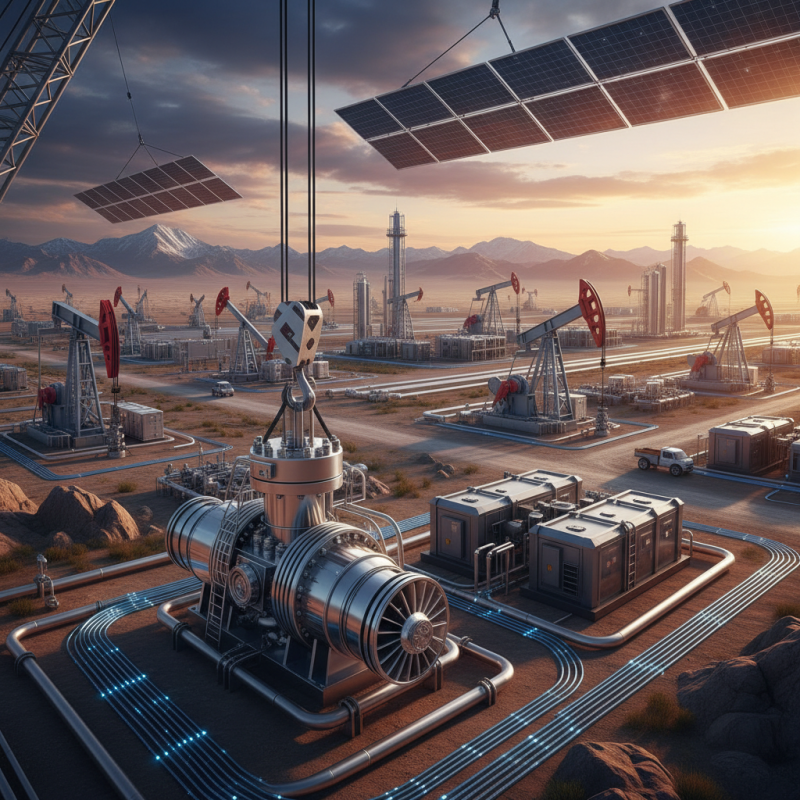
China's Leading Artificial Lift Technologies in Oil Production
China has emerged as a significant player in the artificial lift technologies sector for oil production. These technologies are essential for enhancing oil recovery from mature fields. In recent years, there has been rapid innovation in lift methods, particularly in the use of submersible pumps and gas lift systems. These advancements offer greater efficiency and reduce operational costs, helping to sustain production levels.
Submersible pumps are often favored for their ability to operate in various depths. They ensure consistent fluid flow and are adaptable to different well conditions. On the other hand, gas lift systems can enhance production by using gas to lift oil to the surface. This method is particularly effective in wells with high gas-to-oil ratios. Yet, challenges remain. For instance, maintaining efficient gas injection rates is critical. Variations in reservoir pressure can affect the overall performance.
Innovation is necessary to address these issues continuously. The development of smart technologies could improve monitoring and control, enhancing the efficiency of existing systems. Training skilled operators is another area that requires attention, as the performance of these technologies heavily depends on human expertise. Balancing technology and human factors is vital for achieving optimal results in oil production.
China Best Artificial Lift Technologies for Enhanced Oil Recovery
| Technology Type | Application | Key Advantages | Market Share (%) |
| Beam Pumping | Conventional Oil Fields | High reliability, low operating costs | 35% |
| Electric Submersible Pumps (ESP) | Deep Wells | High lifting efficiency, suitable for high flow | 25% |
| Progressing Cavity Pumps (PCP) | Heavy Oil Production | Handles viscous fluids, minimal maintenance | 15% |
| Gas Lift | Gas-Cap Reservoirs | Increased oil recovery, lower energy costs | 15% |
| Hydraulic Lift | Complex Reservoir Conditions | Versatile, effective in challenging conditions | 10% |
Overview of Enhanced Oil Recovery (EOR) Methods in China
Enhanced Oil Recovery (EOR) methods in China have gained attention for their potential in boosting production. These techniques aim to extract more oil from reservoirs compared to conventional methods. China’s complex geology presents unique challenges, yet innovative solutions are emerging.
One prevalent method involves thermal EOR. By injecting steam, the viscosity of heavy oil decreases, making extraction easier. It’s effective but energy-intensive and requires specific reservoir conditions.
Another approach is chemical EOR, which uses surfactants and polymers. These substances improve oil displacement efficiency. However, the long-term impact on reservoir integrity remains a concern.
CO2 injection is also explored as a promising EOR technique. It aims to enhance oil recovery while addressing environmental issues. Capturing CO2 from industrial sources presents logistical challenges. The effectiveness of CO2 in various geological formations needs further study.
Each method has its strengths and weaknesses, highlighting the importance of tailored solutions in Chinese oil fields. The path forward may not be perfectly clear, but learning from challenges is key to innovation.
Types of Artificial Lift Techniques Used in Chinese Oil Fields
In recent years, China has developed advanced artificial lift technologies to enhance oil recovery from its complex reservoirs. Key techniques involve using pumps, gas lift methods, and rod-lift systems. Each technique has its unique advantages. For instance, electro-submersible pumps are effective in deep wells but can be costly to install.
Gas lift systems utilize compressed gas to assist in lifting oil. This method is often more flexible and can be adjusted based on well conditions. Yet, the reliance on gas availability poses challenges. Rod-lift systems are widely used due to their simplicity. However, they require consistent maintenance and can wear quickly under harsh conditions.
The choice of artificial lift technique depends on reservoir characteristics. Each type has benefits, but it may not be a one-size-fits-all solution. Engineers often face tough decisions. Local geology, reservoir pressure, and cost all factor into the selection process. Many oil fields show uneven performance, which indicates the need for continuous adaptation and innovation in technology.
China Best Artificial Lift Technologies for Enhanced Oil Recovery
This chart displays the distribution of different artificial lift techniques used in Chinese oil fields, showcasing their respective popularity and application in enhancing oil recovery.
Case Studies of Successful EOR Using Artificial Lift in China
Enhanced Oil Recovery (EOR) in China has seen significant advancements using artificial lift technologies. One notable case study comes from the Daqing Oil Field, where Gas Lift techniques have boosted production rates. In 2022, the field reported a 15% increase in output, largely attributed to optimized gas lift systems. This highlights the effectiveness of integrating artificial lift methods in mature fields.
Another interesting example is the use of Electrical Submersible Pumps (ESP) in the Shengli Oil Field. Here, the implementation of ESP led to a 25% recovery improvement in certain reservoirs. Reports indicate that these results stem from better reservoir management and targeted lifting strategies. Continuous monitoring and adaptation are vital, as varied geological conditions can impact performance.
Tips for operators: Regularly evaluate your lift system's efficiency. Utilize data analytics to identify underperforming areas. Maintain clear communication with field engineers. This ensures a timely response to any production challenges. It's essential to remain flexible and ready to adapt technologies as conditions change. Remember, what works for one reservoir may not apply universally. Always stay informed and ready for adjustments.
Future Trends in Artificial Lift Technologies for Oil Recovery in China
China's oil industry is rapidly evolving. Recent reports indicate that artificial lift technologies are at the forefront of enhanced oil recovery. In 2022, nearly 60% of oil produced in China utilized some form of artificial lift. This significant adoption reflects the country's urgent need to optimize production amidst depleting oil reserves.
One notable trend is the shift towards advanced electrical submersible pumps (ESPs) and progressive cavity pumps. These technologies have proven to increase production rates by 30% to 50% in many fields. However, challenges remain in terms of energy efficiency and maintenance costs. For instance, while ESPs excel in high-production environments, their operational lifecycle can be short, leading to frequent replacements and additional costs.
Moreover, the integration of digital technologies in Artificial Lift Systems is becoming increasingly important. Artificial intelligence and data analytics can enhance monitoring and predictive maintenance. Yet, many companies struggle to fully harness these advancements. Without a proper infrastructure, investments in digital tools may not yield the expected returns. These factors highlight a critical need for continuous evaluation and adaptation in the development of artificial lift technologies in China.