
Industrial Pipeline projects rarely fail because a catalogue looks unattractive. They stumble when pressure ratings, material grades, coating systems, delivery schedules, or documentation do not match site conditions. A supplier’s brochure is only the beginning. Buyers need traceable test records, clear quality controls, and practical evidence of experience with comparable projects.
The International Energy Agency’s Global Methane Tracker 2024 estimates that fossil fuel operations released close to 120 million tonnes of methane in 2023. That figure does not measure pipeline quality or apply to every industrial network. It does show why reliable transport infrastructure, sound engineering, and leak prevention matter in oil and gas applications. For relevant line pipe, ISO 3183:2019 provides an established technical reference; buyers should still verify the specification and certification requirements for their project.
This guide reviews seven Industrial Pipeline suppliers for global buyers, with attention to product range, manufacturing capability, quality documentation, and international project support. A mill certificate may look convincing on a screen. The real test is whether its grade, dimensions, and inspection records match the purchase order. Not every supplier will suit every site. Price matters, but so do lead times, communication, and after-sales support. Even a carefully researched shortlist has limits; regional availability and project-specific approvals can change the outcome. Use the profiles as a starting point, then confirm every critical detail directly with the supplier.
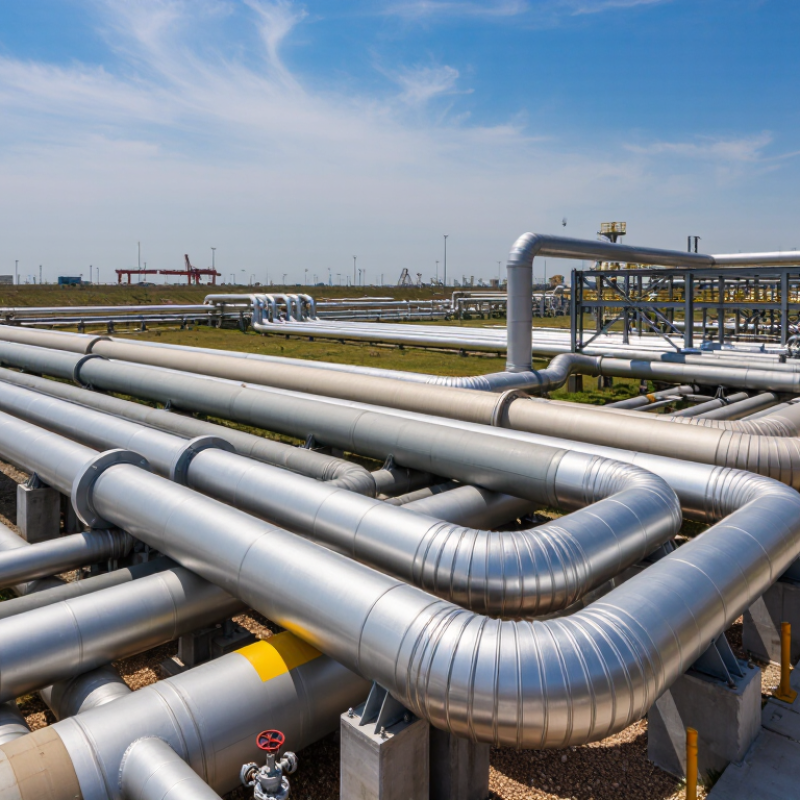
Global industrial pipeline supply depends on more than price and availability. Buyers compare material grades, diameter ranges, wall thickness, coatings, and delivery capacity. A carbon steel line pipe may suit one service, while corrosive conditions can require a different alloy or lining. Confirm the project specification before comparing quotations. Small differences matter.
Cross-border sourcing adds practical checks. Ask suppliers for material test certificates, heat-number traceability, inspection options, and clear packing details. Confirm whether stated lead times include production, inspection, and shipping. A low quote can become expensive if documentation is incomplete or bundles arrive poorly protected. A polished quotation is not proof of dependable supply. Even experienced teams can miss a detail, so review assumptions rather than relying on familiar wording.
Tips: Compare suppliers against the same written specification. Check sample certificates and clarify inspection scope before placing an order. Ask how pipes will be capped and protected against moisture during transit. Record open questions in the purchase documents. One caution: freight estimates can change, and buyers should verify current terms directly with the supplier.
Assess suppliers through evidence, not polished capability statements. Request mill certificates linked to each pipe’s heat number, then match grade, chemistry, tensile strength, and dimensions against the purchase specification. For line pipe, check applicable API Specification 5L or ISO 3183 requirements, weld inspection records, and hydrostatic test results. Ask how nonconforming pieces are quarantined and replaced. Small gaps matter.
Capacity needs proof, too. The World Steel Association’s World Steel in Figures 2025 reports global crude steel production of about 1.88 billion tonnes in 2024; this indicates market scale, not any supplier’s quality. Verify the proposed mill, actual production slots, and shipment history separately. Review coating procedures, packing details, port access, and delivery contingencies against the project route. Ask for recent inspection reports and clarify who pays when tests fail. A useful scorecard weighs traceability, quality controls, delivery performance, and technical support—not price alone. Paperwork can mislead. Even a thorough review has limits: records show past performance, not what the next shipment will be.
Global pipeline buyers need more than a low quoted price. These seven supplier profiles highlight different strengths to examine. One supplier may specialize in seamless steel pipe for high-pressure service, while another focuses on welded pipe for large-diameter water lines. A third may offer corrosion-resistant alloys for demanding process environments. Ask for material test reports and confirm that grades match the project specification. Small paperwork gaps can cause large delays.
A fourth supplier might stand out for custom lengths and accurate end preparation. Those details matter when crews are aligning heavy sections on site. A fifth may provide protective coatings suited to buried or marine exposure. Check coating thickness, inspection records, and repair procedures. The finish can look sound and still fail early. A sixth supplier may support complex orders with clear production schedules and shipment tracking. Buyers should confirm capacity, delivery terms, and packing methods rather than rely on a confident sales estimate.
The seventh profile is a supplier with broad product coverage, useful when one order includes several pipe sizes or fittings. A wider catalog does not guarantee consistent quality across every item. Request recent inspection evidence and clarify who handles nonconforming goods. Compare suppliers on traceability, technical support, and realistic lead times. A neat brochure helps, but it is not proof. Verify details against the project’s drawings and acceptance criteria.
Comparing industrial pipeline suppliers requires more than checking a product catalogue. Review pipe grades, outside diameters, wall thicknesses, joining options, and delivery locations against the project’s operating conditions. The World Steel Association’s October 2024 Short Range Outlook projected global steel demand at 1,751 million tonnes in 2024. That scale signals a broad materials market, not uniform quality. Ask for heat-specific mill test certificates and traceability from raw material to finished pipe.
Certifications need close inspection. For line pipe, check whether products meet the project’s specified edition of ISO 3183 or API Specification 5L, and confirm the certificate covers the actual manufacturing site and product range. Request evidence of dimensional checks, non-destructive testing, and independent inspection where required. For corrosive or low-temperature service, verify the supplier’s documented material and testing capabilities. A certificate alone is not proof of suitability.
Look beyond the factory gate. Compare stock availability, minimum order quantities, packaging, export documentation, and realistic lead times. Ask how the supplier handles rejected material and changes to delivery schedules. Small details matter: pipe-end protection, clear bundle labels, and matching heat numbers can prevent delays after arrival. One awkward limitation: supplier data is often difficult to compare directly. Use the same specification checklist and request recent, product-specific records before shortlisting.
Anonymous supplier profiles by manufacturing segment. Product standards listed are commonly specified in procurement; they do not confirm that a particular supplier holds a certificate or can supply every grade. Verify current mill approvals, product scope, and project-specific qualifications before ordering.
| Supplier profile | Typical manufacturing capability | Representative products | Commonly specified standards | Best fit for buyers | Key checks before award |
|---|---|---|---|---|---|
| 1. Integrated line-pipe mill | Typically makes longitudinally welded pipe from plate and may offer high-strength line-pipe grades, subject to mill range and qualification. | SAWL line pipe; project-specific sour-service or low-temperature options may be available. | API Specification 5L; ISO 3183. Grade, PSL, dimensions, and supplementary requirements must be confirmed. | Large-diameter transmission pipelines and engineered projects with formal qualification requirements. | Approved mill list, pipe diameter and wall-thickness range, weld procedure qualifications, NDT, and coating scope. |
| 2. Spiral-welded pipe specialist | Forms pipe from steel coil using a helical seam; available size and grade ranges vary by mill. | SAWH line pipe for water, piling, and selected oil-and-gas applications. | API Specification 5L or project-specific standards where the product and mill are qualified; AWWA standards may apply to water-service pipe. | Buyers comparing large-diameter welded pipe for infrastructure or suitable transmission applications. | Service suitability, seam inspection records, dimensional tolerances, hydrostatic testing, and project acceptance criteria. |
| 3. Seamless-pipe producer | Produces seamless pipe by hot-working processes; size, wall thickness, and steel grades are mill-specific. | Line pipe, pressure pipe, and mechanical pipe in applicable carbon or alloy steel grades. | API Specification 5L for applicable line pipe; ASTM A106/A106M for specified seamless carbon-steel pressure pipe; ASTM A333/A333M for specified low-temperature service. | Applications where a seamless product is specified or welded seams are not accepted by the project design. | Actual production range, heat treatment, grade availability, testing requirements, and traceability to heat and pipe. |
| 4. ERW/HFW pipe producer | Forms strip or coil and joins the longitudinal seam using electric-resistance or high-frequency welding; capabilities depend on the mill line. | Welded line pipe, structural pipe, and selected water or industrial-service pipe. | API Specification 5L for qualified line pipe; ASTM A53/A53M for applicable steel pipe; project specifications govern end use. | Buyers seeking welded pipe in available mill sizes for pipeline, structural, or general industrial use. | Weld-seam inspection, heat-treatment requirements, dimensional range, NDT, and documented compliance with the purchase specification. |
| 5. OCTG-focused pipe producer | Focuses on oil-country tubular goods; product scope may include casing, tubing, and associated connections. | Casing and tubing for wells; certain producers also make line pipe. | API Specification 5CT for applicable casing and tubing; connection and performance requirements should be stated separately. | Upstream buyers procuring tubulars for well construction rather than general-purpose pipeline systems. | Grade, connection type, thread inspection, product traceability, applicable license or qualification, and service environment. |
| 6. Water-transmission pipe supplier | Supplies steel pipe systems for water infrastructure; fabrication, lining, and coating may be offered in-house or through approved partners. | Welded steel water pipe, fittings, and, where offered, internal linings and external coatings. | AWWA C200 for steel water pipe and AWWA C205 for cement-mortar protective lining, where specified and applicable. | Municipal water transmission, treatment-plant connections, and related infrastructure projects. | Potable-water approvals for the destination market, lining/coating system, joint design, field repair procedure, and installation requirements. |
| 7. Multi-product project supplier | Coordinates multiple pipe types and accessories, often combining own production with qualified external mills and processors. | Line pipe, seamless or welded pipe, fittings, flanges, and coating services depending on its approved supply network. | Standards are product-specific and may include API 5L, ASTM A106/A106M, ASTM A53/A53M, and project requirements. | Global buyers consolidating procurement across multiple product categories or delivery locations. | Identify the actual manufacturing mill, confirm certificates and traceability, audit subcontractors, and check Incoterms, lead time, and inspection hold points. |
Procurement note: API and ASTM designations are product standards, not a blanket guarantee of supplier certification. Request current certificates, mill test reports, inspection records, and evidence that the specific manufacturing facility and product scope meet the project requirements.
Global sourcing for industrial pipelines starts with matching manufacturing capability to service conditions, not choosing the lowest quoted tonnage. Set grade, diameter, wall thickness, end preparation, coating, pressure class, and inspection scope before comparing bids. Small gaps matter. A familiar pipe schedule may still conflict with project specifications or site joining methods. Request heat-number traceability, mill test reports, and sample inspection records.
Logistics deserve equal attention. UNCTAD’s Review of Maritime Transport 2024 reports that over 80% of global trade by volume moves by sea. Port capacity, weather exposure, packaging, and inland transport can all affect delivery and pipe condition. Ask suppliers how they protect pipe ends and coatings during handling, and confirm who manages damage claims. The World Bank’s Logistics Performance Index 2023 covers 139 economies and assesses customs, infrastructure, logistics services, tracking, and timeliness. Use it as a screening signal, not a substitute for lane-specific checks.
Qualify suppliers with document review, technical calls, and, where practical, independent inspections. Verify production capacity against your required shipment schedule; a strong sample does not prove consistent output. Check certificate scope and connect material records to actual pipe markings. Paperwork can look tidy while lot traceability remains weak. I would still treat any single audit as a snapshot, not a guarantee. No checklist catches everything.
Copyright © 2025 The Toolroom Inc. All Rights Reserved.
Website Design St Louis by IQComputing