
Blog

What Are the Best Flange Accessories in 2026?

Choosing the best flange accessories in 2026 starts with the job, not the product label. A gasket that seals reliably on a low-pressure water line may not suit a hot process pipe. The right Flange Accessory depends on pressure, temperature, fluid compatibility, flange material, and the conditions around installation. Small details matter. A slightly mismatched gasket, for example, can cause uneven compression and repeat maintenance.

This guide compares practical options, including gaskets, bolting, flange guards, insulation kits, and alignment tools. It looks at material selection, fit, durability, ease of installation, and the documentation buyers should check. A stainless-steel bolt set may resist corrosion in one environment, while another application calls for different materials and engineering review. There is no universal winner. That is worth remembering.

The recommendations are intended to help readers ask better questions, not replace project specifications or qualified engineering advice. Check dimensions, ratings, and manufacturer guidance before ordering or installation. A product description can sound convincing, yet still leave important details unclear. That is a real limitation of comparing accessories from brief listings. The sections ahead explain what to inspect, where common trade-offs appear, and how to build a shortlist suited to the actual piping system.
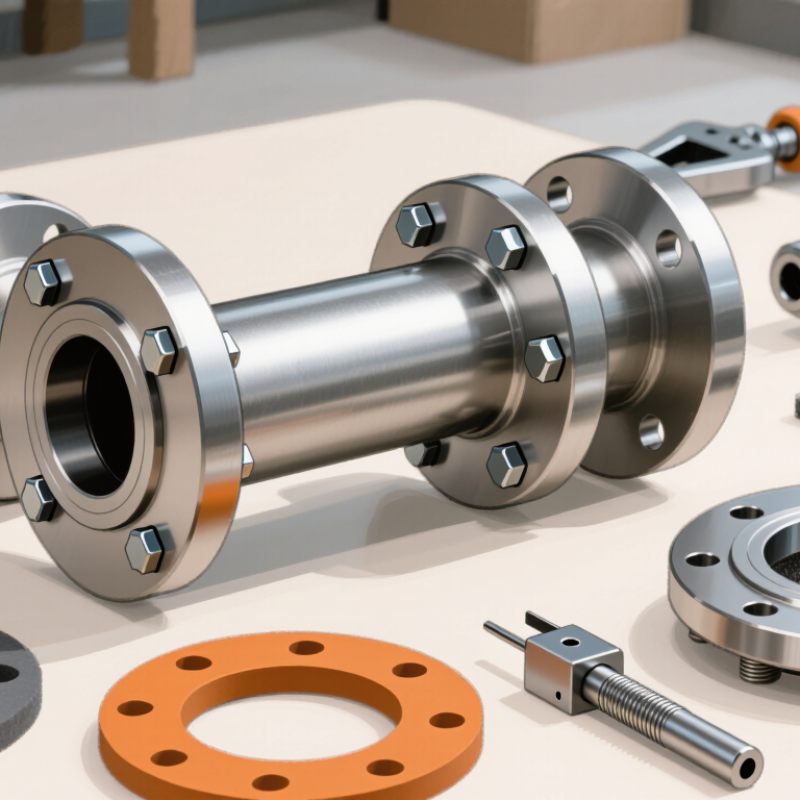
What Are the Best Flange Accessories in 2026?

Understanding Flange Accessories and Their Role in Piping Systems

What Are the Best Flange Accessories in 2026?

Understanding Flange Accessories and Their Role in Piping Systems

Flange accessories help turn two pipe ends into a controlled, maintainable joint. A gasket seals the faces; bolts and nuts supply the clamping force. Washers can help distribute that load, while insulating kits limit electrical continuity between connected components. Blinds and spacers support isolation or maintenance. Small parts, serious consequences.

Selection starts with the service, not the catalog. Check fluid, temperature, pressure, flange facing, material compatibility, and expected maintenance conditions. ASME B16.5 provides dimensional and pressure-class data for flanges and fittings from NPS 1/2 through NPS 24, with classes from 150 to 2500. ASME PCC-1 gives guidance for assembling bolted flange joints. These references help, but they do not replace checking the actual equipment and operating conditions.

In the field, a gasket that looks right can still fail if its material or thickness is unsuitable. Uneven tightening can also leave a leak path; a calibrated tool and a documented tightening sequence make the work more repeatable. PHMSA’s pipeline annual data reports organize operating and incident information by pipeline type, reinforcing why asset records and inspection history matter. Keep accessory details with the joint record: gasket specification, bolt material, installation date, and any observed corrosion. Records are easy to neglect. That is worth questioning.

Key Criteria for Evaluating Flange Accessories in 2026

What Are the Best Flange Accessories in 2026?

Key Criteria for Evaluating Flange Accessories in 2026

Choosing flange accessories starts with the service conditions, not the catalogue. Confirm pressure, temperature, fluid, and flange dimensions before comparing gaskets, bolts, washers, or insulation kits. Check that materials and pressure ratings match the piping specification and the applicable flange standard. Fit matters. A gasket that slightly overhangs the bore can disrupt flow or suffer damage during tightening.

Corrosion resistance deserves close attention, especially in wet, saline, or chemically aggressive environments. NACE International’s 2016 IMPACT study estimated global corrosion costs at US$2.5 trillion annually, or 3.4% of global GDP. That broad estimate is not a flange-failure rate, but it shows why material compatibility and inspection records matter. Ask for material certificates, dimensional checks, and traceable batch information. Small gaps count.

Installation details can undo a sound specification. Verify bolt length, thread engagement, lubricant compatibility, and the tightening procedure; uneven loading can compromise a gasket seal. For electrical or cathodic-protection applications, assess whether an insulation kit is required and suitable for the operating conditions. A checklist helps, but it cannot replace a hands-on fit-up inspection. In practice, site conditions sometimes expose assumptions the specification missed.

Common Flange Accessory Types and Their Functions

What Are the Best Flange Accessories in 2026?

Common Flange Accessory Types and Their Functions

Gaskets sit between flange faces and help contain the process fluid. Spiral-wound gaskets suit many demanding services, while soft, full-face gaskets are common on flat-face connections. The choice depends on the flange finish, dimensions, temperature, pressure, and fluid compatibility. Small mismatches matter. A gasket that fits poorly may leak even when the joint looks tight.

Stud bolts, nuts, and washers hold the joint together and distribute clamping force. Bolt length and material should match the flange assembly and service conditions. Tighten fasteners in a cross-pattern, using the specified torque procedure. Guessing can create uneven compression. A calibrated tool and clean, undamaged threads help make installation more consistent.

Insulation kits include sleeves, washers, and a gasket to reduce electrical contact between connected flanges. They can help limit galvanic corrosion in compatible systems, but correct installation is essential. Protective flange covers also keep dirt and moisture away during storage or maintenance. Their value is easy to overlook. Check fit and material suitability before ordering, since accessory details vary with flange size, facing, and operating conditions.

Matching Accessories to Flange Standards, Materials, and Service Conditions

What Are the Best Flange Accessories in 2026?
Matching Accessories to Flange Standards, Materials, and Service Conditions

Choosing flange accessories starts with the flange standard, not the catalog photo. ASME, EN, and JIS dimensions and pressure classes are not automatically interchangeable. Verify the facing type, bolt circle, bore, and rating against drawings and equipment records. A small mismatch can leave a gasket compressed unevenly.

Match gasket material to the fluid, temperature, pressure, and cycling conditions. A spiral-wound gasket may suit some high-temperature services, while an elastomer sheet may fit others; neither is universal. Select studs, nuts, and washers for the flange material and environment. Confirm strength, coating, and lubrication requirements against the project specification. Insulating kits may help in some dissimilar-metal assemblies, but check their pressure and temperature limits.

Field fit matters. Clean faces, correct bolt length, and a controlled tightening sequence help distribute load. Use calibrated tools when the procedure requires them, and record the checks. The neatest-looking kit is not always the safest choice. One detail deserves another look: site conditions can differ from the original specification. Review current drawings and service data before ordering, especially after a process change.

What Are the Best Flange Accessories in 2026? — Matching Accessories to Flange Standards, Materials, and Service Conditions

Typical upper service temperatures for common gasket materials

These are approximate upper-temperature guidelines, not universal ratings. Actual limits depend on the specific material grade, fluid compatibility, pressure, oxidation, and installation. Match gasket style and dimensions to the flange facing and applicable standard—for example, ASME B16.20 for spiral-wound, ring-joint, and metal-jacketed gaskets, or ASME B16.21 for nonmetallic flat gaskets—and verify the complete service rating with the product specification.

Selecting and Maintaining Accessories for Reliable Performance

A reliable flange joint depends on compatible accessories, not simply a tight fit. Match gasket material to the process fluid, temperature, pressure, and flange finish. Check that bolts, nuts, and washers suit the service environment and joint design. ASME PCC-1-2022 provides guidance for assembling pressure-equipment bolted flange joints, including controlled tightening practices. Follow the equipment maker’s specifications and site procedures; a generic torque value can damage a gasket or leave uneven compression. Small parts matter.

During maintenance, look for corrosion, damaged threads, flattened gaskets, and signs of leakage. Record what was replaced and the conditions observed. The NACE IMPACT study estimated corrosion costs at US$2.5 trillion annually, or 3.4% of global GDP, and reported that corrosion-management practices could save 15–35% of those costs. These figures cover many industries, not flange accessories alone, but they show why routine inspection deserves attention.

A clean flange face and correctly sized gasket are useful starting points. So are traceable material records and calibrated tightening tools. Yet field conditions are rarely perfect: access may be cramped, surfaces may be dirty, and old joints may have undocumented repairs. Pause and verify rather than forcing mismatched hardware into place. A minor delay is better than guessing. Recheck joints after startup when procedures call for it, and document any seepage, even if it seems slight.

Copyright © 2025 The Toolroom Inc. All Rights Reserved.
Website Design St Louis by IQComputing