
Blog

2026 Best Diesel Pile Hammers in Southeast Asia for Buyers

Southeast Asia’s ports, bridges, industrial sites, and transport links depend on reliable foundation work. UNCTAD’s Review of Maritime Transport 2024 reported that global maritime trade grew 2.4% in 2023 and projected 2% growth for 2024. That is useful context, not proof of pile-hammer demand. Projects differ widely. A coastal port in Indonesia may require different equipment from a bridge site near a dense city. Buyers need to match hammer energy, pile type, soil conditions, and operating access to the actual job.

This guide to Diesel Pile Hammers in Southeast Asia compares practical buying factors for 2026, including impact performance, fuel use, transport requirements, parts support, and operator safety. The World Bank’s Logistics Performance Index 2023 also treats infrastructure quality as a core measure of logistics performance. Still, that broad measure cannot tell a contractor which hammer will suit a specific piling plan. Site records and a supplier’s technical documentation matter more. Ask for verified impact ratings, compatible pile dimensions, maintenance intervals, and local service arrangements. Check how the hammer performs in the soil you expect to encounter. Small details matter. A remote jobsite with limited lifting capacity can turn a powerful machine into a costly delay. No single model fits every project, and published specifications do not replace field checks. That limitation deserves attention.
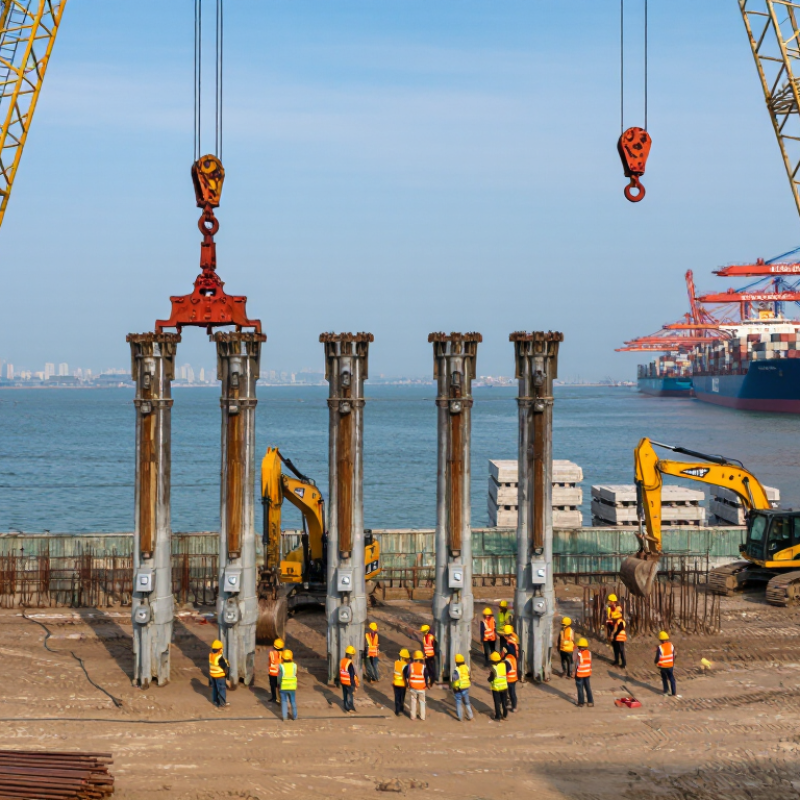
2026 Best Diesel Pile Hammers in Southeast Asia for Buyers

Diesel Pile Hammers and Their Role in Southeast Asian Construction

Ports, bridges, and transport links across Southeast Asia depend on foundations that can perform in varied ground conditions. The Asian Development Bank’s 2017 report, Meeting Asia’s Infrastructure Needs, estimated that the region would need about US$210 billion in infrastructure investment each year through 2030, including climate-related costs. That scale of construction makes reliable piling equipment important, especially where projects operate far from stable power supplies.

Diesel pile hammers use controlled combustion to lift and drive a ram, delivering repeated impact energy into a pile. They can suit remote sites, but performance depends on pile type, soil layers, and careful setup. On site, operators must account for vibration, noise, fuel use, and maintenance. A wet work platform or changing ground can complicate the job. It is not a universal solution.

The U.S. Federal Highway Administration’s 2016 Design and Construction of Driven Pile Foundations manual emphasizes evaluating hammer, pile, and soil behavior together. Rated energy alone does not prove that a pile will reach the required capacity. Field monitoring can reveal unexpected resistance or stress during driving. That detail is easy to overlook. Even experienced teams may need to revise assumptions when subsurface conditions differ from the investigation.

How Diesel Pile Hammers Work and Where They Are Used

A diesel pile hammer converts fuel combustion into repeated impact energy. Its ram rises, compresses air, and ignites a measured fuel charge near the bottom of its stroke. The resulting force drives the pile downward; the cycle then repeats. Simple in principle. In practice, soil changes everything.

A pile entering dense gravel may respond very differently from one passing through soft delta deposits, so operators track penetration per blow and watch for unexpected changes.

Diesel hammers are used to install driven piles for bridges, port structures, road embankments, and building foundations. These applications matter across Southeast Asia, where waterways, coastal ground, and rapid infrastructure growth shape project demands.

The Asian Development Bank’s 2017 report, Meeting Asia’s Infrastructure Needs, estimated that developing Asia would require US$1.7 trillion in annual infrastructure investment from 2016 to 2030, including climate-related needs. That figure describes regional demand, not pile-hammer sales.

On site, crews must also consider noise, vibration, exhaust, and nearby structures. Wet weather and variable ground can complicate work. A high blow count is not, by itself, proof of a sound foundation; installation records and appropriate pile testing still matter.

That distinction is easy to overlook.

Key Types and Features of Diesel Pile Hammers in 2026

Open-end, single-acting diesel hammers use a free ram that strikes the pile cap. Operators can often observe the ram stroke directly, making field adjustments easier. Closed-end, double-acting models contain combustion pressure around the ram and can deliver faster cycling in a compact setup. Both types rely on compression at impact, so very soft ground may make starting or consistent operation difficult. That matters.

Hammer selection depends on pile material, required penetration, and local ground conditions. Southeast Asian projects may encounter soft alluvium, dense sand, or weathered rock, sometimes within one site. A heavier ram is not automatically better: excessive impact can damage concrete piles, while insufficient energy can stall progress. Check the manufacturer’s rated energy against the pile design, then monitor driving records and pile integrity on site.

ADB’s 2017 report, Meeting Asia’s Infrastructure Needs, estimated that developing Asia would need about US$26 trillion in infrastructure investment from 2016 to 2030, or US$1.7 trillion annually. This is regional infrastructure spending, not a diesel-hammer market forecast. A field caveat: catalog ratings can mislead. Fuel quality, alignment, operator settings, and soil resistance all affect actual performance. Noise and vibration also deserve attention near occupied buildings.

How to Compare Diesel Pile Hammers for Southeast Asian Projects

For Southeast Asian projects, compare diesel pile hammers against the pile design and actual ground conditions. Check ram weight, rated energy, stroke, and operating frequency. These figures help show whether a hammer can drive the specified pile without excessive stress. A larger model is not automatically better. Confirm compatibility with the pile material, dimensions, and required driving depth.

Fuel consumption and transport needs also affect project costs. In humid, rainy conditions, inspect how the machine is protected during storage and how routine maintenance is performed. Ask about access to replacement parts and the recommended service intervals. Parts matter. A short service delay can leave a crew and crane waiting on site. Compare operating data under similar conditions; figures from different soils may not be directly comparable.

Request test records or project references involving similar piles and soil profiles. Where possible, observe a trial and record penetration per blow, fuel use, vibration, and noise. These details are more useful than a brochure’s headline rating. Listen to the operators, too; their feedback may reveal setup issues that a specification sheet misses. There is no perfect comparison. Ground conditions can change over a short distance, so allow for uncertainty and verify assumptions with a qualified piling engineer.

2026 Best Diesel Pile Hammers in Southeast Asia for Buyers - How to Compare Diesel Pile Hammers for Southeast Asian Projects

Hammer class Typical ram mass Indicative impact energy* Typical project fit Pile types commonly considered Key checks for Southeast Asian sites
Light-duty About 0.5–2 tonnes About 10–40 kJ Smaller foundations, short piles, and projects with restricted lifting capacity or access. Small-diameter steel pipe piles and selected small precast concrete piles, subject to the pile and helmet design. Confirm the hammer can achieve the required penetration in local soils; soft ground does not automatically mean a light hammer is sufficient.
Medium-duty About 2–5 tonnes About 40–100 kJ General building, industrial, and infrastructure piling where access and pile sizes are moderate. Steel pipe piles, steel H-piles, and compatible precast concrete piles. Check leader capacity, crane capacity, pile cushions, noise restrictions, and vibration limits near occupied areas.
Heavy-duty About 5–10 tonnes About 100–200 kJ Large building, port, bridge, and other projects involving substantial pile sections or demanding driving conditions. Larger steel pipe piles, H-piles, and suitably designed precast concrete piles. Assess ground conditions, pile stresses, equipment transport, fuel logistics, and the effect of driving on nearby structures.
Very heavy-duty About 10–20 tonnes About 200–400 kJ Major marine, port, bridge, and heavy industrial works where large piles and high driving resistance may be encountered. Large-diameter steel pipe piles and other pile sections specifically engineered for the driving system. Require a detailed drivability and stress assessment, robust lifting and support equipment, and project-specific environmental approval.
Buyer checks for every class: Match the hammer to the pile type, pile dimensions, soil profile, required capacity, and driving system. Verify helmet and cushion compatibility, available service support, spare-part supply, fuel requirements, transport limits, and the applicable local rules for noise, vibration, emissions, and working hours.

*Ram-mass and impact-energy figures are broad indicative ranges for comparing equipment classes, not specifications for a particular model. Actual delivered energy depends on the hammer design, operating conditions, stroke, and pile-driving setup. Confirm manufacturer data and obtain a project-specific drivability assessment before selection.

Buyer Checklist for Selecting and Operating a Diesel Pile Hammer

A diesel pile hammer should match the pile, ground conditions, and working platform—not just the required driving speed. Check ram weight, rated energy, stroke range, helmet fit, and cushion compatibility against the pile design. Ask for verified performance records and a maintenance history, including fuel-system checks and wear-part replacement. In Southeast Asia, inspect seals and electrical components for moisture exposure, and assess corrosion risks near coastal sites. Small details matter.

The Asian Development Bank’s 2017 report, Meeting Asia’s Infrastructure Needs, estimated developing Asia would need $1.7 trillion in annual infrastructure investment through 2030. That scale makes dependable equipment selection important, but it does not replace site-specific engineering. Review soil investigation data and expected penetration resistance with the project engineer. Confirm transport dimensions, lifting points, spare-part availability, and local service response before purchase.

During operation, use a clear exclusion zone, stable leads, and a trained crew; record hammer settings, blow counts, and unusual vibration. The ILO’s 2023 estimates reported 2.93 million work-related deaths and 395 million non-fatal work injuries worldwide each year. These figures are not pile-driving statistics, but they reinforce the need for documented risk controls. One awkward point: production targets can encourage rushed checks. Set stop-work triggers for fuel leaks, damaged cushions, unstable setup, or unexpected pile movement.

Copyright © 2025 The Toolroom Inc. All Rights Reserved.
Website Design St Louis by IQComputing