
A Designer Paper Box does more than hold a product. It shapes the first impression, protects delicate goods, and gives a brand a tangible voice. That voice depends on practical details: board strength, color consistency, fold accuracy, and a lid that closes cleanly. Small defects show quickly under bright retail lighting.
The opportunity is substantial, but choosing a supplier takes more than comparing catalog images. Smithers’ industry report, The Future of Global Packaging to 2028, examines the forces shaping packaging markets worldwide, including changing material and market demands. For buyers, its broader lesson is clear: supplier capability must match the product, destination, and production volume. Request material specifications, printed samples, quality-control procedures, and realistic lead times. A polished sample is not proof of repeatable production. Not always.
Design authority Paul Rand wrote, “Design is the silent ambassador of your brand.” His words fit paper packaging particularly well: a crisp logo, precise color, and sturdy construction can communicate quality before a product is opened. Still, design alone cannot guarantee dependable supply. This guide compares seven manufacturers for global buyers, focusing on design capability, customization, production experience, and communication. Treat each profile as a starting point, not an endorsement; verify current certifications and specifications directly. Beautiful boxes matter. Reliable delivery matters, too.
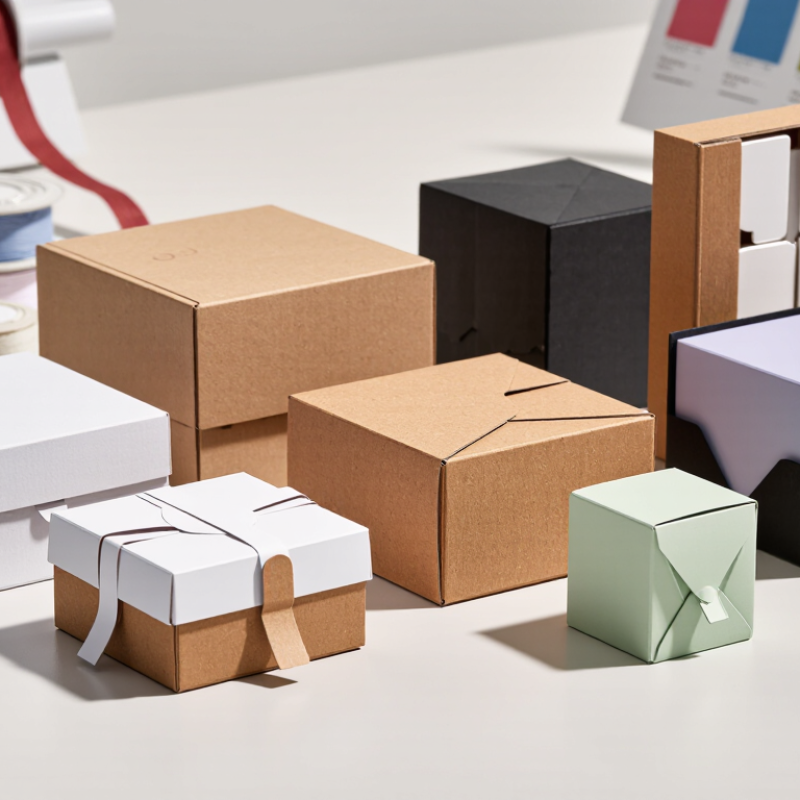
Designer paper box manufacturers turn a packaging brief into a finished structure. They produce rigid setup boxes, folding cartons, sleeve boxes, and drawer-style designs. Each format serves a different purpose. A rigid box feels substantial, while a folding carton ships flat and saves storage space.
Production often includes selecting paperboard, printing artwork, applying coatings, and adding details such as foil stamping or embossing. Manufacturers may also make paper inserts to hold a product steady. A well-fitted insert prevents rattling. Small details matter. A glossy finish can show fingerprints, though, and dark colors may reveal scuffs more easily than expected.
Before full production, buyers can request a structural sample to check dimensions, opening style, and fit. This step catches problems that a screen mockup may miss. Manufacturers also advise on board thickness and finishing options based on the box’s intended use. Still, advice is not a substitute for testing: a box that looks elegant on a desk may not withstand repeated handling. Ask for clear specifications, material samples, and a production proof before approving an order.
A reliable paper box manufacturer should explain how its materials perform, not just show attractive photographs. Ask for board grade, paper weight, surface finish, and approved food-contact details when relevant. Request a physical sample with your actual dimensions and product weight. Check whether corners stay square and lids close without force. Small flaws matter.
Compare the sample with a written specification. Include dimensions, color references, print placement, acceptable tolerances, and packing method. Ask how the factory checks quality during production, not only before dispatch. A clear answer should identify inspection steps and provide records when requested. Vague promises deserve follow-up. Ask again.
Global orders add practical risks. Confirm production capacity, sample and bulk lead times, export packing, and shipment documentation. Discuss how the manufacturer handles delays, damaged cartons, or a color mismatch. Request references or evidence of similar export work, while remembering that past performance cannot guarantee your order. A polished sample can still hide inconsistent production. I would verify key details in writing, even when communication feels smooth. Also consider whether the factory can adjust specifications without quietly changing board strength or finish. This takes time. But a careful evaluation can prevent costly rework and packaging that arrives poorly protected.
Global buyers comparing seven leading designer paper box manufacturers should look beyond foil, embossing, and polished sample photos. Compare structural design, board options, print consistency, prototyping, quality checks, production capacity, and export packaging. Small details matter. Ask each supplier for a dieline, a physical sample, and clear tolerances for color and dimensions.
The FAO’s 2023 Forest Products Annual Market Review reports about 401 million tonnes of paper and paperboard production worldwide in 2022. This signals broad material availability, but not uniform quality. Eurostat reported that EU packaging waste averaged 186.5 kilograms per person in 2022; paper and cardboard made up 40.8 percent of the total. Those figures make material use and box sizing practical sourcing questions. A neat sample is not proof of repeatable quality. Request production samples, inspect corner folds and closures, and check how boxes are packed for shipment. Some buyers may overvalue decorative finishes; they can add cost without improving protection. Compare lead times and reorder consistency, too. I would still treat supplier claims cautiously until specifications and samples agree.
| Designer Box Format | Typical Paperboard Construction | Common Printing and Finishing Options | Typical Uses | Key Buyer Check |
|---|---|---|---|---|
| Rigid setup box | Thick paperboard wrapped with printed or decorative paper; supplied as a pre-formed box. | Offset-printed wrap, foil stamping, embossing, debossing, and matte or gloss coatings. | Premium gifts, cosmetics, accessories, and presentation packaging. | Confirm board thickness, corner construction, insert fit, and shipping protection requirements. |
| Folding carton | Folding boxboard or other cartonboard, cut and creased to fold flat before assembly. | Offset or digital printing, aqueous coating, varnish, and selected foil or embossing details. | Retail products, personal care items, food packaging, and small consumer goods. | Check the required board grade, dieline, product weight, and whether food-contact compliance is needed. |
| Corrugated mailer box | Corrugated board made from linerboard and a fluted medium; often supplied with folding tabs. | Direct printing or printed paper covering; coatings and labels may also be specified. | E-commerce shipments, subscription kits, and products needing extra transit protection. | Specify the board construction and test requirements based on product weight and distribution conditions. |
| Kraft paper box | Kraft paperboard or kraft-faced corrugated board, depending on the required strength and structure. | Flexographic or digital printing, labels, and limited-area decoration. | Gifts, bakery items, apparel, and brands seeking an uncoated or natural-paper appearance. | Ask whether the paper is virgin, recycled, or a blend; confirm any required food-contact suitability. |
| Drawer-style box | A sliding inner tray paired with an outer sleeve, commonly made from paperboard or wrapped rigid board. | Printed sleeves, textured papers, foil details, and shaped pull tabs or ribbon pulls. | Jewelry, small electronics, cosmetics, and gift sets. | Check sliding clearance, tray strength, insert dimensions, and the assembled pack’s overall size. |
| Magnetic-closure rigid box | Rigid paperboard construction with a hinged lid and an embedded magnetic closure. | Printed or decorative-paper wrap, foil stamping, embossing, and soft-touch coatings. | Premium gift sets, apparel, electronics, and corporate presentation packs. | Confirm magnet placement, closure strength, material declarations, and any shipping restrictions that apply. |
| Paper tube box | Spiral-wound or convolute-wound paperboard tube, usually paired with a separate lid or base. | Printed paper wrap, labels, foil details, and coated or uncoated finishes. | Tea, cosmetics, candles, posters, and other products suited to a cylindrical pack. | Verify internal diameter, wall construction, closure fit, and moisture or barrier needs for the packed product. |
These are common paper-box formats and material constructions, not rankings of individual suppliers. Actual specifications, print methods, minimum order quantities, and lead times vary by manufacturer and project. Request product samples and confirm applicable packaging, safety, and certification requirements before ordering.
Choosing a designer paper box manufacturer means checking the material, finish, and factory floor—not just a polished sample. Eurostat’s Packaging Waste Statistics report recorded 83.4 million tonnes of packaging waste in the EU in 2022; paper and cardboard accounted for 40.8%. That figure is regional, not a global rule. Still, fiber sourcing and coating choices deserve practical questions.
Ask for board grade, basis weight, recycled-fiber share, and coating details. Compare a physical prototype against your product dimensions, inserts, and shipping route. Check corner crush, lid fit, foil alignment, and color consistency under neutral light. Small details matter. Request documented inspection criteria and transit-test results; a beautiful mock-up alone proves little. More evidence helps.
The U.S. EPA’s 2018 materials report recorded an 80.9% recycling rate for paper and paperboard containers and packaging. That is an older U.S. benchmark, not a guarantee that every coated or laminated box is recyclable. Capacity needs equal scrutiny: request monthly output, sample lead time, peak-season capacity, and defect data. Ask how the supplier handles reorders when board availability shifts. Factories may hesitate to share yield figures; that gap deserves follow-up.
A practical framework for comparing materials, customization, quality, and production capacity.
Suggested evaluation weights for buyer due diligence—not audited data or a ranking of specific manufacturers. Confirm each supplier’s materials, quality controls, customization capabilities, and capacity directly.
For international buyers, a designer paper box is not just a sample-room decision. Ask manufacturers for flat and assembled samples, board-grade details, finished dimensions, and packed-carton measurements. These details help you compare quotes and estimate freight before approving production. The World Bank’s 2023 Logistics Performance Index estimates that goods spend about 44 days moving through international supply chains from exporter to importer. Build buffer time into launch plans; a perfect sample cannot prevent a missed vessel.
Freight planning can change the best supplier choice. UNCTAD reports that shipping carries over 80% of world trade by volume, so carton size, stacking strength, and moisture protection matter. Request pallet patterns and photos of packed cartons, then check whether boxes arrive without crushed corners after a realistic handling test. Confirm destination-specific labeling and import-document requirements with a qualified customs broker. Small details matter. A low unit price may lose its appeal when bulky cartons increase freight costs or arrive late.
Tips: Compare quotes using the same box size, paper specification, order quantity, and Incoterm. Ask for production lead time separately from transit time, and confirm who books freight and insures the shipment. Keep one approved sample for comparison. Plans still need flexibility; port delays can disrupt even careful schedules.
Copyright © 2025 The Toolroom Inc. All Rights Reserved.
Website Design St Louis by IQComputing