Who Is the Best ABC Cable Manufacturer in China?
Choosing the best ABC cable manufacturer in China takes more than comparing prices or reading a polished product page. Buyers need to understand how a cable will perform in its intended setting, from a control cabinet to an outdoor installation. Abc Cable may describe a product category or supplier offering, so confirm the exact construction, conductor material, insulation, voltage rating, and application before requesting a quote. Details matter.
A useful comparison looks for clear technical documentation, consistent production controls, traceable test reports, and responsive engineering support. Ask how the manufacturer checks conductor dimensions, insulation thickness, and finished-cable performance. Request samples when practical, and have specifications reviewed by a qualified professional familiar with the installation. Do not treat a certificate logo or a low price as proof of suitability. Verify documents with the issuing organization where possible, and confirm that the stated standards match your project requirements and destination market.
This guide examines the questions that help separate verifiable capability from sales language: What products does a supplier actually make? Can it explain testing and quality procedures? Are delivery terms, customization limits, and warranty conditions stated clearly? A factory visit or independent inspection may provide useful evidence, but neither guarantees every shipment will meet expectations. That deserves reflection. Supplier rankings can also become outdated as equipment, ownership, and quality systems change. The most dependable choice is therefore the manufacturer whose claims can be checked against your cable specification, inspection plan, and long-term support needs—not simply the one called “best” online.
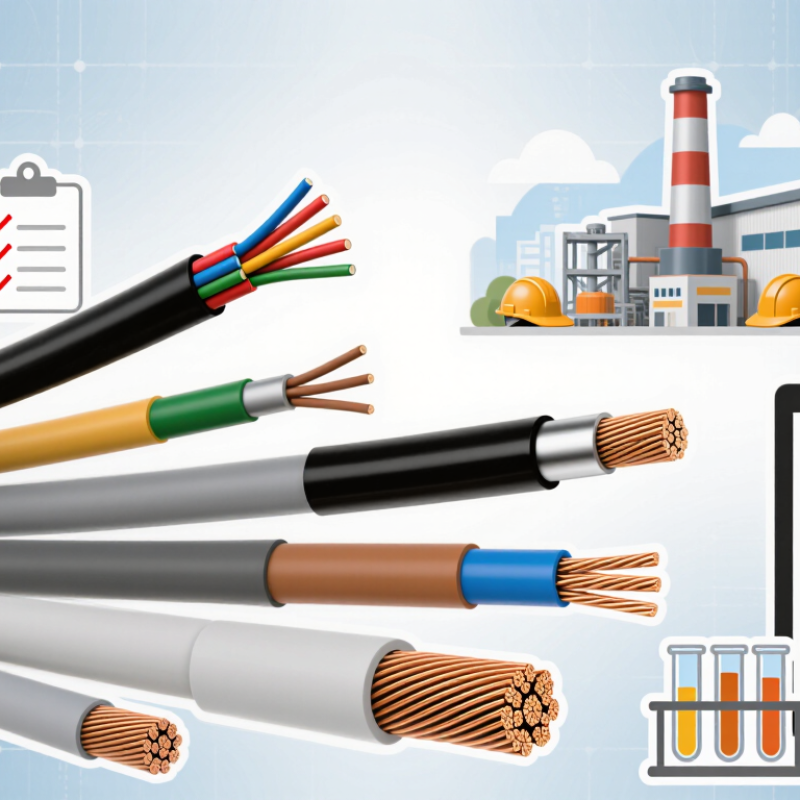
What ABC Cable Is and How It Is Used
ABC cable, or aerial bundled cable, is an overhead power line made from several insulated conductors grouped into one assembly. Utilities use it to carry electricity along streets and rural roads, then connect homes or buildings through service drops. Depending on the design, a messenger wire supports the bundle, or the conductors support themselves. From the ground, it looks like one compact cable. That matters where poles are close to trees or buildings. Bundling can reduce conductor contact and make the line less vulnerable to some brief faults. It does not make the line harmless.
A typical installation follows a street of wooden poles, with the cable held by clamps and connected at each span. Crews select the cable’s voltage rating, conductor size, and support hardware to match the load and span length. Wind, temperature changes, tree growth, and connector condition also affect performance. ABC can be useful in crowded or exposed routes, but it is not a cure-all. Insulation may age or suffer damage, and faulty connections can still cause outages. Details vary by network, so the cable should be chosen and installed to suit actual site conditions. A neat bundle alone proves little.
China’s ABC Cable Manufacturing Industry
China’s ABC Cable Manufacturing Industry serves overhead power distribution projects with a wide range of conductor sizes, insulation options, and production volumes. Manufacturers commonly work with aluminum conductors and weather-resistant insulation designed for outdoor exposure. Their capabilities can differ: one factory may handle custom specifications well, while another focuses on standardized, high-volume orders. The details matter. Production scale alone does not prove consistent quality.
A practical supplier review should look beyond price and brochures. Ask how conductor materials are checked, how insulation thickness is controlled, and whether finished cable batches receive documented electrical and mechanical tests. Resistance, tensile strength, and insulation performance are useful checkpoints. Request reports tied to the batch being purchased, then compare them with the project specification. I would not treat a polished sample as proof of stable production; that is an easy mistake. Communication and clear records matter, too.
Tips: Confirm the cable’s voltage rating, conductor size, and installation conditions before comparing quotations. Ask for sample inspection and traceable test records. Check closely. If a specification is unclear, resolve it in writing before production begins.
Key Criteria for Evaluating ABC Cable Manufacturers
Choosing an ABC cable manufacturer in China takes more than comparing quoted prices. Start with the cable’s actual operating conditions. Will it face strong sunlight, high temperatures, or frequent wind movement? These details affect conductor size, insulation, and service life. Share the required voltage, installation method, and project specifications before requesting a quotation. Clear inputs make comparisons more useful.
Ask for conductor material details, dimensional data, and test reports tied to the proposed cable construction. Check whether the manufacturer can explain routine tests, sample testing, and production checks in plain terms. Specifics matter. A polished brochure is not proof of consistent quality. Request a sample and compare its markings, strand arrangement, and dimensions with the technical documents. Where possible, review production records or arrange an independent inspection. Some buyers focus heavily on certificates; they still need to confirm that the documents match the product and relevant project requirements.
Evaluate communication and delivery practices, too. Ask how batches are identified, how changes to materials are recorded, and how production delays are reported. A capable supplier should give direct answers and raise limitations early. That can feel less reassuring than a perfect promise, but it is often more useful. No checklist removes every risk, so weigh evidence against the cable’s intended use and your own inspection results.
How Leading Chinese Manufacturers Compare
Comparing leading Chinese ABC cable manufacturers takes more than checking price and production capacity. Start with the details that affect installation: conductor material and cross-section, insulation thickness, strand construction, and stated operating conditions. Ask how each supplier verifies these specifications across production batches. A clear test report is more useful than a polished product sheet. So is a sample you can inspect for consistent insulation, clean marking, and uniform conductor stranding.
Manufacturers can also differ in engineering support and order flexibility. One may offer faster sample preparation, while another may provide clearer guidance on span, load, and cable configuration. Check whether the team can explain its recommendations using your project requirements, rather than offering a generic specification. Request quality records, batch identification, and realistic lead times before comparing quotations. Small details matter. A low price can look attractive, but changing specifications late in production may add cost and delay. No comparison is perfect; I would still verify claims independently and clarify any gaps before placing an order.
Choosing an ABC Cable Manufacturer for Your Project
Choosing an ABC cable manufacturer starts with the conditions at your site, not a catalogue headline. Share the voltage, expected load, installation span, local weather, and pole arrangement. A cable exposed to strong sun or coastal air may need different insulation and hardware than one used in a mild inland area. Details matter.
Ask how the manufacturer controls conductor size, insulation thickness, and bundle consistency during production. Request recent test reports, product traceability, and samples that match the proposed specification. Check that the stated standards suit your project’s destination and utility requirements. Ask about production capacity, delivery timing, packaging, and how damaged or nonconforming goods are handled. Ask for evidence.
A supplier’s technical team should be able to explain its recommendations in plain language and identify what still needs confirmation. Compare written quotations line by line; similar cable names can hide differences in materials or testing scope. If possible, review a sample and inspect its markings and finish. Even a careful specification can miss a real site condition, such as an unexpected span or mounting detail. I would confirm those points with the project engineer before ordering. No checklist catches everything.