Best Grade 304L Stainless Coils from China?
Choosing the best Grade 304l Stainless Coils from China requires more than comparing prices. The real decision begins with chemistry, surface quality, dimensional accuracy, and production consistency. A bright coil may look excellent under warehouse lighting, yet its edge condition can reveal poor slitting or careless handling.
John C. Lippold, a recognized stainless-steel welding specialist, has emphasized this practical principle: “Material selection is a balance between corrosion resistance, strength, and weldability.” That balance matters when 304L coils are used for food equipment, architectural panels, pressure components, or welded fabrication. Lower carbon content can reduce sensitization risks after welding, but buyers still need suitable heat treatment, traceability, and inspection records.
Reliable Chinese suppliers should provide mill test certificates, coil identification, chemical analysis, mechanical results, and clear tolerance data. Ask about ASTM or EN compliance, annealing conditions, pickling quality, and whether third-party inspection is accepted. Details matter. A loose coil label can create expensive confusion months later.
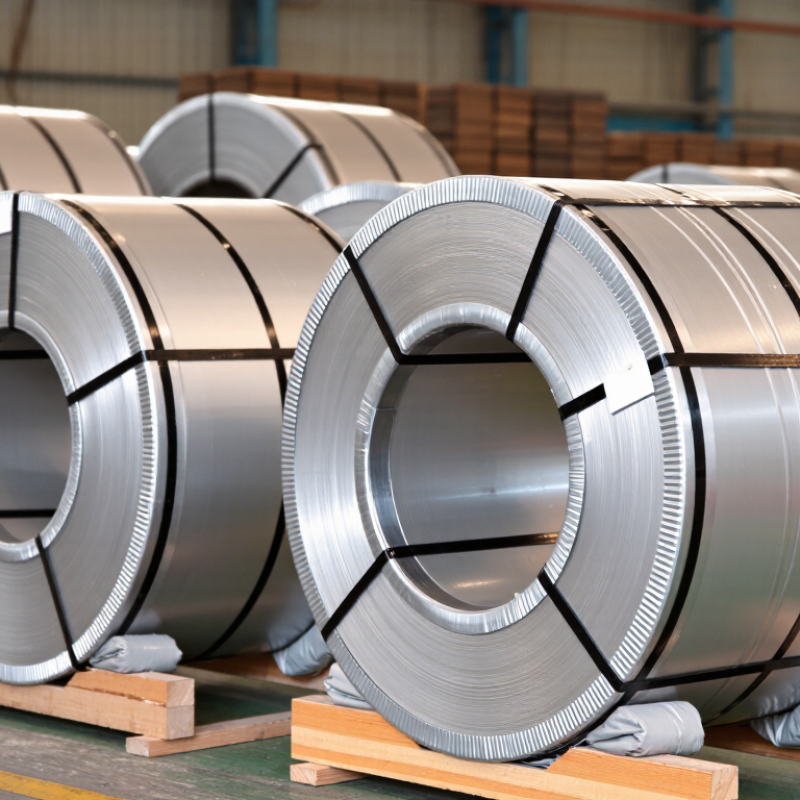
Supplier experience also deserves careful attention. Visit the mill when possible, review sample coils, and inspect packaging against sea-freight damage. Wooden supports, waterproof wrapping, and protected edges are not cosmetic extras. They preserve the product.
The difficult part is admitting that “best” has no single definition. The cheapest coil may fail during forming. The most polished surface may not suit every application. Buyers should compare verified performance, not attractive photographs. Even careful specifications can miss practical issues. That is why staged sampling, documented communication, and repeat inspection remain essential when sourcing Grade 304l Stainless Coils from China.
What Is 304L Stainless Steel and Why Is It Used for Coils?
304L stainless steel is a low-carbon version of 304 stainless steel. The “L” means low carbon. Its carbon content is usually limited to 0.03% maximum. This reduces carbide precipitation during welding. It helps preserve corrosion resistance near welded areas.
304L contains chromium and nickel, which form a passive surface film. This film protects the steel from moisture, food acids, and many mild chemicals. It is not immune to saltwater or strong chlorides. That distinction matters. In coil form, the steel is continuously rolled and supplied in long, tightly wound strips. Fabricators can slit, level, stamp, or form it with less material waste. It suits kitchen equipment, tanks, architectural panels, and welded tubing. In my experience, consistent thickness improves forming results more than a low purchase price.
Tips: Check the mill certificate before ordering. Confirm chemical composition, thickness tolerance, surface finish, and mechanical properties. ASTM A240 and EN 10088 references can clarify requirements. Inspect the coil edge for cracks, dents, or loose winding. A clean 2B surface should look even, but minor handling marks can still appear. Ask whether the coil was annealed and pickled after rolling. This detail is easy to overlook. Also, specify the intended environment clearly, because 304L may perform poorly in warm, chloride-rich conditions.
Best Grade 304L Stainless Coils from China? What Is 304L Stainless Steel and Why Is It Used for Coils?
304L is a low-carbon austenitic stainless steel commonly supplied as coil. Its low carbon limit helps reduce carbide precipitation during welding, while chromium and nickel provide corrosion resistance, formability, and toughness.
Typical chemical composition limits for 304L stainless steel under ASTM A240 specifications. Values are shown as weight percentages; carbon, manganese, and silicon are maximum limits, while chromium and nickel are specified ranges.
Key Properties and Performance Standards of 304L Stainless Coils
Best Grade 304L Stainless Coils from China?
Key Properties and Performance Standards of 304L Stainless Coils
Choosing the best 304L coil from China requires more than comparing price. Performance begins with chemistry. ASTM A240/A240M limits carbon to 0.030%, while chromium is typically 18.0–20.0% and nickel 8.0–12.0%. Lower carbon helps reduce sensitization during welding. It does not prevent contamination, poor cleaning, or incorrect heat treatment. That distinction is often missed.
515 MPa tensile strength
205 MPa yield strength
40% elongation
Under ASTM A240/A240M, annealed 304L generally requires at least 515 MPa tensile strength, 205 MPa yield strength, and 40% elongation. EN 10088-2 provides comparable chemical and mechanical controls. Values can vary with thickness and delivery condition. Buyers should request a complete mill test certificate, heat number, thickness record, surface finish, and dimensional inspection. Each heat number should match the coil documentation. Independent positive material identification remains wise. Small cost, useful doubt.
Surface consistency matters during forming and fabrication. A 2B finish should show an even, clean appearance, while edge cracks can reveal poor rolling control. The International Stainless Steel Forum reported 58.4 million tonnes of stainless crude steel production in 2023. Such scale supports supply capacity, but volume does not guarantee traceability or stable quality. Samples should be checked for flatness, burrs, corrosion marks, and weldability before full production. One practical weakness remains: certificates may look complete while sampling is too limited.
How to Evaluate Chinese 304L Stainless Coil Manufacturers
Evaluating Chinese 304L stainless coil manufacturers requires more than comparing quotations. Start with the steel grade. Ask for heat numbers, chemical analysis, and mechanical results linked to each coil. An experienced supplier should provide a mill test certificate, commonly to EN 10204 3.1, with traceable records. Check chromium, nickel, carbon, tensile strength, yield strength, and elongation against the agreed specification. Do not accept a polished certificate without matching coil markings. That small check often reveals weak control.
Inspect production capability and quality routines. Ask how the manufacturer controls thickness, width, flatness, edge condition, and surface finish. Request sample photographs under clear lighting, not only edited catalog images. A trial coil can reveal scratches, pinholes, uneven polishing, or poor winding tension. Verify whether the supplier can maintain your required tolerance across several coils. One good sample proves little. An independent inspection before shipment adds useful evidence, especially for large orders. Packaging also matters; waterproof wrapping, protected edges, and secure steel straps reduce damage during handling.
Review the manufacturer’s experience with similar applications, export documentation, and response speed when problems arise. A video call helps, but records matter more. Some evaluations fail because buyers focus only on price. I have seen low offers hide uncertain tolerances or incomplete traceability. Ask direct questions, save written answers, and compare every promise with the inspection report. Reliability is visible in details.
Grades, Sizes, Finishes, and Customization Options Available
Choosing the best Grade 304L stainless coil from China starts with its intended service, not only its price. Grade 304L contains a maximum 0.03% carbon under ASTM A240, helping reduce carbide precipitation after welding. It typically contains about 18–20% chromium and 8–12% nickel. The International Stainless Steel Forum reported global stainless crude steel production at approximately 58.4 million tonnes in 2023. That scale supports broad processing capacity, but quality still varies between suppliers.
Available thicknesses commonly range from 0.3 mm to 6 mm, with wider gauges available by contract. Common widths include 1,000, 1,219, and 1,500 mm. Coil inner diameters, outer diameters, weight limits, slit widths, and edge conditions can be customized. Finishes may include 2B, BA, No. 4, and HL. Each creates a different visual texture and cleaning response. Ask for mill certificates, heat numbers, dimensional reports, surface inspection records, and third-party testing. I have found that surface defects often matter more than small chemistry differences. That point is easy to underestimate.
Tips: Match the finish to the application. Use 2B for general fabrication and BA for brighter interiors. Confirm flatness and thickness tolerance before ordering. Request a sample coil or strip. A perfect specification does not exist. Recheck welding, forming, and transport requirements before approving production.
Quality Checks, Pricing Factors, and Export Considerations in China
Best Grade 304L Stainless Coils from China?
Choosing 304L stainless coils requires more than comparing the lowest quotation. Check the chemical composition, mechanical properties, coil thickness, width, and surface finish. A reliable supplier should provide a heat number and matching mill test certificate. Request PMI testing when composition is critical. Visual checks should identify scratches, edge cracks, pits, and uneven polishing. Independent inspection can verify results before shipment. It costs more, but it may prevent expensive claims later.
Pricing depends on nickel and chromium markets, thickness, width, finish, quantity, and processing requirements. Freight rates, currency changes, export packing, and payment terms also affect the final cost. A very low offer deserves questions. Hidden tolerances or incomplete documents may explain the difference. Buyers should confirm Incoterms, production time, inspection responsibility, and applicable import duties. Export files usually include invoices, packing lists, certificates of origin, and quality documents. Requirements vary by destination.
Tips: Ask for recent test records, not samples alone. Confirm coil weight and outer diameter. Use moisture-resistant wrapping and strong steel straps. Review every tolerance in writing. Do not assume “304L” guarantees identical performance in every environment. Even careful buyers can overlook surface requirements. A small clarification before production is often cheaper than reprocessing after arrival.