Discover the Benefits of Porous Ceramic Balls for Global Buyers
In the realm of advanced materials, porous ceramic balls stand out for their unique properties. Dr. Emily Chen, a renowned expert in ceramics, once stated, "Porous ceramic balls offer unmatched versatility across diverse applications." This assertion highlights their importance in industries ranging from filtration to catalyst support.
These lightweight balls possess a high surface area, making them ideal for various uses. They effectively enhance fluid dynamics and supply essential support in chemical reactions. However, not all porous ceramic balls are created equal. It's crucial to select the right type for specific applications, which can often lead to confusion for global buyers.
The potential benefits of porous ceramic balls are significant. They provide durability, efficiency, and can be engineered for specific needs. Yet, buyers should be aware of quality differences among suppliers, reflecting the need for thorough research. Understanding the intricacies of this material can lead to optimal results and better investment decisions.
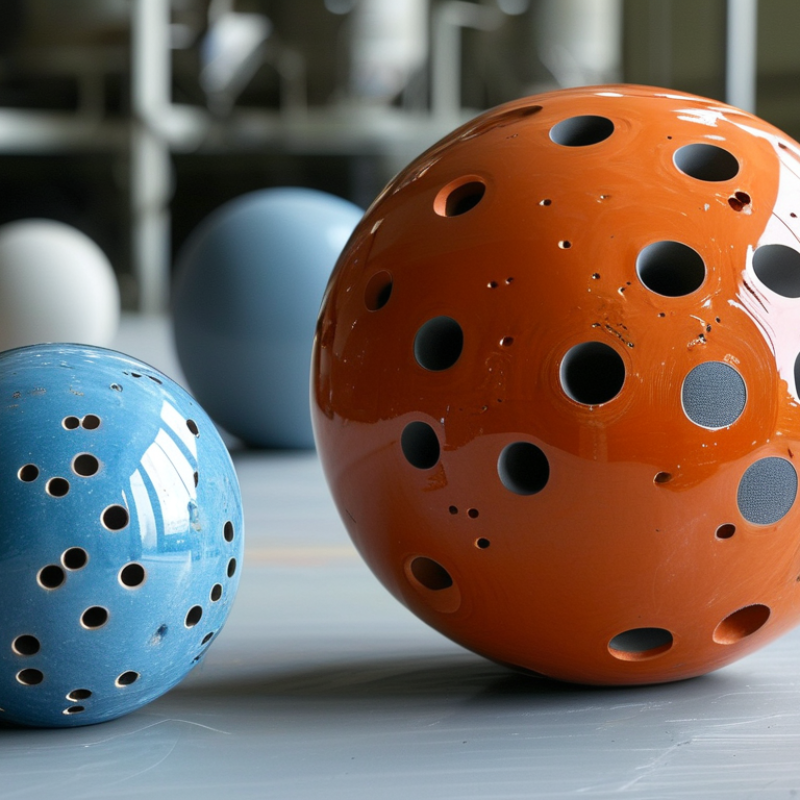
The Composition and Structure of Porous Ceramic Balls in Industry
Porous ceramic balls are increasingly vital in various industries due to their unique composition and structural properties. Typically composed of alumina, silica, and other materials, these balls exhibit high porosity and low density. According to a recent industry report, the porosity levels can reach up to 60%, providing enhanced performance in filtration and catalytic applications.
The structure of porous ceramic balls allows for superior adsorption characteristics. Their extensive surface area, often exceeding 300 m²/g, facilitates efficient interaction with gases and liquids. This property is crucial in sectors such as wastewater treatment and petrochemicals, where effective separation and purification processes are critical. However, the manufacturing processes can lead to variability in performance. Quality control remains essential to ensure reliability across applications.
In practical terms, users have reported mixed experiences regarding the durability of these materials. While porous ceramic balls are often praised for their lightweight nature and thermal stability, some have noted issues relating to mechanical strength under extreme conditions. This variability underlines the importance of rigorous testing and tailored solutions for each specific application to maximize efficiency.
Applications of Porous Ceramic Balls in Catalysis and Filtration Processes
Porous ceramic balls have gained popularity in various industries, especially for catalysis and filtration. Their unique structure allows for high surface area and efficient mass transfer. This quality makes them ideal for catalytic reactions, enhancing the rate of production while reducing energy consumption.
In filtration systems, these ceramic balls act as excellent media. They can trap impurities and particulates effectively. Their robustness and chemical stability prolong the lifespan of filtration systems. This durability is essential in industries dealing with aggressive chemicals. However, achieving the optimal balance of porosity and strength can be challenging. Some products may exhibit uneven porosity, leading to inconsistent performance.
The innovation in porous ceramic ball design is often driven by user feedback. Buyers are encouraged to consider their specific needs and applications. This thoughtful approach can improve efficiency and reduce costs over time. Investing in high-quality porous ceramic balls can yield substantial benefits. However, it's crucial to verify the source to ensure reliability.
Discover the Benefits of Porous Ceramic Balls for Global Buyers - Applications of Porous Ceramic Balls in Catalysis and Filtration Processes
| Application | Industry | Benefits | Key Features |
| Catalysis | Chemical | Enhanced reaction rates, improved selectivity | High surface area, uniform pore structure |
| Filtration | Water Treatment | Reduced particle contamination, longer filter life | Chemical stability, high porosity |
| Adsorption | Environmental | Effective removal of pollutants, cost-efficiency | Large internal surface area, durability |
| Thermal storage | Energy | Improved energy efficiency, stable temperature | High thermal capacity, low thermal conductivity |
Comparative Analysis of Porous Ceramic Balls and Alternative Materials
Porous ceramic balls have gained attention as an innovative material. Their unique structure offers advantages over conventional alternatives. According to a recent industry report, porous ceramics exhibit a lower density compared to metal and plastic materials. This property enhances their performance in various applications, from catalysis to filtration.
When comparing porous ceramics with materials like activated carbon or metal spheres, certain distinctions become clear. For instance, porous ceramic balls can withstand higher temperatures, often exceeding 1000°C. This makes them ideal for high-temperature applications, where other materials would fail. Furthermore, the porosity of these ceramic balls allows for increased surface area, facilitating more efficient chemical reactions. However, sourcing these materials can sometimes present challenges, particularly in regions with less access.
While the benefits are apparent, domain experts highlight a few limitations. The brittleness of ceramic compared to tougher substances can lead to mechanical failure. Additionally, the manufacturing process can be more complex and energy-intensive. Understanding these factors is crucial for buyers making informed decisions. Having access to comprehensive data is essential for navigating these options effectively.
Market Trends and Demand for Porous Ceramic Balls in Global Markets
The global market for porous ceramic balls is experiencing notable growth. Their unique properties make them suitable for a variety of applications, from water treatment to chemical processing. Buyers are increasingly recognizing the benefits of these materials. They are lightweight but strong, offering cost-effective solutions. With environmental concerns on the rise, these ceramics are also praised for their low environmental impact.
Recent trends indicate a rising demand, especially in Asia-Pacific regions. Industries require innovative materials that provide efficiency and sustainability. Porous ceramic balls fulfill these needs while also enhancing product performance. Manufacturers are adapting to market shifts, investing in research and development. However, some challenges remain. The consistency of quality across suppliers can vary. This inconsistency affects buyers' decisions and market trust, highlighting the need for reliable sourcing.
As the market evolves, the demand for porous ceramic balls will likely continue to rise. Buyers should focus on finding reputable suppliers. Investing in high-quality materials becomes crucial in maintaining competitive advantages. Staying informed about market trends and innovations is essential. Doing so allows businesses to leverage the benefits of porous ceramics effectively.
Environmental Benefits of Utilizing Porous Ceramic Balls in Manufacturing
Porous ceramic balls present unique environmental benefits in manufacturing. These materials are excellent in filtration and absorption. They help in removing contaminants from water and air. This capability reduces pollution effectively. Industries can achieve cleaner production processes by using them.
In construction, porous ceramic balls enhance insulation. This property can lead to lower energy use. Imagine a building that stays cool in summer without excessive energy costs. However, the initial production process of these balls can sometimes involve energy-intensive methods. This enigma invites manufacturers to reflect on their overall sustainability practices.
Using porous ceramic balls can also reduce waste. They are biodegradable and can be recycled. Yet, not all manufacturers prioritize such materials. This raises questions about industry responsibility. How can companies balance profit and environmental impact? There's still much to explore in this evolving field.