Top Benefits of Using Automatic Welding Robots for Your Business?
In today's competitive manufacturing landscape, companies are continuously seeking ways to enhance productivity and reduce costs. One solution gaining traction is the use of Automatic Welding Robots. These advanced machines usher efficiency into welding processes, transforming traditional methods. They not only boost output but also improve consistency, which is vital in ensuring quality control.
However, the implementation of Automatic Welding Robots is not without its challenges. Businesses must invest in training and integrate these robots into existing workflows seamlessly. The upfront cost can be significant, and some may question whether the investment pays off. Despite these hurdles, the potential benefits are impressive. Enhanced precision and reduced human error can lead to substantial long-term savings.
Automatic Welding Robots can also adapt to various welding tasks, making them versatile tools. Their ability to work tirelessly further contributes to increased production rates. Yet, an over-reliance on automation might lead to workforce shifts, raising concerns about job displacement. Companies must navigate these complexities thoughtfully to ensure they harness the full potential of this technology while maintaining a skilled workforce.
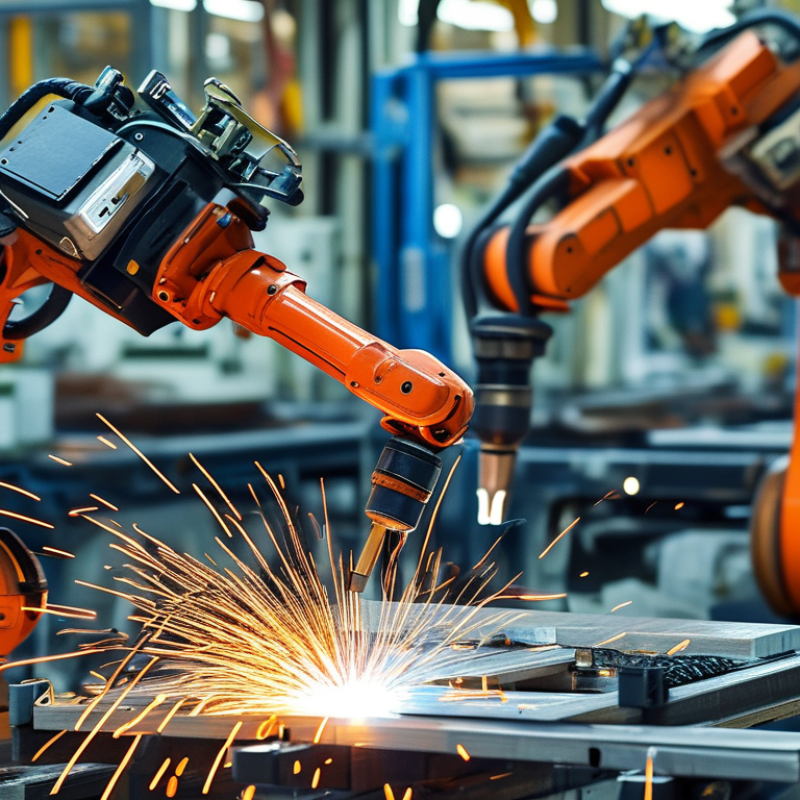
Advantages of Increased Efficiency with Automatic Welding Robots
Automatic welding robots have transformed the landscape of manufacturing by significantly enhancing efficiency. A report from the International Federation of Robotics highlights that companies using these robots can see efficiency improvements of up to 40%. This is achieved through reduced cycle times, consistent quality, and minimized human error. The precision of these machines allows for tighter tolerances, which is essential in industries such as automotive and aerospace.
However, the transition to automatic welding does come with challenges. Many businesses initially face a steep learning curve and potential integration issues with existing systems. According to a survey by the American Welding Society, about 25% of companies report difficulties in training staff to operate these advanced technologies. Nevertheless, overcoming these challenges can lead to substantial long-term benefits, including increased output and reduced operational costs.
Additionally, as automatic welding robots operate continuously without fatigue, they can maintain high production rates. This capability can be crucial during peak demand periods, allowing companies to meet tight deadlines. Data shows that manufacturers can achieve higher throughput, which supports growth in increasingly competitive markets. Still, it remains essential for businesses to evaluate their specific productivity needs and invest in worker training programs to realize the full potential of these technologies.
Cost Savings from Reduced Labor and Operational Expenses
In today’s competitive landscape, automatic welding robots offer businesses significant cost savings. These robots minimize the need for manual labor, directly reducing labor expenses. By automating repetitive tasks, companies can allocate human resources to more complex functions, driving efficiency.
Operational expenses also see a decline with robotic systems. Robots work continuously, reducing downtime and increasing production output. They maintain consistent quality, leading to fewer errors and less rework. This reliability is key to optimizing resources.
Tip: When integrating robotic systems, start small. Test in a controlled environment. This can help identify potential issues. Regularly evaluate the overall impact on productivity and costs. Adaptations may be needed as business needs evolve. Collaboration with experts can provide insights for smoother transitions.
Enhanced Precision and Consistency in Welding Operations
The integration of automatic welding robots significantly enhances precision and consistency in welding operations. According to a report by the International Federation of Robotics, automated welding systems can improve accuracy by up to 50%. This is crucial in industries where minor discrepancies can lead to significant safety issues or financial losses. By utilizing advanced sensors and algorithms, these robots can achieve welds with minimal deviation, ensuring high-quality outcomes.
Moreover, automatic welding robots operate continuously, leading to consistent results in production. A study published in the Journal of Manufacturing Science and Engineering highlighted that companies employing robotic welding saw a 30% increase in productivity. This consistency reduces the need for rework and scrap, which can be costly and time-consuming. However, the reliance on technology may also introduce challenges; programming errors or mechanical failures could disrupt operations, prompting the need for ongoing training and maintenance.
On the other hand, the initial investment in automated systems can be significant. Many companies may hesitate due to upfront costs, even though they often recover this in efficiency gains. It’s essential to weigh these factors carefully. As industries evolve, the integration of automatic welding robots may become more cost-effective, but careful assessment remains critical to ensuring reliable efficiency and long-term benefits.
Improved Workplace Safety and Reduced Injury Risks
Automatic welding robots are becoming essential in modern manufacturing. These machines significantly enhance workplace safety. By taking over dangerous tasks, they reduce the risk of injuries for human workers. Welding can be hazardous, with risks like burns, electrical shocks, and exposure to harmful fumes. Robots can perform these tasks with precision, minimizing human involvement in hazardous conditions.
Incorporating robotic welding can also lead to fewer accidents. Human error is a common cause of workplace injuries. When using robots, the chances of mistakes decrease. With their consistent quality and repeatability, these machines not only uplift safety but also ensure high-quality welds. Workers can be reassigned to safer roles, focusing on supervision and maintenance rather than risky weld procedures.
However, transitioning to robotic welding is not without challenges. There can be a learning curve associated with programming and maintaining these machines. Some employees might feel uncertain about their job security. Adapting to these changes requires thoughtful communication and training. It's essential to approach these adjustments with sensitivity and an open mind. The journey to increased safety through automation is a step forward for many businesses.
Top Benefits of Using Automatic Welding Robots for Your Business
| Benefit | Description | Impact on Safety |
| Increased Precision | Robots provide consistent weld quality, reducing defects. | Decreases the need for rework and potential accidents from faulty seams. |
| Enhanced Production Speed | Robotic systems can operate continuously without breaks. | Less time spent in hazardous areas, minimizing exposure to risks. |
| Reduced Labor Costs | Fewer workers are needed for welding tasks, leading to lower overheads. | Lowers the chance of workplace injuries associated with manual welding. |
| Improved Workplace Environment | Robots handle dangerous tasks, promoting a safer workspace. | Reduces exposure to fumes and hazards from welding. |
| Consistent Quality Control | Automated systems ensure uniformity in welding processes. | Less variability leads to fewer safety incidents due to faulty products. |
Flexibility and Scalability of Automation in Manufacturing Processes
Automation in manufacturing processes offers immense flexibility and scalability. Businesses can quickly adapt to changing demands by incorporating automatic welding robots. These robots allow for swift adjustments in production lines, accommodating various products without extensive reconfiguration. For instance, a manufacturer can switch from welding automobile parts to metal furniture with minimal downtime.
Scalability is another crucial benefit. As production volume increases, companies can seamlessly add more robotic units. This adaptability ensures that businesses keep pace with market demand without sacrificing quality. However, the initial investment in automation can be daunting. Companies must carefully evaluate their long-term needs against immediate costs. Balancing these factors can be challenging but necessary for sustainable growth.
While automation enhances efficiency, it also necessitates skilled oversight. Employees must be trained to manage and maintain robotic systems. Companies may face a learning curve as they integrate this technology. Ultimately, the journey to automation is not without hurdles but can lead to significant rewards for those who persist.