
Blog

5 Best Delta Frequency Drive Options for Global Buyers?

Choosing a Delta Frequency Drive is no longer a simple price comparison. Global buyers must examine motor compatibility, control accuracy, enclosure protection, service access, and regional certification. A dusty cement plant needs different protection from a clean packaging line. That practical difference can decide whether a drive performs reliably or fails early.

The International Energy Agency and its 4E initiative identify motor-driven systems as responsible for nearly half of global electricity consumption. Market estimates also show strong demand. MarketsandMarkets valued the global variable-frequency-drive market at approximately USD 23.9 billion in 2024 and projects continued growth through 2029. Grand View Research reports a similar expansion trend, although its market boundaries and forecast assumptions differ. The numbers are useful, but not perfect. Buyers should question every forecast.

Energy-efficiency specialist Paul Waide has stated, “Motor systems account for nearly half of global electricity use.” His point matters here. A Delta Frequency Drive can reduce speed-related energy waste, but savings depend on correct sizing, load profiles, installation quality, and maintenance. The best option is rarely the cheapest model on a supplier’s spreadsheet. It may be the unit with stronger overload capacity, clearer diagnostics, wider voltage tolerance, and dependable local support.

This guide compares five leading Delta Frequency Drive options for global buyers. It considers industrial duty, automation integration, energy performance, environmental conditions, and lifetime service risk. Some specifications look impressive. Field results may still vary. That is why real operating conditions deserve more attention than polished brochures.
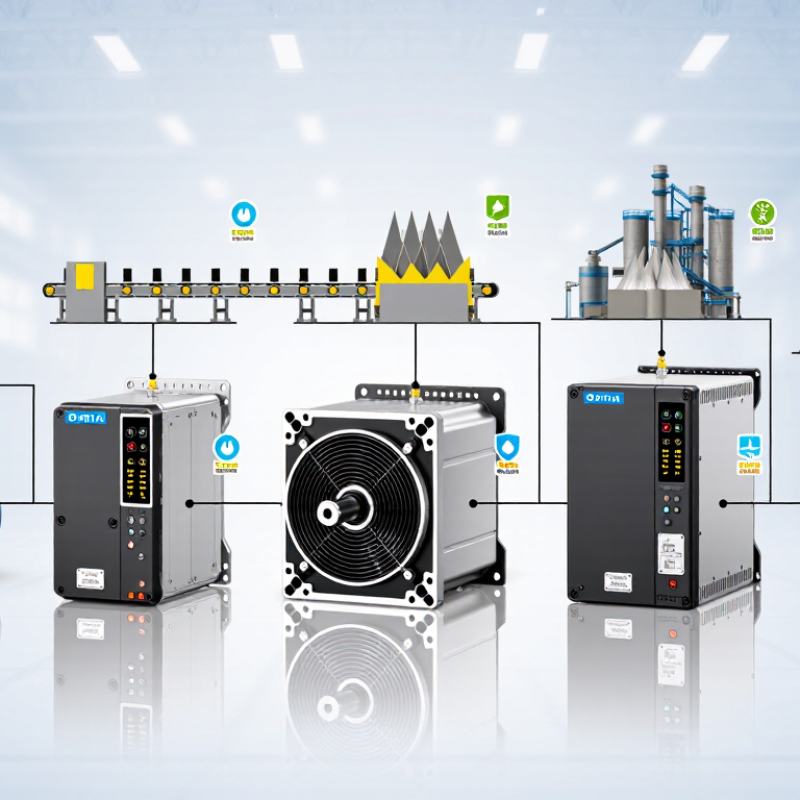
5 Best Delta Frequency Drive Options for Global Buyers?

Define Global Selection Criteria Using IEC 61800-9-2 Efficiency and IEEE 519 Harmonics

Global buyers should compare five frequency-drive options by application: general-purpose, HVAC, heavy-duty, regenerative, and compact machine drives.

The best choice depends on efficiency, harmonics, voltage, duty cycle, and serviceability. A 400 V motor may run at 50 Hz in one market and 60 Hz elsewhere. Confirm this before comparing quotations.

IEC 61800-9-2 provides a common method for measuring drive-module and complete-drive efficiency. Buyers should request IE and IES classifications at realistic load points, not only full load.

The U.S. Department of Energy reports that motor systems consume more than half of industrial electricity. Small efficiency differences can therefore become significant operating costs. Ask for test conditions, standby losses, and partial-load results. Nameplate efficiency alone is insufficient.

IEEE 519-2022 evaluates harmonic performance at the point of common coupling. For systems below 69 kV, the commonly applied planning values are 5% total voltage distortion and 3% individual voltage distortion.

Current limits depend on the short-circuit ratio, so one universal pass number is unreliable. Specify whether the drive needs a line reactor, passive filter, or active front end. Measure distortion with a power-quality analyzer during acceleration and steady operation.

A spreadsheet can still mislead. I would also check ambient temperature, altitude derating, enclosure cooling, and local technical support. These details often decide whether an efficient drive remains reliable after installation.

Delta MS300: Compact Drives for 0.1–22 kW General-Purpose Applications

A compact frequency drive can simplify motor control in pumps, conveyors, fans, and small machine tools. This general-purpose range supports motors from 0.1 to 22 kW, covering many light industrial duties. Its small footprint helps installers save cabinet space. That matters when an existing panel is already crowded.

In field work, simple commissioning often matters more than impressive specifications. A clear keypad, practical parameter groups, and stable speed control reduce setup mistakes. V/f control suits basic loads, while sensorless vector control can improve torque at lower speeds. Input voltage and braking requirements still need careful checking. Do not select by power alone.

I would not call this type of drive perfect. Very small motors may need extra attention during autotuning. Long cable runs can also require suitable installation practices and filters. Model-specific overload ratings, ambient temperature limits, and enclosure protection should be verified before purchase. Global buyers should confirm local supply voltage, frequency, documentation, spare parts, and technical support. A drive that fits the motor may still fail the project if service access is poor. Test one unit under real load conditions. Small details expose big assumptions.

5 Practical Frequency Drive Power Options for Global Buyers

Nominal motor-power checkpoints within the 0.1–22 kW general-purpose application range. Actual drive selection should also consider motor current, supply voltage, overload duty, braking, and local electrical standards.

The five points represent commonly used IEC motor power ratings: 0.1 kW for small machinery, 0.75 kW for light-duty equipment, 3.7 kW for general-purpose machinery, 7.5 kW for pumps and conveyors, and 22 kW for larger industrial loads. These are nominal motor ratings, not guaranteed output capabilities.

Delta C2000: High-Performance Drives with IEC 61800-5-2 Safety Support

For global buyers, a frequency drive should deliver more than smooth motor speed control. A high-performance unit must respond accurately during acceleration, braking, and sudden load changes. This matters in conveyors, pumps, fans, and processing equipment. Stable torque can reduce mechanical stress and production interruptions.

IEC 61800-5-2 safety support adds important value. It can support safety functions such as Safe Torque Off, when correctly configured within the machine’s safety design. The drive itself does not replace a complete risk assessment. Wiring, emergency-stop circuits, and external safety devices still require professional verification. Check the manual carefully.

During commissioning, technicians should confirm motor data, control mode, braking settings, and fault responses. Clear parameter software can shorten setup time, especially for overseas service teams. Yet no drive is perfectly plug-and-play. Poor grounding, excessive cabinet heat, or incorrect cable length can create unstable operation. I have seen small installation details cause large delays.

Global purchasers should also review input voltage ranges, communication protocols, enclosure requirements, and available technical support. A compact cabinet may look attractive, but restricted airflow can shorten component life. Ask for safety documentation, conformity information, wiring diagrams, and tested application references. These details provide stronger evidence than marketing claims alone.

Delta CP2000: HVAC and Pump Drives Rated for 0.75–400 kW Systems

For HVAC and pumping systems, the CP2000 drive family covers applications from 0.75 to 400 kW. That range suits small circulation pumps, rooftop units, and large chilled-water plants. In field commissioning, stable low-speed control often matters more than maximum output. A drive should maintain pressure without repeatedly starting and stopping the motor.

Built-in PID control can adjust pump speed as demand changes. Sleep and wake functions may reduce energy use during quiet periods. Fan and pump profiles also help manage acceleration, deceleration, and motor loading. For a 110 kW chilled-water pump, technicians should verify flow, pressure, motor current, and cooling conditions before final tuning. Small wiring errors can create large operating problems.

The enclosure, installation space, and local temperature deserve equal attention. A 400 kW cabinet needs practical ventilation, safe cable routing, and sufficient service clearance. Harmonic conditions may also require an input reactor or other mitigation equipment. Specifications can look convincing.

However, not every HVAC site needs the highest feature set. A smaller pump may benefit from simple parameter settings and clear fault reporting. I have seen projects delayed by ignoring motor data during commissioning. That mistake is avoidable. Buyers should confirm voltage, overload requirements, communication protocols, bypass arrangements, and local service support before ordering. Supplier documentation should match the exact model and application, not merely the product family.

5 Best Frequency Drive Options for Global Buyers — HVAC and Pump Drives Rated for 0.75–400 kW Systems

Option Recommended System Typical Power Range Common Input Supply Motor Control Typical Enclosure Typical Overload Capability Best-Fit Applications
1. Compact Variable-Torque Drive Small HVAC, ventilation and water-transfer systems 0.75–7.5 kW Three-phase, 380–480 V AC, 50/60 Hz V/f and sensorless vector control IP20 cabinet installation; IP55 available in packaged systems Approximately 110% for 1 minute in variable-torque duty Fans, small pumps, air-handling units and booster sets
2. General-Purpose Pump Drive Commercial water supply and building-service equipment 11–30 kW Three-phase, 380–480 V AC, 50/60 Hz V/f, sensorless vector and PID pressure control IP20 for panels; IP55 or higher when installed in a protected outdoor enclosure Approximately 110% for 1 minute in variable-torque duty Centrifugal pumps, circulation pumps, irrigation and pressure-boosting systems
3. HVAC Fan and Chiller Drive Medium-size air-conditioning and mechanical-room equipment 37–90 kW Three-phase, 380–480 V AC, 50/60 Hz Sensorless vector control with PID and energy-saving modes IP20 cabinet installation; higher protection requires a suitable enclosure Approximately 110–120% for 1 minute, depending on duty setting Supply and return fans, cooling-tower fans, chilled-water pumps and air handlers
4. Heavy-Duty Process Pump Drive Municipal water, wastewater and industrial pumping 110–250 kW Three-phase, 380–480 V AC, 50/60 Hz Sensorless vector control, PID, sleep/wake and multi-pump control IP20 drive module within a ventilated electrical cabinet Approximately 150% for 1 minute in heavy-duty operation Raw-water intake, wastewater lift stations, process circulation and high-head pumps
5. High-Power Central Pump Drive Large infrastructure and industrial utility systems 315–400 kW Three-phase, 380–480 V AC, 50/60 Hz Closed-loop or sensorless vector control with programmable PID IP20 power section installed in a dedicated, ventilated cabinet or switchroom Typically 110% for variable-torque duty; confirm the selected overload class Large cooling-water pumps, district-energy plants, desalination and industrial water networks
Selection note: Ratings are representative IEC motor-power classes for 380–480 V, three-phase variable-torque systems. Final selection should be based on motor rated current, overload requirement, ambient temperature, altitude, short-circuit rating, harmonic limits, enclosure rating and local electrical regulations.

Delta CH2000 and VFD-E: Compare Heavy-Duty Capacity, IP Ratings, and EMC Standards

For global buyers, the real comparison is not only price or rated horsepower. It is application fit. A heavy-duty drive suits conveyors, crushers, hoists, and pumps with frequent load changes. A compact general-purpose drive fits lighter machinery and smaller control cabinets. Heavy-duty capacity usually includes stronger overload performance, better thermal management, and improved low-speed torque. Check the duty rating carefully. “Heavy duty” is not always defined identically.

IP protection also needs practical interpretation. Many drives use IP20 housings and require a clean, ventilated cabinet. An IP55 enclosure may support harsher locations, but it does not remove the need for temperature control. Dust, moisture, and cable glands still matter. In field inspections, poor cabinet sealing often causes more trouble than the drive itself. I have also seen buyers compare IP ratings without checking the complete installation. That comparison is incomplete.

EMC performance depends on more than an internal filter. Confirm compliance with IEC 61800-3, then review cable length, shielding, grounding, and motor-frame bonding. A heavy-duty option may offer stronger filtering and control stability, while a compact option can be easier to install. However, added filtering may increase leakage current. That detail is easy to miss. For five potential selections, compare overload class, enclosure arrangement, EMC category, cooling method, and local certification. Do not rely on a catalog headline alone. Verify the exact variant.

Copyright © 2025 The Toolroom Inc. All Rights Reserved.
Website Design St Louis by IQComputing