
Choosing a sinker EDM supplier is not just a search for machine capacity. In 2026, global buyers must weigh technical fit, process control, communication, and delivery reliability. Sinker Edm Machining uses shaped electrodes to create cavities and features in conductive materials, often where conventional cutting is difficult. The right partner should understand the part, not merely quote its drawing.
Look for relevant experience with your material, geometry, tolerance, and surface-finish requirements. Ask how the supplier plans electrodes, manages wear, inspects finished parts, and handles design changes. Small details matter. A deep cavity, a sharp internal corner, or a tight finish requirement can affect both machining time and cost. Request sample inspection records, equipment details, and a clear explanation of the proposed process. Do not assume every supplier measures quality in the same way.
This guide introduces suppliers serving international buyers and offers practical points for comparing their capabilities. Consider production volume, lead times, technical support, shipping arrangements, and responsiveness alongside price. A polished website is not proof of consistent performance. Neither is a low quote. Some information may be difficult to verify from public sources, so buyers should confirm important claims directly and request references where appropriate. The comparison is a starting point, not a guarantee. A careful review can help identify a supplier suited to your project, while leaving room to reassess as requirements change.
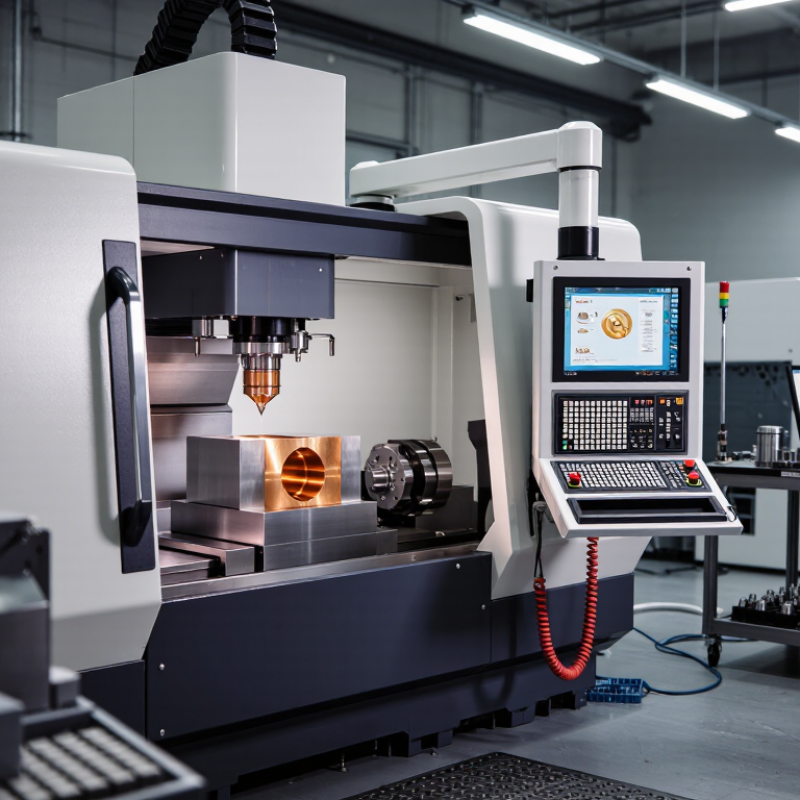
Sinker EDM machining uses a shaped electrode and electrical discharges to remove conductive material inside a workpiece. The process takes place in dielectric fluid, often oil or deionized water. There is no direct cutting force. This makes it useful for deep cavities, narrow ribs, and sharp internal features that conventional tools may struggle to reach. The electrode’s shape transfers to the workpiece, so its accuracy and wear matter. Small details count.
Common applications include injection molds, die-casting tools, and precision components with complex pockets. In moldmaking, a shop may use sinker EDM to form a ribbed cavity after milling leaves hard-to-reach corners. Hardened steel can also be machined without softening it first, though cycle times may be long. Surface finish, flushing, and electrode design affect the result. A supplier’s claimed precision is only useful when tied to the material, feature size, and inspection method. That distinction is easy to overlook.
Tips: Ask how the supplier measures cavity dimensions and controls electrode wear. Share drawings, material grade, and finish requirements before requesting a quote. Check whether sample parts can be inspected with suitable measuring equipment. Leave room for discussion: the first process plan may not be the best one. It happens.
Sinker EDM machining creates cavities by using a shaped electrode and controlled electrical discharges. The electrode does not touch the workpiece. Both sit in dielectric fluid, which insulates the gap and helps carry away eroded particles. A power supply sends rapid pulses across that narrow space. Each spark removes a tiny amount of conductive material.
The electrode’s shape guides the cavity, so this process can form detailed pockets, ribs, and blind features in hardened metal. A servo system keeps the working gap stable as the electrode advances. Flushing matters. Debris left in the gap can cause unstable sparks, poor surfaces, or unwanted wear. Electrode wear also changes the result, so experienced operators account for it when choosing electrode material and machining settings. Small details matter.
Sinker EDM applies little cutting force, which can help when machining delicate or already-hardened parts. But it is not automatically the fastest option. Deep cavities may take time, and making a precise electrode adds preparation work. Surface finish depends on pulse settings, material, and flushing; one setting rarely suits every feature. In practice, the process is less tidy than diagrams suggest. A test cut and careful inspection can reveal issues that a setup sheet misses.
Compare sinker EDM suppliers by the work they can prove, not by machine lists alone. Review work-envelope dimensions, maximum workpiece weight, electrode capacity, and axis travel. Ask how they manage flushing in deep ribs and narrow cavities, where debris can distort accuracy. Grand View Research’s 2024 market report estimated the global EDM market at USD 5.2 billion in 2023 and projected continued growth through 2030. This signals broad investment, not equal supplier capability. Ask for sample results on a part similar to yours.
Quality evidence matters. Request documented first-article inspection, measurement equipment details, and repeatability results across multiple runs. ISO 230-2 describes tests for machine-tool positioning accuracy and repeatability; it does not certify finished-part quality. Compare achievable tolerances and surface finish against your drawing, then confirm them with a trial cut. Ask about electrode wear, lead times, and how operators respond when a cavity burns unevenly. A polished capability sheet may still miss a shop-floor surprise.
Tips: Send a representative CAD file and material specification. Request a short process review, quoted inspection plan, and sample-cut report. Check who owns electrode design and what happens when the first result misses target. Small details matter.
These are fundamental features of sinker EDM—not supplier performance scores. Compare suppliers using verified details such as workpiece size, achievable tolerances, electrode options, and inspection capability.
A value of 1 indicates a fundamental process requirement. Sinker EDM removes material from electrically conductive workpieces using electrical discharges, a shaped electrode, and dielectric fluid.
Choosing a sinker EDM supplier requires more than comparing hourly rates. Ask what inspection records accompany each job. Useful evidence includes electrode and workpiece material details, cavity dimensions, surface-finish readings, and a final inspection report. Ask how the supplier controls electrode wear and verifies deep, narrow features. Request a sample report with sensitive customer information removed. Ask for evidence.
Quality claims matter less than repeatable checks. For a critical mold cavity, discuss datum selection, tolerance measurement, and how the shop handles rework. A first-article inspection can reveal problems before a full batch proceeds. Still, one successful sample does not guarantee every future job. That limitation deserves attention.
Lead-time estimates should identify programming, electrode preparation, machining, inspection, and packing. Ask which stages happen in-house and where queues may form. Delays happen. Export support also affects delivery: confirm crate specifications, commercial paperwork, shipping terms, and who answers questions if documents need correction. Request milestone updates and a named contact. Compare suppliers using the same drawing, material, inspection expectations, and delivery destination; otherwise, their quotes may look comparable while covering different work. No checklist captures every shop-floor surprise, so a technical call can expose assumptions that a quotation leaves unstated.
A practical, supplier-neutral comparison framework for evaluating sinker EDM machining capabilities. Use the ranges below as planning benchmarks, not guaranteed specifications.
| Evaluation Dimension | Indicative Benchmark | What to Verify | Evidence to Request | Potential Warning Sign |
|---|---|---|---|---|
| Dimensional accuracy | Around ±0.005–0.02 mm for suitable features and process conditions | Confirm achievable tolerance for the specified material, cavity depth, geometry, and measurement method. | Part-specific capability statement, inspection plan, and sample measurement report. | A single tolerance is promised for every feature without reviewing the drawing or geometry. |
| Surface finish | Approximately Ra 0.2–1.6 µm across common finishing requirements; finer finishes may require additional passes | Specify the required Ra value, measurement location, and whether polishing or secondary finishing is included. | Surface-finish measurement records from a comparable material and feature. | Finish is quoted without defining the measurement method or whether post-processing is included. |
| Material and workpiece capacity | Capacity depends on machine travel, tank size, workpiece weight, electrode setup, and material | Match the workpiece envelope and weight to the machine; confirm material grade and any heat-treatment condition. | Machine-work-envelope details and a written review of the supplied drawing and material specification. | The supplier confirms capacity based only on part dimensions, without considering weight or setup access. |
| Lead time | A straightforward prototype may take roughly 2–4 weeks; complex tooling or production work can take longer | Separate engineering review, electrode preparation, machining, inspection, and shipping time in the schedule. | Milestone-based delivery plan, capacity confirmation, and agreed schedule-update frequency. | One delivery date is offered with no allowance for drawing approval, tooling, inspection, or transit. |
| Quality management | A documented inspection process is essential; certification requirements should match the buyer’s industry and contract | Check revision control, calibration practices, nonconformance handling, traceability, and certificate scope where applicable. | Quality-system certificate if required, sample inspection report, and corrective-action procedure. | A certificate is presented without a verifiable scope, or inspection records cannot be linked to the supplied part. |
| First-article inspection | Inspection coverage should be agreed before production and reflect drawing-critical characteristics | Define measurement points, acceptance criteria, sampling plan, and approval responsibility. | First-article report with actual readings, instrument details, and drawing revision reference. | Only a general “passed inspection” statement is offered for a dimensionally critical component. |
| Export documentation | Documentation commonly includes a commercial invoice and packing list; origin and transport documents depend on the shipment | Agree who prepares each document and confirm the importer’s requirements before dispatch. | Sample redacted export-document set and confirmation of document responsibilities. | Export paperwork, declared shipment details, or responsibility for document corrections remain unclear. |
| Shipping and trade terms | Delivery responsibilities should be stated using the agreed Incoterms® rule and named place | Confirm freight mode, insurance responsibility, customs-clearance roles, and packaging requirements. | Written quotation showing the Incoterms® rule, named place, estimated transit time, and packing method. | The quotation says only “shipping included” without specifying the destination point or customs responsibilities. |
| Packaging and part protection | Protection should suit part material, geometry, corrosion sensitivity, and transport route | Review rust prevention, cushioning, separation of delicate features, and moisture protection where needed. | Packaging specification or photographs of a comparable export shipment. | Packaging is treated as standard despite fragile edges, precision surfaces, or long-distance transport. |
| Communication and engineering support | A named technical contact and agreed response process help control drawing and schedule changes | Assess drawing-review capability, clarification turnaround, language coverage, and change-control procedures. | Documented quotation assumptions, technical query process, and escalation contact. | Questions about tolerances, electrodes, or design changes receive unsupported or contradictory answers. |
Buyer note: Actual capability, finish, tolerance, and delivery time vary with part geometry, material, electrode design, machine condition, inspection requirements, and order size. Confirm all acceptance criteria and shipping responsibilities in writing before placing an order.
Copyright © 2025 The Toolroom Inc. All Rights Reserved.
Website Design St Louis by IQComputing