Blog

2026 Top Hydraulic Rubber Hose Types for Global Buyers

Global buyers are entering 2026 with more hydraulic hose choices than ever. The decision is not simply rubber versus thermoplastic. Pressure, temperature, abrasion, bend radius, fluid compatibility, and service access all matter.

Fortune Business Insights estimates the global hydraulic hose market at approximately USD 1.8 billion in 2023, with continued growth through 2032. Grand View Research also reports steady expansion, driven by construction equipment, agriculture, mining, and industrial automation. The figures differ because researchers define products and regions differently. That uncertainty deserves attention.

Real conditions are less tidy.

A hose may run beside a hot engine, scrape against steel, and flex hundreds of times daily. A technically correct hose can still fail after poor routing or excessive bending. Hydraulic hose specialist Brendan Casey states, “Contamination is the enemy of hydraulic systems.” His warning extends beyond oil cleanliness. Dirt can enter during cutting, storage, assembly, and field replacement.

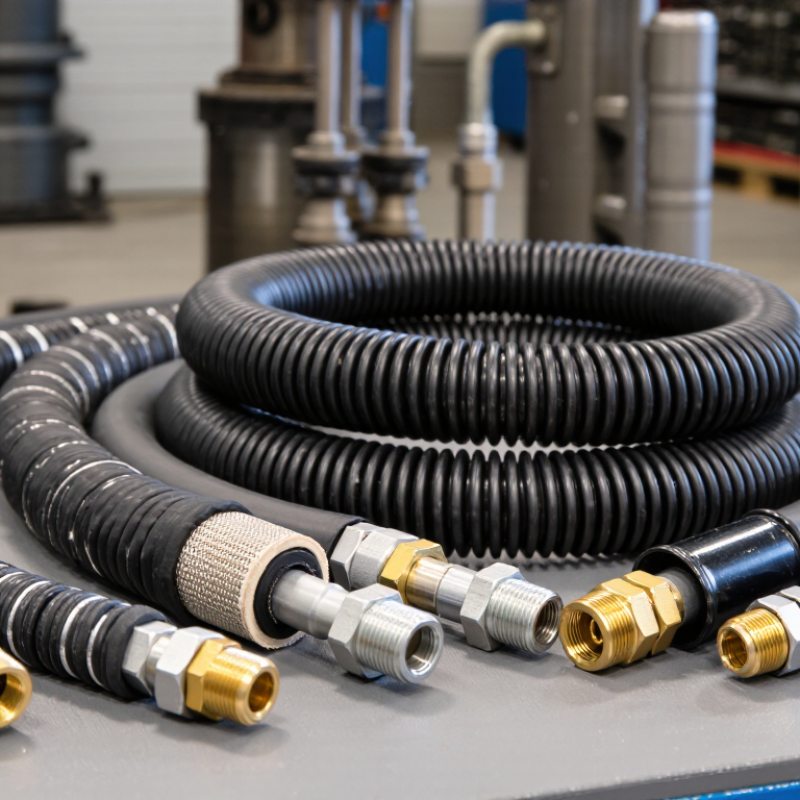
This guide examines the leading Hydraulic Rubber Hose types expected to matter most in 2026. It considers wire-braided, spiral-wire, textile-reinforced, compact, and high-temperature designs. Each type serves a different operating window. None is universally superior.

ISO 18752 classifications provide a useful comparison for pressure performance and impulse resistance. However, certification alone cannot replace site experience. Buyers should verify working pressure, minimum bend radius, cover material, impulse testing, and fitting compatibility. They should also examine supplier traceability and replacement support.

Small details matter.

A crushed carton, an exposed reinforcement wire, or a mismatched fitting can change the outcome. This overview aims to support informed purchasing, while acknowledging one practical limitation: market data rarely captures every regional specification or field failure.

2026 Top Hydraulic Rubber Hose Types for Global Buyers

Hydraulic Rubber Hose Basics and Core Performance Standards

Hydraulic rubber hoses transfer pressurized fluid between pumps, valves, and actuators. Their construction usually includes an inner tube, reinforcement layers, and an outer cover. Each layer serves a different purpose. The tube must resist the working fluid, while reinforcement controls pressure expansion. The cover protects against abrasion, sunlight, moisture, and temperature changes. Small details matter. A hose rated for 250 bar may fail if bent too sharply or exposed beyond its temperature range. Buyers should check working pressure, burst pressure, minimum bend radius, fluid compatibility, and operating temperature before selection. Standards such as SAE J517, EN 853, and ISO 18752 provide useful performance frameworks, but the exact specification still requires careful review.

Tips: Match the hose rating to the complete hydraulic circuit, not only normal pressure. Leave room for pressure spikes. Measure the actual routing path, including movement and vibration. Avoid twisting the hose during installation. A clean connection is essential, yet contamination is often overlooked. Record inspection dates and replace hoses showing cracks, exposed reinforcement, flattened sections, or leaking fittings.

In practical applications, abrasion resistance can matter more than a higher pressure rating. A hose rubbing against a steel edge may deteriorate quickly. Temperature also changes flexibility and service life. A cold hose can become stiff, while excessive heat may weaken its inner tube. Visual inspection alone is imperfect. It can miss internal damage, especially after repeated pressure pulses. Buyers should request traceable test records and confirm whether the stated rating covers continuous or intermittent service. The cheapest option is not always the most reliable one.

2026 Top Hydraulic Rubber Hose Types for Global Buyers

Reference maximum working pressure for common DN12 (1/2-inch) hydraulic hose constructions

Working pressure varies by hose bore, reinforcement, temperature, and manufacturer specifications. The values shown are representative DN12 reference ratings based on commonly used EN 853, EN 856, and SAE J517 hose construction classes. Always verify the exact product datasheet before selection.

Key Hose Types by Pressure, Temperature, and Fluid Compatibility

2026 Top Hydraulic Rubber Hose Types for Global Buyers

Key Hose Types by Pressure, Temperature, and Fluid Compatibility

Hydraulic hoses are selected by operating conditions, not appearance. Pressure, temperature, and fluid compatibility determine service life. A compact two-wire braided hose suits many medium-pressure circuits. Spiral-wire construction handles higher impulse loads and demanding mobile equipment. Suction and return hoses need different reinforcement. They must resist collapse under vacuum.

Pressure ratings need careful reading. Working pressure is not the same as burst pressure. Leave a safety margin for pressure spikes, especially near pumps and valves. Frequent bending, vibration, and sharp routing can reduce the practical rating. A hose may pass a workshop test, then fail after repeated flexing. That detail is easy to miss. Check the required standard, such as ISO 18752 or applicable regional specifications, before approval. Avoid tight bends.

Temperature affects both the tube and cover. Short exposure to extreme heat can still accelerate aging. Mineral-based hydraulic fluids commonly pair with nitrile tubes, while phosphate-ester fluids require compatible materials. Water-glycol mixtures also need confirmation from the hose manufacturer. Never match fluid by color alone. Read the fluid safety data and compatibility chart. Inspect for blistering, soft spots, cracks, and exposed reinforcement. In practice, selection is sometimes rushed, and small assumptions become costly failures. Record pressure, temperature, fluid, bend radius, and fitting details before ordering.

2026 Top Hydraulic Rubber Hose Types for Global Buyers - Key Hose Types by Pressure, Temperature, and Fluid Compatibility
Hose Type Typical Reinforcement Typical Working Pressure* Typical Temperature Range* Best-Suited Hydraulic Fluids Main Advantages Common Applications Important Selection Notes
Single-Wire Braid Hose
SAE 100R1 / EN 853 1SN
One high-tensile steel-wire braid Approximately 70–225 bar
(1,015–3,265 psi), depending on bore size
Approximately −40°C to +100°C
(−40°F to +212°F)
Petroleum-based hydraulic oils; many water-glycol fluids when the hose cover and tube are approved Flexible, compact, cost-effective, and suitable for general hydraulic service Mobile equipment, agricultural machinery, low-to-medium pressure hydraulic circuits, lifting equipment Confirm the pressure rating at the selected inside diameter, especially for impulse or high-cycle service.
Double-Wire Braid Hose
SAE 100R2 / EN 853 2SN
Two high-tensile steel-wire braids Approximately 140–400 bar
(2,030–5,800 psi), depending on bore size
Approximately −40°C to +100°C
(−40°F to +212°F)
Petroleum-based hydraulic oils and selected water-based fluids approved for the hose construction Higher pressure capability and improved resistance to external abrasion compared with single-braid hose Construction machinery, hydraulic cylinders, excavators, forklifts, industrial power units Use the correct fittings and assembly method; bend radius and impulse performance are critical for long service life.
Compact Two-Braid Hose
SAE 100R16 / EN 857 2SC
Two steel-wire braids with a compact construction Approximately 160–400 bar
(2,320–5,800 psi), depending on bore size
Approximately −40°C to +100°C
(−40°F to +212°F)
Petroleum-based hydraulic oils; compatible water-glycol and biodegradable fluids subject to manufacturer approval Smaller outside diameter and tighter minimum bend radius than many conventional two-wire hoses Space-limited installations, compact mobile equipment, articulated machinery, complex hose routing Useful where routing space is restricted, but the specified minimum bend radius must not be exceeded.
Four-Wire Spiral Hose
SAE 100R12 / ISO 3862 4SP
Four alternating layers of high-tensile spiral steel wire Approximately 210–420 bar
(3,045–6,090 psi), depending on bore size and standard
Approximately −40°C to +121°C
(−40°F to +250°F)
Petroleum-based hydraulic oils and approved fire-resistant or biodegradable hydraulic fluids High impulse resistance and reliable performance in demanding high-pressure systems Heavy construction equipment, mining machinery, high-pressure hydraulic drives, industrial presses Typically less flexible than braided hose; select fittings and assemblies rated for the same pressure class.
Six-Wire Spiral Hose
SAE 100R13 / ISO 3862 6SP
Six alternating layers of spiral steel wire Approximately 350–420 bar
(5,075–6,090 psi), depending on bore size
Approximately −40°C to +121°C
(−40°F to +250°F)
Petroleum-based hydraulic oils and other fluids specifically approved for the tube and cover materials Very high pressure and high impulse capability for severe-duty applications Large excavators, mining systems, steel mills, heavy lifting systems, high-pressure equipment Requires careful routing, adequate clamping, and correctly matched fittings because of its stiffness and weight.
Textile-Braid Hydraulic Hose
SAE 100R3 / SAE 100R6
Textile braid, with hose construction varying by applicable standard Approximately 20–80 bar
(290–1,160 psi), depending on type and bore size
Approximately −40°C to +100°C
(−40°F to +212°F)
Petroleum-based hydraulic oils and selected low-pressure water-based fluids Lightweight, highly flexible, and suitable for low-pressure return, pilot, and control lines Return lines, instrumentation circuits, lubrication systems, small machinery, low-pressure controls Do not substitute for high-pressure wire-reinforced hose; verify the exact standard and pressure rating.
Suction and Return Hose
SAE 100R4 / EN ISO 3949 Applications
Textile reinforcement with embedded steel helix or anti-collapse structure Usually suction service to approximately −0.8 bar
and low-pressure return service typically up to 10–20 bar
Approximately −40°C to +100°C
(−40°F to +212°F)
Petroleum-based hydraulic oils; some biodegradable oils and water-based fluids require specific compatibility confirmation Resists collapse under vacuum and accommodates large flow rates with relatively low restriction Tank-to-pump suction lines, reservoir return lines, drain lines, circulating oil systems Never use a standard pressure hose for pump suction unless it is specifically designed and rated for vacuum service.
Thermoplastic Hydraulic Hose
SAE 100R7 / SAE 100R8
Synthetic-fiber braid, commonly with a thermoplastic tube and cover Approximately 70–350 bar
(1,015–5,075 psi), depending on construction and bore size
Approximately −40°C to +93°C
(−40°F to +200°F)
Petroleum-based hydraulic oils; certain water-glycol, phosphate-ester, and biodegradable fluids when specifically approved Small outside diameter, low fluid permeation, clean appearance, and good resistance to abrasion Material handling, lift platforms, compact hydraulic systems, pilot lines, robotics, control circuits Temperature and fluid compatibility can vary considerably; check the tube material and electrical-conductivity requirements.
PTFE-Lined Hydraulic Hose
SAE 100R14
PTFE inner tube with braided stainless steel or other metallic reinforcement Approximately 70–210 bar
(1,015–3,045 psi), depending on bore size and braid
Approximately −54°C to +260°C
(−65°F to +500°F), with pressure derating at elevated temperatures
Mineral oils, many synthetic fluids, water-based fluids, and a broad range of chemicals when PTFE and fittings are compatible Excellent chemical resistance, low friction, and high-temperature capability Hot-oil systems, chemical processing, high-temperature hydraulic circuits, gas and fluid transfer PTFE has limited resistance to bending fatigue and external crushing; follow the specified bend radius and assembly procedure.
High-Temperature Cover Rubber Hose
SAE 100R5 / Specialty High-Heat Construction
Textile or wire reinforcement with a heat-resistant rubber cover Approximately 70–225 bar
(1,015–3,265 psi), depending on construction and bore size
Approximately −40°C to +135°C
(−40°F to +275°F), subject to fluid and pressure derating
High-temperature petroleum-based hydraulic oils and selected synthetic fluids approved for the inner tube Improved resistance to elevated ambient temperature and hot hydraulic fluid compared with standard hose constructions Steel mills, engine compartments, hot industrial environments, high-temperature mobile equipment High ambient temperature can shorten service life even when the fluid temperature remains within its rating; provide heat shielding where necessary.

*Pressure and temperature values are representative industry ranges for commonly available constructions and vary with inside diameter, reinforcement, fitting design, fluid type, impulse conditions, and applicable standard. Always verify the manufacturer’s current technical data before specifying or installing a hose. The maximum working pressure must not be exceeded, and temperature ratings may require derating when pressure, impulse frequency, or fluid compatibility conditions change.

Reinforcement Structures for Heavy-Duty Hydraulic Applications

2026 Top Hydraulic Rubber Hose Types for Global Buyers

Reinforcement structures determine how hydraulic hoses handle pressure, movement, and repeated loading. In heavy-duty applications, the rubber tube carries fluid, but the reinforcement carries the force. Common structures include textile layers, wire braid, and spiral-wound wire. Each design serves a different duty.

Wire-braided hoses

Wire-braided hoses offer good flexibility for machinery with frequent bending. They suit mobile equipment, lifting systems, and compact routing spaces.

Spiral-wire hoses

Spiral-wire hoses use multiple wire layers for higher pressure and stronger impulse resistance. They are useful near pumps, excavators, presses, and other demanding circuits. However, extra strength often means a larger bend radius and a stiffer installation.

Textile reinforcement works well in lower-pressure return lines and lightweight systems. It can reduce weight, but it may not tolerate severe pressure spikes or external crushing.

Selection should consider working pressure, temperature, abrasion, vibration, and minimum bend radius. Inspectors should also check whether fittings match the hose construction. A strong hose can still fail when poorly routed.

Small details matter.

Avoid twisting during assembly. Keep the hose away from sharp edges and hot surfaces. Clamps should support the line without squeezing it.

Pressure ratings also change with temperature and service conditions, so a catalog value is not always enough. No structure is perfect.

A careful buyer should question simplified charts, review real operating data, and allow a safety margin for unexpected loads.

Selection Guide for Global Buyers and Regional Compliance Needs

Choosing hydraulic rubber hoses in 2026 requires more than comparing pressure ratings and prices. Global buyers must match hose construction with fluid type, temperature, movement, and installation space. Common choices include wire-braided, spiral-wire, textile-reinforced, and compact high-pressure hoses. Each type serves a different duty.

Regional compliance can change the purchasing decision. European projects may require documentation aligned with applicable pressure equipment rules and harmonized standards. North American buyers often request conformity with relevant SAE specifications. Other markets may reference ISO or national standards. Requirements can vary by machine, industry, and hose assembly. Verify them locally.

Ask suppliers for test reports, batch traceability, material declarations, and clear assembly markings. Check working pressure, impulse performance, bend radius, and fitting compatibility. Do not rely on the hose alone. The complete assembly must be assessed.

Small details matter. A readable date code helps during maintenance. Correct crimp records reduce installation errors. Import documents should match the physical product. A practical buyer also reviews storage conditions, because heat, sunlight, and ozone can shorten rubber life.

No checklist is perfect. In real projects, buyers sometimes select a compliant hose that fails after poor routing. That lesson deserves attention. Confirm requirements with a qualified engineer or local authority before shipment. Regional compliance is not a label exercise; it is an ongoing quality process.

Installation, Maintenance, and Service-Life Evaluation Criteria

2026 Top Hydraulic Rubber Hose Types for Global Buyers

Choosing a hydraulic rubber hose requires more than checking pressure ratings. Wire-braided hoses suit moderate pressure systems and frequent movement. Spiral-wire hoses handle higher pressure and severe industrial pulses. Textile-reinforced hoses remain useful for lighter equipment and compact routing. Thermoplastic hoses can reduce weight, but their temperature limits need careful review.

Installation determines much of a hose’s working life. Keep the bend radius above the supplier’s stated minimum. Do not twist the hose while tightening fittings. Leave enough length for movement, but avoid loose loops near hot surfaces. Secure long runs with supports that prevent rubbing. A hose touching painted steel can still develop hidden abrasion.

Inspect fittings, covers, and leakage points during scheduled maintenance. Look for blistering, exposed reinforcement, flattened sections, and hardened rubber. Check clamps after the first operating cycle because vibration may loosen them. Record pressure, temperature, fluid type, installation date, and replacement history. These details make service-life decisions more reliable.

Not every failure is dramatic. Small surface cracks matter. Service life should reflect actual pressure cycles, heat, contamination, and flexing, not calendar age alone. A hose may appear clean yet suffer internal damage from incompatible fluid. Our checklists can miss this. When doubt remains, isolate the line and request a qualified inspection before reuse. Deadlines often encourage premature repairs, but rushing can create a second failure.

Article Source:

Copyright © 2025 The Toolroom Inc. All Rights Reserved.
Website Design St Louis by IQComputing