2026 Top Dust Control Filters for Global Buyers Guide?
In an era where air quality is paramount, selecting the right Dust Control Filters becomes vital for various industries. These filters minimize airborne particles, ensuring safer work environments and compliance with regulations. Many buyers face challenges in understanding the different types and specifications available in the market.
Deciding on the best filters requires careful consideration of specific needs and applications. A buyer must assess filter performance, lifespan, and maintenance requirements. There is no one-size-fits-all solution. Each industry presents unique dust control issues. Therefore, understanding filter options is essential for tailored solutions.
While considerable research and expertise are necessary, it's common for buyers to overlook critical details. Some may focus too much on initial costs rather than long-term benefits. Others might neglect the importance of filter compatibility with existing systems. As the market evolves, buyers must stay informed and adaptable, ensuring their choices align with the latest technology and standards.
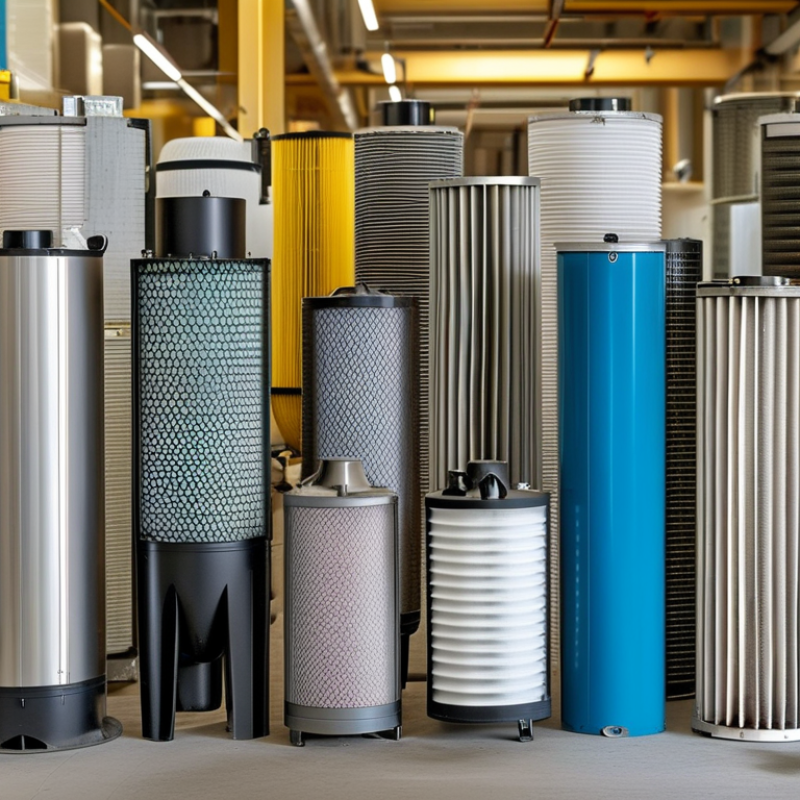
Overview of Dust Control Filters: Importance and Functionality
Dust control filters play a crucial role in maintaining air quality across various industries. Dust particles can severely impact human health, as reported by the World Health Organization, which links respiratory diseases to airborne pollutants. Effective filtration systems can reduce dust levels significantly, promoting safer work environments. Industrial reports indicate that using high-efficiency particulate air (HEPA) filters can capture up to 99.97% of particles, enhancing overall air quality.
When selecting dust control filters, consider their filtration efficiency and suitability for your specific needs. It's important to analyze the types of dust typically encountered in your setting. For example, fine particulate matter, like PM2.5, requires specialized filters to ensure optimal protection. Using filters that are too coarse may leave harmful particles unfiltered. Regular maintenance of these systems can also impact their longevity and effectiveness.
Tips: Regularly check filters for blockages. Regular maintenance can extend filter life. Understand the specific dust types in your environment for better selection. Filters must be replaced according to manufacturer guidelines. Proper installation plays a significant role in overall performance. Dust control filters should not be an afterthought; they are essential components for health and safety.
2026 Top Dust Control Filters for Global Buyers Guide
| Filter Type | Efficiency (%) | Maximum Airflow (Cubic Feet per Minute) | Filter Lifespan (Months) | Application Area |
| HEPA Filter | 99.97 | 300 | 24 | Industrial, Commercial |
| Activated Carbon Filter | 85 | 250 | 12 | Residential, HVAC |
| PES Filter | 90 | 400 | 18 | Pharmaceutical, Food Processing |
| Pocket Filter | 70 | 1500 | 36 | HVAC Systems |
| Panel Filter | 60 | 1200 | 24 | General Purpose |
Types of Dust Control Filters Available in the Market
Dust control filters are essential in various industries to maintain air quality. These filters help minimize particulate matter, ensuring both worker safety and compliance with environmental regulations. Common types of dust control filters include bag filters, cartridge filters, and electrostatic precipitators. Each type offers unique benefits depending on the specific dust challenge faced.
Bag filters are widely used in manufacturing and construction. They capture fine particles effectively, with efficiencies ranging from 80% to 99%. However, their maintenance can be labor-intensive, and they require regular replacement to maintain effectiveness.
Cartridge filters are compact and often preferable in spaces where installation space is limited. They provide high filtration efficiency and require less frequent maintenance, though their initial cost can be higher.
Electrostatic precipitators, while often more expensive, use electrical charges to capture dust. They are particularly effective for high-volume dust particles. According to a 2022 industry report, electrostatic precipitators can achieve up to 95% efficiency in certain applications.
Despite the benefits, they may face challenges in terms of installation complexity and energy consumption. Understanding these trade-offs is crucial for buyers when selecting the appropriate dust control filter for their needs.
Key Factors to Consider When Choosing Dust Control Filters
When selecting dust control filters, several key factors must be considered to ensure effectiveness and longevity. Material quality is crucial. High-efficiency filters made from synthetic fibers often outperform their counterparts. It’s vital to assess the filter’s particle size capture efficiency too. A filter that can trap smaller particles significantly enhances air quality.
Tips: Always check the filter’s MERV rating. A higher rating indicates better performance. Monitor the filter’s pressure drop. An excessive drop can indicate clogging or inefficiency.
Another important aspect is the filter's compatibility with your system. Not every filter fits all applications. Examine your equipment specifications carefully. A misfit can lead to ineffective dust control or damage. Also, consider the environmental factors in your area. Dust types vary from one region to another, requiring tailored solutions.
Tips: Research local dust pollution levels. This helps in selecting the right type of filter. Keep an eye on maintenance schedules. Regular checks can save costs in the long run.
2026 Top Dust Control Filters Performance Comparison
Top Manufacturers of Dust Control Filters Globally
The global dust control filter market is evolving rapidly. Research has shown a significant growth potential, projected to expand at a CAGR of around 6.5% from 2021 to 2026. This growth is largely driven by increasing industrialization and environmental regulations mandating air quality control. Major manufacturers in various regions are focusing on developing innovative filtration technologies.
Manufacturers are investing heavily in R&D to enhance filter efficiency and lifespan. Effective dust control filters can capture particles as small as 0.3 microns. This efficiency is crucial, especially in construction and manufacturing sectors. Reports indicate that these industries contribute to a substantial share of the dust filter market. However, some companies still struggle with balancing cost and quality in their product offerings.
Market dynamics vary by region. North America leads in revenue due to stringent regulations. Meanwhile, Asia-Pacific presents the highest growth potential. The demand for improved air quality in urbanizing regions is a significant driver. Nevertheless, varying standards and competition can pose challenges to manufacturers. A focus on sustainable practices and material innovations will be essential for future success.
Future Trends in Dust Control Filter Technology
Dust control filter technology is evolving rapidly. Future trends highlight advanced materials and innovative designs. Thin-film coatings show promise in enhancing filtration efficiency. Research indicates that filters with nanofibers can achieve up to 99.9% particle capture efficiency. This is vital in industries such as construction and mining, where airborne dust poses serious health risks.
Data from the industry shows a projected increase in demand for high-efficiency filters. A report estimates a compound annual growth rate of 7.5% from 2023 to 2028 in the global dust control market. Manufacturers are increasingly focusing on eco-friendly materials. This shift towards sustainability cannot be overlooked. However, some filters still struggle with durability and operational costs. These challenges require further innovation.
Adoption of smart technology is also on the rise. Filters integrated with sensors provide real-time data on air quality. Yet, the complexity of these systems can be daunting for smaller operations. Balancing cost, efficiency, and sustainability remains an ongoing challenge. As we look to 2026, the need for reliable and adaptive dust control solutions will only increase.